Highly readable text lays foundation for critical study of celebrated author
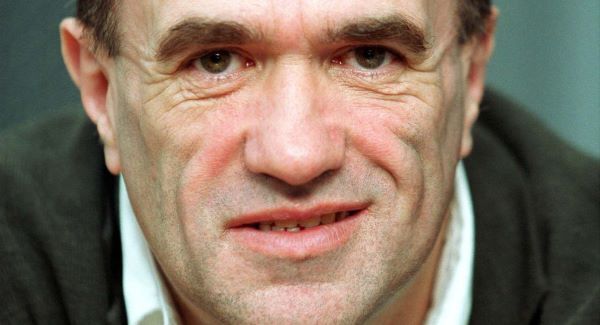
A Different Story: The Writings of Colm Tóibín

Highly readable text lays foundation for critical study of celebrated author

An ideal introductory text for third-level students or for those who wish to place Colm Tóibín’s fiction in its wider context, Eibhear Walshe’s new critical study charts the Enniscorthy author’s evolution in highly readable fashion.

Beginning in 1987 with the publication of Tóibín’s first full-length book, Bad Blood: A Walk Along the Irish Border, Walshe traces the “shift away from nationalism” towards “other kinds of aesthetic and political freedoms” in his novels and short stories up to 2012’s The Testament of Mary.

Eschewing academese, A Different Story uses lucid, discursive language to identify the “archetypical pattern” of all Tóibín’s long-form fiction: “Each of his novels,” Walshe says, “begins with a central character trapped within a constrained and alienating existence, usually created by family or marriage. This usually leads to a reinvention of the self and a consequent confrontation with the limits of the past”.

Par for the course in contemporary Irish literature, one might say, so what is Tóibín’s “different story”? A preoccupation with Irish history and gay identity? A desire to “escape and refute sectarian history”? Or perhaps the redeployment of scholarly knowledge as fiction?

For Walshe, a senior lecturer in English at UCC, it is a unique conflation of all three. He sees in Tóibín’s work an intention to reshape “the role of the short story and novel within Irish cultural discourse” with reference to “sexual and moral questions”. He identifies the roots of these concerns in the “profound influences” of Tóibín’s “Catholic education and family interest in Irish nationalism, Irish history, and the Fianna Fáil party”. Moreover, Tóibín’s fascination with Catholicism and, in particular, his effort in books like The Heather Blazing (1992) to undermine “belief in established discourses of faith, country, family, and politics” are framed by Walshe as part of the writer’s wider investigation of public versus private identity in Ireland.

Indeed, the chief accomplishment of A Different Story is to situate Tóibín’s fiction against the backdrop of his critical writings. By prefacing his treatment of Tóibín’s novels with the examination of volumes including The Sign of the Cross: Travels in Catholic Europe (1994), Lady Gregory’s Toothbrush (2002), and Love in a Dark Time: Gay Lives from Wilde to Almodóvar (2002), Walshe skilfully restores the critical scaffolding to the Tóibínian fictional edifice.

It is a valuable contribution, one which underlines the author’s commitment to equality and social change, as well as stressing the fact that there is a second Tóibín, a thornier, journalistic Tóibín forever shadowing the respected novelist.

Walshe divines in this non-fiction “a taste for martyrs rather than survivors” and, less critically, “a fascination with sadness” in Tóibín’s establishment of gay history in parallel to mainstream accounts of Irishness.

Such an emphasis on people over polemics readily transfers to Tóibín’s fiction where Walshe wisely teases out the author’s respect for the emotional aspects of homosexual relationships, something too often lost in critiques which merely foreground the physicality of his writing.

Where one review pivoted around “sex without commitment, orgiastic promiscuity, intimacy that is close to brutality…”, Walshe’s concern here, and Tóibín’s in most of his writing, lies with the “deceptions necessary to separate love from political affiliations”. It is both a perfect summation of the novelist’s “different story” as well as the point where Tóibín’s narratives betray the most similarity to those of his artistic antecedents.

That this discrepancy is never addressed is one of several minor issues with A Different Story. Walshe repeats a handful of quotations and distinctive turns-of-phrase in the text and, in some chapters, relies too heavily on quotations from others.

By contrast, Walshe’s other sources seem quite narrowly selected. Equally, Walshe never satisfactorily engages with damning reviews received by Tóibín, quoting, for instance, Rudiger Imhof’s assessment of The Story of the Night (1996) as “an excruciatingly insufferable book” but failing to dismiss the accusation by argument.

Nonetheless, these are but quibbles with an otherwise successful overview of Tóibín’s presence on the landscape of contemporary Irish writing. Insightful chapters on The Blackwater Lightship (1999) and Tóibín’s Henry James novel The Master (2004) — the latter equating James’s “hidden Irishness with his hidden sexuality” — provide a rigorous core to A Different Story.

Around these, Walshe supplies well-argued but analytically lighter discussions of contested national identity in the early novels. The closing portions pick up the theme of female bodily regulation by the patriarchal state from The South (1990) to The Testament of Mary and provide a sharp reading of Brooklyn (2009) which posits the novella as being “as much about the ending of the Celtic Tiger” as it is about the “repression, silence, and denial” of “a past world,” the “mean-spirited but keenly felt class distinctions of Enniscorthy” during Tóibín’s childhood.

A study which occasionally sacrifices investigative complexity for clarity and thematic unity, A Different Story is to be commended for the broad approach it takes to Tóibín’s oeuvre. Yes, more in-depth volumes remain to be written on specific facets of the author’s work, however Walshe has laid firm foundations for future scholars.

The “different versions of Irishness” he explores define a one-off response to change in 20th and 21st century Ireland, while Tóibín emerges as someone whose subjectivity, as has been said of The Heather Blazing’s protagonist, is “defined discursively in and through the acts of reading and writing”.

Dr Val Nolan teaches 20th century and contemporary literature at NUI Galway. He is completing a monograph on the fiction of Neil Jordan.

x

More in this section

Cookie Policy Privacy Policy Brand Safety FAQ Help Contact Us Terms and Conditions

© Examiner Echo Group Limited













