The grass is greener when Alice is in the garden
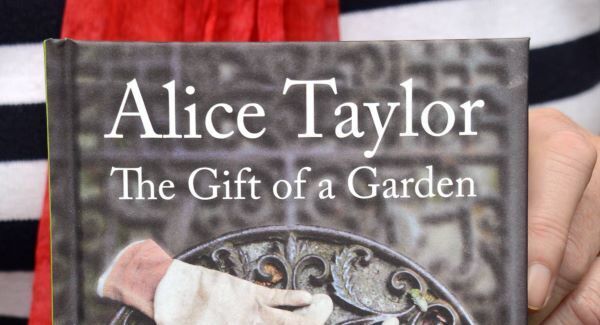
‘A garden is a thing of beauty and a job forever’, writes Alice Taylor in a paraphrase of John Keats; her version indicates her lack of pretension as a gardener, so that she offers experience, rather than expertise, in her latest book.
The work ethic applies to small gardens, as it does to large ones; anyone who has ever planted a row of raspberry canes in the wrong place (and, to tell the truth, there are few right places for raspberry canes) and discovered the primeval forest, which arrives with spring and spreads its ebullient stems generously throughout the plot, can only smile grimly at the notion that the bench under the apple tree is intended for leisure moments.
To those whom an hour of idle quiet in a fragrant, flowering garden remains an aspiration rather than an achievement, Taylor provides both encouragement and consolation. She inherited this garden from her Uncle Jacky, and it was already established when she began to work in it — her personality, like her choices, over-lies his without hiding them.
Each, elegantly-designed chapter is an account of her stewardship, recording her approach to renewing an old border, opening a new site, or reviving failing growth or reluctant introductions.
As her many readers appreciate, Taylor writes as she thinks and feels, and sometimes what is obviously a winning formula can become winsome.
A little too much reverence, perhaps: a rose blossoms, at last, and ‘it is a beautiful, transient ballet, and, for a brief moment, you are the dancer and the rose lifts you into a spiral of enchantment.’ Some readers may pause to look again at the unenchanted bench under the trees, but they should persist, because this tendency to over-work the charm is also transient, as Taylor’s saving literary grace is her humorous self-deprecation.
The outstanding element in this book is that Taylor doesn’t just invite you into her garden, she invites you warmly into her life.
Although normally a well-organised manager (she had to be, given her life as wife, mother, shopkeeper and author), she admits to being messy and random in the garden and while planning ahead, as gardeners must do, she enjoys a particular freedom there: ‘Most mornings, I meander, sometimes in my nightdress, out into the backyard and up into the garden…’ Sometimes, she is accompanied by her two dogs, whose arrival is recorded with witty affection, just as the advent of St Joseph the Worker brings him to ‘the right place’.
Illuminated by the glowing photographs of Emma Byrne, enriched by such stories as the tree-planting meitheal, the gathering of manure and the history of the garden shed, The Gift of a Garden is itself a gift.














