John Minihan capturing photography's magic moments
Next year photography will be 175 years old. Louis Daguerre is credited with the birth of photography. In Paris in 1839 he exclaimed: “I have arrested the light.” The resulting image, called a Daguerreotype, was both positive and negative, depending on the lighting and angle in which it was viewed.
Every Daguerreotype was unique and the advent of the Kodak camera in 1888 made photography accessible to amateurs as well as professionals. Artists not immune to its allure began experimenting with the camera as a means of observing the world. A new interchange between art and photography began to develop.
In the late 1960s artists like Warhol, Hockney and Francis Bacon used photography. Certain photographs have been steadily admired and collected and eventually written into the history of art. Warhol was particularly interested in the aura of fame and the media exploitation that transformed people like James Dean, Marilyn Monroe and Elvis Presley into cultural icons.
I have had a successful love affair with the camera for more than 50 years; you could say it was life through a lens. I have always considered photography to be a legitimate form of creative expression, rather than an ingenious curiosity. I remember being taken to mass in Athy in Co Kildare in the early 1950s — I could only have been aged five or six years old — looking at the open prayer book, with In Memoriam cards with a thumb-sized, black and white, muzzy photograph of a man.
That image has never left me. Sometimes I think the only memories I have are those that I have created around my photographs. The digital revolution has brought a storm of technological innovation that has blown away film, chemicals, and darkrooms, replacing them with computers. The speed and flexibility of the digital process makes them ideal for many applications in print journalism, advertising, and you only have to watch Hollywood movies where the most fantastic special effects seem routine.
What do we look for in a photographer? Curiosity, wit, humility, detachment, an imaginative quality to offset the machine itself.
Two of my favourite photographers, Bill Brandt and André Kertész probably best known for his portraits of writers and artists, and some of the best portraits of Dylan Thomas. His landscapes are lesser known romantic and melancholy images of the Yorkshire moors.
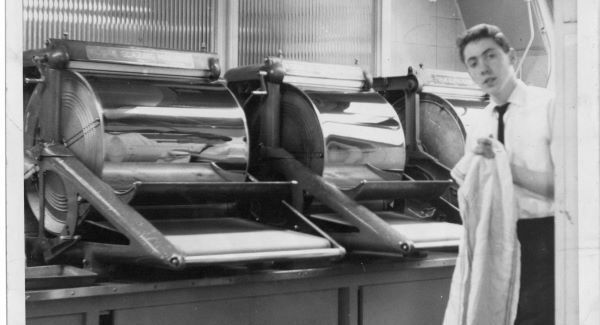
As an apprentice photographic printer in the Daily Mail darkroom in 1962, I was busy developing film and printing my own pictures. The ’60s in London was a decade of contrasts, on the one hand Dior fashion models were still strutting the catwalk, while on the other Twiggy and Jean Shrimpton opened up a whole new era. Fashion photographers like David Bailey, who took vogue away from the stylised way of shooting fashion. Mythologised along with his models, the photographer becomes a cultural hero. It all seems curiously unreal yet I was so much a part of it all, photographing writers, actors, musicians, artists, royalty.
My desire was to work for Life Magazine. It was the beginning of photography’s most creative periods. Reading about Brandt and Kertész I rediscovered the pleasures of walking the streets, looking not for the stereotypical image, but shadows cast by a chair, old advertisements stencilled on a wall. In my lunch hours I would go to St Paul’s Cathedral with my camera to search out the curious moments that makes a good picture.
Brandt and Kertész made me realise that quick reflexes and patience were necessary to record what otherwise might have gone unnoticed. Brandt and Kertész were both in Paris around 1928, but they never met. Brandt worked for a while with Man Ray. Kertész photographed many of the writers and artists in Montparnasse. Photographers of their generation refined the way we looked at photographs. The artistry with which they could transform a seemingly mundane assignment into a work of art was inspirational.















