A wave of enthusiasm for water transport
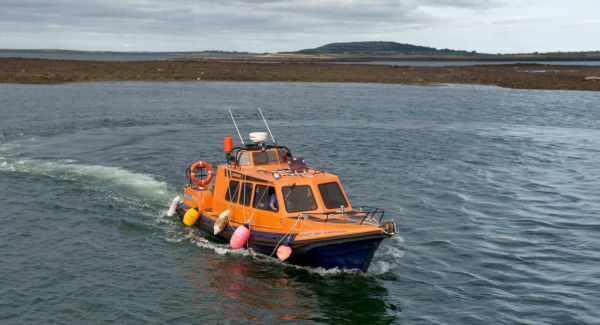
IF throwing a stone in water sends out ripples, then a powerful RIB 12-passenger ferry can send out strong waves and positive vibes which may yet wash up on fertile shores for waterside work commuters.

A wave of enthusiasm for water transport

A two-week pilot test of a fast commuter ferry ends today in Galway Bay. It has linked Ballyvaughan in North Clare with Galway city, cutting the usual one-hour commute for Clare residents to just half that, 30 buzzing boat-borne minutes — give or take a few minutes either way for head or tail winds.

According to Ballyvaughan Bay Hop organiser Gwen Ryan, who lives in Clare and works in Galway, the twice-a-day service which they just trialled after several years of plans and dreams “got a 99.9% positive reaction” — and they just missed the 100% rating as one passenger, terrified of the sea, just isn’t going to try it again.

The RIB, with cabin, can carry 12 passengers and up to six bikes for onward journeys and is virtually usable in all conditions, making light work of the Galway Bay passage on a day when a ‘small craft warning’ was in operation. Previously used in Donegal servicing Arran Island, the €250,000 RIB was operated by Liam O’Brien of Doolin Ferries, and found business coming and going both ways, tourists to the Burren and commuters to the heart of Galway city.

Their fortnight test saw hundreds sample the service — three rapidly became regulars — and by this Monday the community initiative had its first weekly ticket sale. With strong seasonal tourism use it could be financially viable for private operators, says Ryan, who explains that they got ideas from similar services in operation in Scotland, while of course islands around Irish and British coastlands already have long-established car and passenger ferry links.

“On plan, we knew it could work, but we had to try it. It wasn’t full any day, but it was increasingly popular; we surveyed all those who used it, and the initial reaction was so positive. We’ll see where we go from here, and map it into plans for the future” says a delighted Ryan.

The idea, supported by LEADER funding, the EU’s TransTourism partnership and the Burren and Cliffs of Moher GeoPark, went like clockwork, and was a relatively low-cost experiment where the costings may now be better scrutinised by potential users, and by potential investors. Set-up/running costs will be considerable, diesel is dear and some subvention may be needed. Fares were set at €12 for a single, €20 for a return, €45 for a family and 10-trip tickets were €80, with tax-saver options open to commuters via Revenue initiatives.

Its operation will also be watched by those in other communities and settings such as Cork Harbour, where a Harbour Management Focus Group meets quarterly to foster new uses for the southern county’s incredible, and under-used natural resource.

Back five years ago, far more ambitious plans were floated in Cork for an up-to €30 million investment, including three €3m 35-metre long low-wash catamarans each capable of carrying 250 harbour passengers and servicing eight to 10 harbour locations. The fledgling company, Harbour Cat Ferries, aimed primarily to link Cobh and Cork city (where there’s already a rail alternative to car-borne commuting.) Also in the commuter belt as possible add-ons were places like Aghada, Monkstown, Crosshaven, Passage West, Blackrock etc — but clearly, no one ferry journey could cover all those bases in a realistic time frame. The estimated time for a Cobh-Cork run was put at 35 minutes.

Concerns were raised about parking at docking stations, effects of ferry wash on rowing club boats, and the current six-knot harbour speed limit was also a dampener. Planning permission was granted by Cork City and County Councils for the proposed stop-off points, upheld by Bord Pleanala, who said, however, that there was a case for a more co-ordinated harbour traffic/river use strategy.

However, despite the initial flood of support, the ebbed economic tide since 2008 has seen Harbour Cat Ferries plans drift off course, with the failure of the MV Julia ferry service to Wales also putting off potential investors. “We’ve not heard any update for quite some time,” admits Sara Mackeown of Port of Cork, who notes that a lot of work was done on feasibility studies, one part-funded by City Council and carried out by Ernst & Young, plus a master plan for the lower harbour/Cobh area, by architects/consultants Scott Tallon Walker. As Mackeown points out, though, Cork harbour is finally getting to grips with its potential, with cruise ship arrivals, kayak tours, sail schools, RIBs already doing harbour and dolphin tours, and marina berths (including Port of Cork’s own) all on the increase.

Meanwhile, a taste of what could be on Leeside is provided as the Cork Harbour Open Weekend gets in gear tomorrow and Sunday, with water-borne events up and down the waterways. It includes free hop-on, hop-off harbour tours tomorrow afternoon, on three RIBs, at Lower Aghada, Cobh, Crosshaven and Ringaskiddy. Time to dip that toe …

*See www.corkharbour.ie & www.ballyvaughanbayhop.com

x

More in this section

Cookie Policy Privacy Policy Brand Safety FAQ Help Contact Us Terms and Conditions

© Examiner Echo Group Limited













