Dogs for the disabled benefit confidence and independence
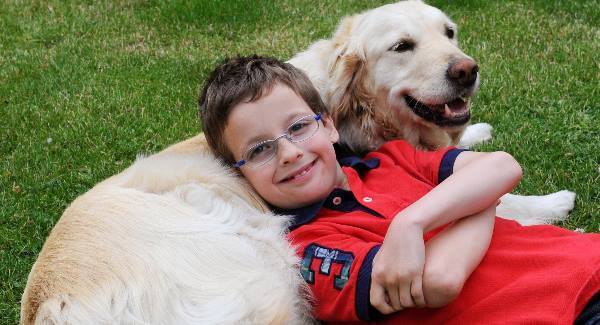
While there are guide dogs for the blind and dogs to help children with autism, Irish Dogs for the Disabled is the only charity supplying assistance dogs for physically disabled clients. About 85% of clients are children, mostly aged six to 12, with conditions including cerebral palsy, Duchenne muscular dystrophy and brain injury.
Irish Dogs for the Disabled has a three- to five-year waiting list. Dogs are “sensible, mature and ready for what will be thrown at them” when they’re about two years old, by which time they will have had six months training, says Jennifer Dowler, who co-founded the organisation.
“None of our dogs is perfect but they’re perfect for the client we give them to. Individual dogs have their strengths and weaknesses — we match them with client needs.”
First step in the process involves assessing the client to see how they’re dealing with their condition and how a dog may help them. Assistance dogs fall into three categories, says Dowler:
* Stability dogs are fitted with a harness to which a floating handle is attached. The dog assists the child to walk. It offers a stable base and forward motion — helping the child stand up, walk forward and negotiate obstacles like kerbs, corners and pavements. The child is allowed weight-bear on the dog only when getting up onto their feet or negotiating an object.
The dog’s other job is to motivate the child to walk. “From day one, the child is told if they want a dog they have to walk it everyday. These children have to do daily physiotherapy and it can become a chore — the dog distracts from the mundane nature of it.”
* Task work dogs work alongside a wheelchair. They’re trained to retrieve out-of-reach objects, turn on/off lights, open doors, assist with dressing, send for help or alert alarm.
A stability dog and task work dog could come from the same litter but they have different personalities. The slightly more active, adventurous task work dog does everything because he sees it as play. The stability dog is “more plodding and really isn’t bothered about charging after a ball”, says Dowler, adding that the charity isn’t strict with the puppies — “we look at the dog’s natural strengths and work with these”.
* Companion dogs are for clients too profoundly disabled to benefit from a working assistance dog.
“We have lovely dogs that aren’t good enough to be assistance dogs. We place these with children who have profound disabilities. One dog encouraged a child to sleep, calming her with his presence.”
Because the dogs have been bred to be around people with disabilities, they’re comfortable around a child in a wheelchair. “Parents know their child will be safe with the dog, even if the child screams, grabs or kicks.”
Irish Dogs for the Disabled predominantly uses golden retrievers because they’re more compatible with children, being predictable and easygoing.
“Labradors are more work-oriented and generally more active. Poodle crosses are good at task work and tend to be very bright — we generally place them with adults.”
When assessing clients, unrealistic expectations need to be addressed. “Some people think the dog’s sheer presence will transform lives, that the dog can almost do the shopping or guide a child through complex traffic. No. The client has to work the dog to help them. The dog has to be worked to retain its skill-set.”
Benefits are multiple. “Much of the time, these children have everything done for them. The dog gives them independence — they might go out on the green or into the next room on their own with the dog. The dog opens lines of communication. Often, when Irish people see someone with a disability, they’re afraid to say anything so they say nothing. But because the dog is there, they see the dog before they see the chair.”
* Irish Dogs for the Disabled is comprised mainly of volunteers and receives no government funding. Visit www.dogsfordisabled.ie; phone 021 438 3333.
CONNECT WITH US TODAY



Be the first to know the latest news and updates

















