Sharon Stone on being more than a pretty face
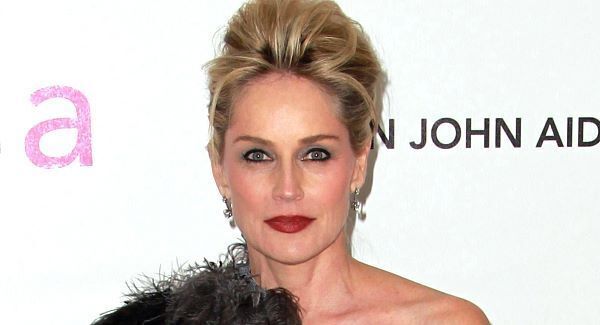
SHARON STONE talks about her new film Lovelace, the look of her character, doing a Playboy shoot to change her bookworm image to be considered sexy, obeying your husband, and the sexual revolution in US cinema.

Sharon Stone on being more than a pretty face

Q: With so much buzz over the years with Linda Lovelace and Deep Throat, and the zeitgeist of the political and pop culture of the world, what is the mystique of these characters that led you to this project?

I grew up in the middle of nowhere in Pennsylvania in the farm countries, so I didn’t really have any big idea of who she was. Of course, I’d heard her name, I heard a few references and so forth, but when I read the script, a couple of things happened. One, I knew of these directors, because of my involvement as an AIDS worker, and there are beautiful films about the making of the American Quilt, and the Harvey Milk story, were just so special. And that’s a kind of special integrity to me. And then I read the script. The script is so good and it stands on its own as a very good script. Then this part, I had been offered to play mothers before, but I didn’t want to just take a stunt mum, ‘Oh, there’s Sharon playing a mum; great stunt casting.’ I wanted to play a mother with some meaning and for me, this cycle of dysfunction in a family is meaningful and it’s intriguing to look at because, metaphorically and cinematically, this gives it quite a powerful punch to see it play out in this way. To see that this mother, though she can look villainous, she was doing the best that she could with what she had and what she knew and coming from a dysfunction in her own past, she made mistakes, but she was still that woman that got dinner on the table every night and there was still family meals, and she was still trying and still loving her husband and still working hard. And so even though she failed, she still succeeded. She was still loving her daughter and she still was growing and learning and realising as this was happening, and as her daughter was standing up for herself, she was growing, too, in that movement of women’s rights. The things today we are still fighting and striving to maintain, and it’s funny that this is much later, but we are still struggling to keep those rights and so I felt that though it was a story in the 70s, it was still so relevant today. So there are many aspects of the story, these great actors such as Peter Sarsgaard and I thought there were just so many elements about this particular project that made it really wonderful and worthwhile.

Q: You got your start in the late 80s, and obviously you were talking the porn industry VS mainstream Hollywood, but what was your early grasp of Hollywood? Did you have any challenges yourself in terms of dealing with it?

Yeah, because it was still very misogynistic. I think it wasn’t until the Anita Hill period, when there were much more stringent behavioural boundaries in any workplace, and it wasn’t just Hollywood. When I was a kid, waitressing and putting myself through school and supporting myself, there weren’t rules at the job place. I mean, your boss could still put his hand up your skirt, and you were really fighting to maintain your dignity and get through your day at work and most of you grew up in my generation and so you know very well what it was like until women were able to get some actual sort of legal boundaries to protect ourselves in the job place. So it wasn’t just here, it wasn’t just Hollywood, it was everywhere. You could go to work as a waitress or a secretary, or anything, and have to fight your way through your day.

Q: So you didn’t see much difference being an actress starting out?

I don’t think it was any different whether you were an actress or working at McDonald’s, both of which I did.

Q: So often we speak with European actors and filmmakers and anything having to do with nudity and sexuality on screen, it’s not really much of a story for them because they are so comfortable with it, but recently with this film, and The To Do List, about a young woman taking control of her sexual experience, and Lindsay Lohan in The Canyons, do you feel there’s any sexual revolution happening right now in American cinema?

I think Peter Sarsgaard said something so wonderful the other day, he said, ‘When I am in bed with someone and I get up to go to the bathroom, I don’t take the sheet with me.’ And I feel that it’s so disappointing in films, when you see the sheet toupee taped to someone’s chest. It takes you out of the scene and it doesn’t protect you from something within the scene, and I remember my father asking me, when we did Basic Instinct, ‘Do you really have to be naked all the time?’ And I am like, ‘Yeah. I am playing a sociopathic, sexual serial killer.’ And he goes, ‘Yeah, that’s true.’ And he’s like, ‘Well, be naked.’ And when it has common sense, it doesn’t make sense to do something else; it really is just the costume of your character. And so if it is the costume of your character, what else are you going to do? If you are inauthentically naked then it’s distracting to the audience and that’s where I think the judgement comes in with what you should do.

Q: What about the concept of obeying your husband?

Well first of all, I would like to acknowledge that, culturally, these things shift. And we as a culture had had this shift through this revolution, and a lot of people have taken this out of the wedding vows, to love, honour and obey. So, I think that many people find that this construct of obeying their wedding partner is something that they choose to remove from the wedding vow. But in that period, it was still in the wedding vow principally.

Q: But do you say to yourself, I’m really glad that underneath this I know I’m Sharon Stone?

Well, in the beginning of my career, I couldn’t get parts because people didn’t think I was sexy or pretty, and Chuck, who has been my manager for 30 years, he used to call me up and say, ‘You can’t get that movie because they don’t think that you are hot.’ And I am such a bookworm and I am always at home and shy and in my library, and it was like, ‘Oh God, what am I going to do?’ Because I was always with big black clothes and my glasses and running around with my head in a book.

And my friend, Marilyn Verbowski, was the editor of Playboy and she was like, you should do a Playboy spread and I was like, me? It seems so farfetched, and she said, ‘If you tell people you are sexy, they will think you are sexy. Use your brain.’ And so we decided I would do this Playboy shoot. . And so we did this thing and then people decided, ‘Oh, she’s sexy.’ And then I got Basic Instinct, which was for me this tremendous stretch to turn myself into this super beautiful, sexy character, and then I went to see the movie and I was like, ‘Oh my God, look at me. I look great!’ And it was awesome and my friends were like, ‘You look like that. And I was like, I don’t, but I could. And then I figured out how to make myself look like that.

Then I couldn’t get out of it and I got endlessly cast in the sexy parts and that was fantastic because who doesn’t want to be gorgeous and hot and sexy? And then I couldn’t get any other kind of parts, and so it’s taken until now, where I start getting these other kinds of parts which is really fun, but I mean really, the joke’s on me. I couldn’t get any sexy parts to begin with which is the funniest thing in the world. And then people thought I was a sex symbol, which to me is just the most hilarious thing of all time, because you should see me in the morning, it’s really not that frigging hot honestly.

So, I could live in my flannel pyjamas forever. My father always used to say, ‘If you don’t get out of that flannel nightgown, nobody is ever going to marry you.’ And obviously, for me, not so much on the marriage front. For me, the investment in the character is the thing.

* © IFA-Amsterdam, 2013

x

More in this section

Cookie Policy Privacy Policy Brand Safety FAQ Help Contact Us Terms and Conditions

© Examiner Echo Group Limited













