Giving parents of autistic kids some room to breathe
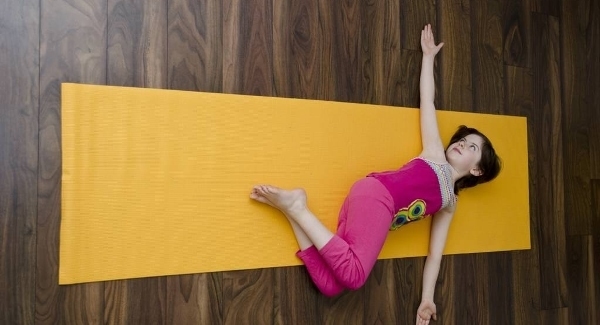
Sarah was first diagnosed with autism at two years of age, and according to Kathleen, in recent years, her vocabulary had almost disappeared. Then at the beginning of this year she began attending the Elbowroom, a yoga studio, which is offering a range of services for children with disabilities, merging yoga and occupational and speech and language therapy. It seems to be getting results. Kathleen certainly thinks so.
“She went from being a pretty quiet child, who doesn’t have much language, and now she is babbling, like when she was younger when she was a baby,” Kathleen says of Sarah’s newfound love of vocalising her world.
“She is at least trying language whereas before she seemed put off.”
The finest example was when she and dad Derek were sharing the trampoline in the family’s back garden in Cabra, Dublin. “She told him to ‘go out’ — she never said that before.”
The Elbowroom, in Stoneybatter, Dublin, is now offering the kind of service many parents have been desperately seeking, and in doing so is easing the burden on the HSE. Opened by Lisa Wilkinson in 2003, the Elbowroom has moved beyond simply catering for young professionals seeking to tone their core muscles.
Wilkinson and Maire Giblin, a senior occupational therapist specialising in paediatrics, hit on the idea of providing services for children with autism, dyspraxia and other conditions early last year, using skills they had learned from a variety of courses.
“We came up with the idea of complete set of services under one roof,” says Wilkinson. “We would be the first centre in Dublin offering this kind of approach, where you have speech and language and occupational therapy, bringing these together with yoga. We run sibling services as well and look after the parents.”
According to Giblin, who trained as a yoga therapist in London, yoga is beneficial in itself and is also easily integrated with occupational and speech and language therapy in a one-on-one session that appears to be a winner with clients. She refers to an article in the International Journal of Yoga Therapy from 2010 as an example of growing claims that yoga can make a positive difference in children with conditions such as autism.
In any given week around 25 children with autism, Down’s syndrome or dyspraxia pass through the doors, and up to 100 families are utilising the services.
Giblin speaks about turning “little worriers into little warriors” by using yoga as a means to tackling triggers of anxiety.
“One of the things that we would work on is stress responses and triggers when they are going to have a meltdown — particular breathing techniques taken from tai chi that we would teach them, explaining the times when it is appropriate to use it,” she says.
“We use language that is really appealing to kids as well, so they are more likely to use the techniques.
Lisa Wilkinson explains that yoga also works in a way that other types of exercise, such as running, do not. “When you are running you are getting feedback from the legs but with yoga you are triggering reception centres all across the body, which kids with self-regulation issues really need.
“For those with high energy levels holding a posture has a calming effect. It can work the other way, you can have kids who are really lethargic or withdrawn and you can use yoga as a fun game to draw them out.”
In many cases the children have already had a hit-and-miss experience with occupational or speech and language therapy, mainly because of the sometimes fragmented nature of the State-provided services. The integrated approach also places an emphasis on involving other family members, ideally so parents can then replicate the experience at home.
According to Kathleen, “We do some of the yoga [at home] and she is very good at her downward facing dog.”
It costs €400 for an assessment and the intervention therapy is €85 per hour — a price that compares favourably to occupational and speech and language therapy rates elsewhere. Wilkinson says the Elbowroom deals with families “on a case-by-case basis”, working out a way of limiting any financial strain.
The Elbowroom also runs a teaching yoga for children course and Wilkinson says half of the participants on a recent course were primary school teachers.
“We get a number of referrals from schools, principals and teachers ... but I do feel the Department of Education have been very short-sighted in their push for the [current] curriculum, unlike Britain and Sweden where movement breaks and relaxation breaks are part of a child’s day.”
Kathleen, originally from Cambridge in Massachusetts, says her daughter Sarah has turned a corner. “I didn’t know if it would make a difference. The fact that they were mixing it up and making it fun for her and the fact that I could watch and see for myself what worked and use it at home, I didn’t think it was going to make a big difference but I hoped it would.
“I am most definitely a yoga convert — I got into it a year ago and it’s changed my life. I am just calmer — I want to say more focused, maybe I’m not — but I just feel better.”
She also believes it has been beneficial for her as a parent looking after an autistic child, constantly striving to do their best.
“It is very draining. You never feel like you’re doing enough, but with the yoga and finding the programme, I feel like I’m doing as much as I can.”
* www.the-elbowroom.com















