Life going swimmingly for Levy since unexpected success of her fifth novel
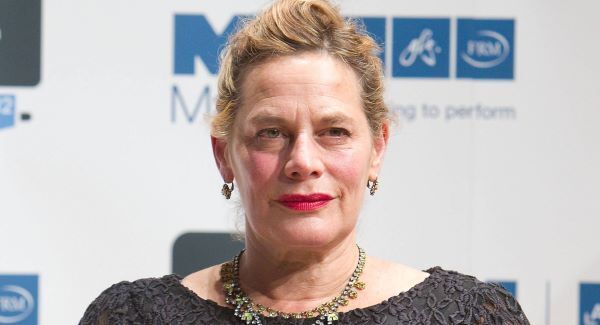
Rejected by mainstream publishers for being “too literary”, the novel was chosen by startup, And Other Stories, to launch their list, and was short-listed for several prizes in the UK, including the Man Booker.
A dark, elliptical story of obsession and madness, set in the sunny south of France, amid wealthy English holidaymakers, Swimming Home got rave reviews in the US, and has been translated into several languages.
Levy, who trained in writing for theatre at Dartington College of Arts, was a playwright (her work has been staged by the Royal Shakespeare Company), novelist, book and theatre reviewer and lecturer. Her work has been praised for its “intellectual rigour, poetic fantasy and visual imagination”. But the Booker Prize nomination for her fifth novel brought her to the wider public.
Her recent book, Black Vodka, was shortlisted for the €25,000 Frank O’Connor International Short Story Award for the best collection of 2013. Levy will be at the West Cork Literary Festival on Jul 11, and the Cork International Short Story Festival (Sept 18-22).
Her stories are sharp-edged, fast-moving and original. Levy cites as influences writers as diverse as JG Ballard, Marguerite Duras, Edmund White and Chinua Achebe.
The stories feature people adrift in a Europe of airport lounges, anonymous hotels and interchangeable city centres. “One screen says ‘departures’ and another screen says ‘arrivals’ and for a moment you don’t know which one you are,” says one of her characters.
Advertising and consumerism are skewered in the title story, in which the agency’s “poet-cripple” — a man with a small hump — comes up with a campaign for Black Vodka inspired by political and philosophical theory that pitches vodka-drinking as “the ultimate defiance of the individual against the state … Black Vodka would hitch a nostalgic ride on all of this and be sold as the edgy choice for the cultured and discerning.”
The story ‘Stardust Nation’ combines the subliminal power of advertising with insanity, as mild-mannered accountant, Nick, takes empathy and transference to new extremes when he starts to live with the childhood memories of his wealthier, more troubled boss, Tom.
Several stories feature casual relationships in which “sharing breakfast feels more intimate than making love to a stranger”, as Pavel, born in the former Czechoslovakia, now based in London with a Jamaican girlfriend, Ella, observes on waking up in Dublin in bed with a beautiful woman from Cork: “Another airport. Another country. Another hotel.”
Levy also has a lyrical, sensual side, and her writing is often great fun.
Her imagery is strong, as is her delight in the sheer power of words: “Kissing you is like new paint and old pain. It is like coffee and car alarms and a dim stairway and a stain and it’s like smoke.”
It is ironic and appropriate, given the peripatetic subject matter of her stories, that when I interview Levy, we are both on the move within Europe, and the most practical way to connect is by email.
I asked Levy how she felt when her excellent novel failed to find a publisher. She says: “I reckoned I was on track to becoming the kind of tragic female writer I’d read about in Virginia Woolf’s 1929 essay, ‘A Room Of One’s Own’ … perhaps, if I was lucky, my books might be rediscovered after I’d curled up my toes, and at least earn my children some royalties. Then, I began to ask myself what else was not being published? It occurred to me that there might be books I would love to read that were also not seeing the light of day.”
The London publisher, Stefan Tobler, and his friends, were asking themselves the same question. They launched a new enterprise, And Other Stories, funded by readers’ subscriptions, to publish books selected by subscribers, thus challenging the power of large commercial enterprises to determine which books get published (www.andotherstories.org). Swimming Home was one of the first books published by AOS, and helped to ensure its success. Levy says: “We met at the right time, because this was a very cynical, toxic moment in British publishing.”
BBC Radio recently broadcast two plays by Levy based on Sigmund Freud’s case histories. Her understanding of psychoanalysis, and of the visual arts, is as important to her work as the heightened political awareness that is her South African legacy.
Her memoir, Things I Don’t Want to Know, tackles head-on the challenges of being a female intellectual. Born in South Africa in 1959, and the mother of two teenage daughters, Levy’s memoir focuses on her writing life, and reveals the importance of her South African childhood, giving a clear-eyed, child’s viewpoint of apartheid.
Her father, Norman Levy, an ANC activist, was a political prisoner for five years, while her mother worked to support herself and three children.
When Levy was nine, the family moved to London, where her schoolmates found her South African accent incomprehensible.
She befriended another girl with a strange accent, Mary 2 (there was another Mary in the class) from Cork: “The teachers and kids couldn’t understand a word we were saying, but the odd thing was we understood each other perfectly, so I translated for Mary 2, and she translated for me.
“We never had time to become big buddies, because her family left for America, but when I’m in Cork I’ll have to raise a glass to Mary 2 for not making me feel like a total freak at a time when any kind of difference was a big deal.”
Things I Don’t Want to Know is a compellingly readable and often very funny account of the additional problems that women who write need to overcome.
“To become a writer, I had to learn to interrupt, to speak up, to speak a little louder, and then louder, and then to just speak in my own voice, which is not loud at all.”
While billed as a response to George Orwell’s essay ‘Why I Write’, it is as much an up-to-date version of ‘A Room of One’s Own’, and, like the Virginia Woolf essay, I suspect it will be quoted for many years to come.
Buy this book

CONNECT WITH US TODAY



Be the first to know the latest news and updates

















