Tracton’s Irish hero
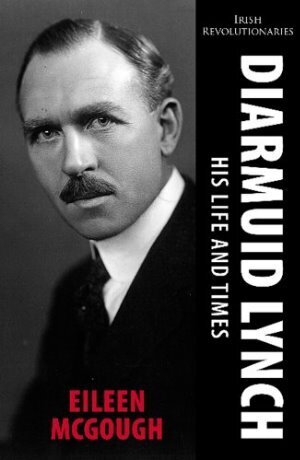
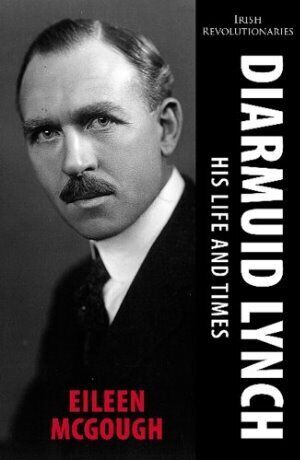
During that time he took out American citizenship. He was very active in Irish-American circles and formed lifelong friendship with John Devoy and Daniel Cohalan of Clan na Gael, before returning to Ireland in 1907. Back home he became involved in both the Irish Republican Brotherhood (IRB) and the Gaelic League.
In 1915 he became Secretary of the IRB, following the arrest of Seán Mac Diarmada. Lynch fought in the General Post Office during the Easter Rebellion and was the last man to evacuate the building. As the IRB was responsible for the Rising, Lynch was unquestionably the most senior figure to survive the executions. He was sentenced to death, but his life was spared because of his American citizenship.
In this valuable contribution to Irish historiography Eileen McGough sets out to identify his place in history and explain why he has essentially been forgotten. In his own writings about the period, Lynch’s aim was to write truthfully and accurately, not to entertain. True to that spirit, the author just tells Lynch’s story, allowing readers to make up their own minds.
Between the lines there is the inescapable conclusion that Lynch was forgotten because his story tended to outshine Éamon de Valera, the man who was often credited with being the last commandant to surrender and the only commandant to survive the executions. In fact, he was neither. Tomás Ashe also survived and he was the last commandant to surrender.
Lynch had worked closely with Ashe prior to the Rebellion, and he was one of those responsible for selecting young Michael Collins to deliver to oration at Ashe’s funeral in 1917. The following year when the leaders were rounded up in the wake of the supposed German Plot, Lynch was deported to the United States, because of his American citizenship.
He became one of the main organisers of the Friends of Irish Freedom (FOIF), which was the most powerful Irish organisation in the United States. The author concludes that Lynch was “probably the most influential member of the FOIF”.
It was the pressure from America that the British feared most, not Irish rebels, but de Valera undermined FOIF in 1920. Lynch, who was elected to the first Dáil, resigned his seat in an effort to highlight de Valera’s disastrous policies. Therein may be the explanation for his subsequent obscurity.
There is no escaping the conclusion that Diarmuid Lynch’s valuable historical contributions became obscured in a long vindictive shadow.














