Rickshaw drivers ride a rocky road
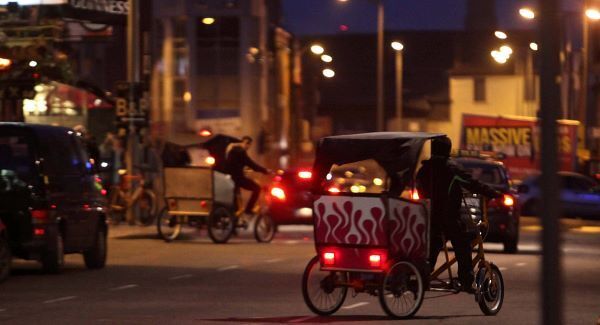
THEY’RE unregulated and they’re taking our business, shout the taxi-drivers. They’re dangerous and a menace on the road, say the city councillors.
Joe Duffy’s Liveline programme on RTÉ 1 lit up recently as a woman spoke about her daughter’s rickshaw accident abroad, and Dublin Wives star Danielle Meagher re-lived a rickshaw accident last year from which she emerged with a broken jaw, sprained hand, concussion, vertigo and tinnitus, and with her front teeth pushed through her lip.
On the lucrative Bank Holiday weekend, Galway sizzles as scores of rickshaw drivers ply their trade on the cobble-stoned Quay St, aware that very soon they will be legally banned from city streets.
In Cork, there are no such regulations. As twilight falls, it’s business as usual for Afghan rickshaw drivers, Jamshir, 28, Ahmad, 19, and Mayar, 20, as they wait on the pavement for the sunny evening drinkers to finish their cocktails. High-heeled ladies linking their partners whoop as they spot the drivers, sinking gratefully into the rickshaws, and leave the men to walk the few hundred metres to the nightclub.
“Some people are very drunk and some people are normal and nice. When you’re drunk, you’re not normal,” says Jay, 23, who moved to Ireland from Iran over three years ago. Jay pays €70 to rent his rickshaw per week, and says he works four nights, earning about €120-€130 per week.
“I’m very tired after work and it’s hard to make money. We just make tips and some people don’t pay,” he says.
Some customers offer 20c for a journey, some give tips of up to €10, while others jump out at their destination and run away without paying.
Previously staying in a Dublin refugee centre, Jay now lives in the Kinsale Road accommodation centre, sharing a room with two other men.
“They moved me from Dublin and when you live in a refugee centre, you have to go where they send you. It’s hard for me to stay in the hostel. There are lots of people around from lots of countries. There’s nothing to do there,” he says.
In his spare time, Jay studies English at the charity-run Welcome English Language Centre, and plays football on Cork’s northside, in a mixed Afghan-Iranian team. He hopes to study accountancy or nursing in the future.
“I can’t go to college now because when you live in a hostel, you can’t go as a refugee. If you want to do something, you must do it yourself. I hope I can do it,” says Jay, who hopes to return to Iran “when it’s safe to go back”.
Cork taxi driver Liam Garde hopes that Cork will follow Galway’s ban on rickshaws. “They’re a danger to pedestrians and motorists. They cycle down one-way streets and run through red lights. They’re a law unto themselves and the guards and social services are turning a blind eye,” says Garde.
“It’s a health and safety issue at the end of the day,” agrees Cork City Councillor, Kenneth O’Flynn, who has called for a blanket ban on the use of unregulated rickshaws in the city.
“It looks nice and cosmopolitan to have rickshaws in the city but until we can regulate it and get it right, they shouldn’t be on the street at all. Rickshaws are covered under pedestrian law. This means, if you’re in a rickshaw that’s hit by a car, you have to sue the driver, and then the driver will sue the car owner. There are rickshaws racing one another up and down the street and it’s all fun and games until somebody gets hurt,” he says.
But rickshaws are big business. This week, a Derry entrepreneur spent €15,000 to begin operating a rickshaw business in the city, while there are plenty of motorised rickshaws advertised for sale. “Electric Rickshaws for sale: Fantastic money earner as taxi & advertising, no licence, permits or insurance required ... €2,000 each.”
Cork taxi driver John Burke decided if he couldn’t beat the rickshaw drivers, he would join them. Having failed to persuade city councillors to ban rickshaws, he promptly imported a number of the vehicles from China.
“There’s lots of money to be made on them and they’re the way of the future,” says Burke, who decorated a Christmas rickshaw last year and says he made over €600 ferrying children through a Cork street. More recently, he spent two hours driving a rickshaw in the city centre, earning €60 in cash.
“I want to professionalise it, and light them up, have music playing and put a logo on them,” says Burke who has already been approached by a phone company seeking to advertise on the sides of the cabs.
At 3am in Cork, the lines of taxis and rickshaws jostling for business outside pubs and nightclubs have disappeared. Jay returns his rented rickshaw to the base, and cycles back through the litter-filled city and up the now-quiet link road to the hostel.
“If I have a job, I can’t say it’s boring. It’s better than doing nothing in a hostel, and I meet many friends,” he says.

CONNECT WITH US TODAY



Be the first to know the latest news and updates

















