Back when gardening was a growing profession
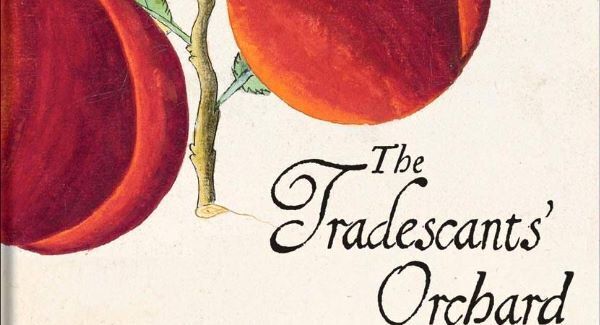
The aple, the plumbe and the burtet Grape which wery scildum rip are among the happy contents of The Tradescants Orchard, just as they were the welcome components of the orchards at Hatfield House in Hertfordshire.
They were grown for Robert Cecil, 1st Earl of Salisbury, and son of that William Cecil, Lord Burghley, who was for many years the chief minister to Queen Elizabeth I. They are presented here in a collection of water-colour plates originally gathered under the title A Book of Fruit Trees with their Fruits.
Although he died before he could properly enjoy his newly-built house at the old palace of Hatfield, Robert Cecil may have had a chance, at least, to relish the plans for transforming his grounds. He ensured the renown of his gardens by engaging John Tradescant the Elder in January 1610. Tradescant was to become extraordinarily well-travelled for a man of his times: plant-hunting for a succession of wealthy and aristocratic patrons took him across Europe. He sometimes accompanied his employers on missions even further afield, to Russia, for example in 1618, and as a volunteer with the English fleet at Algiers, from which adventure he returned with, among other plants, the Argier Apricocke.
Those were transitional times, (from Elizabeth to James I, from James to Charles I) yet the well-educated Tradescant continued to attract the attention and friendship of ambitious proprietors, rising at last to become Keeper of His Majesty’s Gardens, Vines and Silkworms at the palace of Oatlands in Surrey. By this time he had also established his own nursery in London.
His son, another John, inherited not only the skills, reputation and commissions of the elder Tradescant but also the habit of travel, which included a research expedition to the colony of Virginia.
Although the narration and commentary serve as a necessary introduction to the ‘Orchard’ plates, the authors are both good story-tellers and efficient detectives. Their work covers history, botany, characters, garden husbandry, handwriting in the 17th century, horticultural fashions and the gardening legacy of the Tradescants.
There are no clues to the identity of the painter involved, except that while not very accomplished, he or she certainly had a sense of humour, enlivening many of the 66 pages by including snails, butterflies, caterpillars, spiders and frogs, with birds waiting to eat them.
Also sketched into this delightful book is the story of Elias Ashmole, friend of the younger Tradescant. Ashmole financed the inventory of Tradescant’s Ark which he finally inherited in debatable circumstances, but he also found, and bound, the folios now described as The Tradescants’ Orchard; it was transferred from Oxford’s Ashmolean Museum to the Bodleian in 1860. Ashmole himself may have added, on a few pages, a tiny astrological sign denoting the fruiting season; the Tradescants were content to note, for example, that the burtet grape is seldom ripe.
CONNECT WITH US TODAY



Be the first to know the latest news and updates

















