The Nazi and his assassins
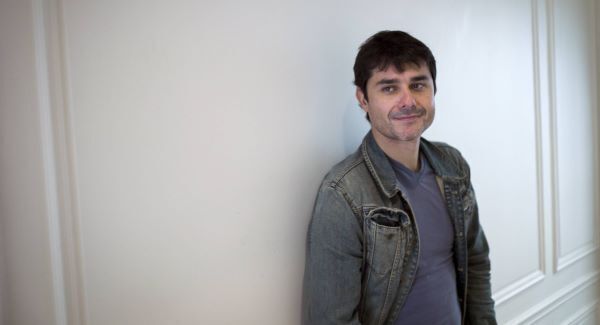
THE French writer Laurent Binet’s debut novel is about the assassination in Prague in May 1942 on Reinhard Heydrich, the Nazi feared “as the most dangerous man in the Third Reich”.
HHhH, which is an acronym for Himmler’s Him heisst Heydrich (“Himmler’s brain is called Heydrich”) dazzled the literary world on publication, first by scooping several awards in France, including the prestigious Prix Goncourt in 2010, and on translation into English, by the reviews of esteemed peers. “HHhH blew me away,” gushed Bret Easton Ellis. Martin Amis found it “gripping”.
Binet, who appears at the Cúirt International Festival of Literature next Thursday, was unfazed about the length of time it took to complete the novel, which he began researching in 1996.
“Some friends of mine, they made fun of me,” he says, “saying, ‘Everybody knows you will never finish that work’, but I wasn’t really scared. I don’t know why because I was going along my way slowly but surely. I was always excited because of new things. That happened through all the process.
“From time to time I felt: anyway that what I’m reading and learning is interesting. This was the first thing. Writing the book was the second point in a way. First I cared about myself and second about showing it to other people. I was reading so many books. Some of them were about the Second World War, but they were not really connected with that story. I read them because I liked them,” he says, laughing.
The plot to kill Heydrich, who was one of the chief architects of the Final Solution, is the stuff of a film studio’s dream. Operation Anthropoid began in England with the training of two resistance fighters — a Czech, Jan Kubiš, tall, easy-going, the explosives guy; and a Slovak, Jozef Gabík, small and energetic. They were parachuted into Nazi-occupied Czechoslovakia, where the build-up to their attack early one spring morning on the streets of Prague was helped by local resistance fighters, but hindered by a traitor, Karel Curda, and some misfortune.
Binet agonised over writing the kernel scene. “It was quite scary. The more I was waiting to write it down, the more pressure I put on myself. In so many chapters I had been announcing that scene that it put a lot of pressure on my shoulders. I delayed and delayed but once I got to Prague, it was OK. It was only a question of picking which café to write it. It took five days to write that scene.”
Heydrich was known as “the hangman of Prague” for good reason. Unlike many of his cohorts in the Nazi hierarchy, he had Aryan traits — tall and blond, with a kind of horsey face — and athleticism.
“Heydrich was a mixture of many things,” says Binet. “On the one hand, he was a man of action — driving fast cars and flying planes — but on the other hand, his biggest skill was bureaucracy.
“He was a very cruel Nazi monster, but in other ways he was quite a normal guy, with a family, who would play with his children. There is one chapter in the book in which he is just having dinner with his wife in a room and then in another chapter he is organising the Einsatzgruppen.”
The disturbing work of the Einsatzgruppen is the aspect that most surprised Binet from his research. The Nazis killed over one million people by machine gun in fields and forests before establishing their notorious concentration camp gas chambers. Mass machine-gunning tested the nerve of executioners and harmed troops’ morale. Himmler fainted while attending one of the executions.
Binet observes that the story of Heydrich’s assassination is more widely known in the Czech Republic and Slovakia today than 30 years ago because it was airbrushed by the old Eastern Bloc regime.
“The parachutists were not celebrated because they were not communists. Today, the story is alive. It’s quite polemical. Some people believe that because they killed one man, Heydrich, thousands and thousands of people died from reprisals, which is interesting. The question of reprisal is the eternal question of any resistance movement in any occupied country.”
*Laurent Binet will read at the Cúirt International Festival of Literature, 1pm, Thursday, Apr 25, Town Hall Theatre Studio, Galway. For more information, visit: www.cuirt.ie
.
CONNECT WITH US TODAY



Be the first to know the latest news and updates

















