Willow Coyote brings her native wisdom to Cork
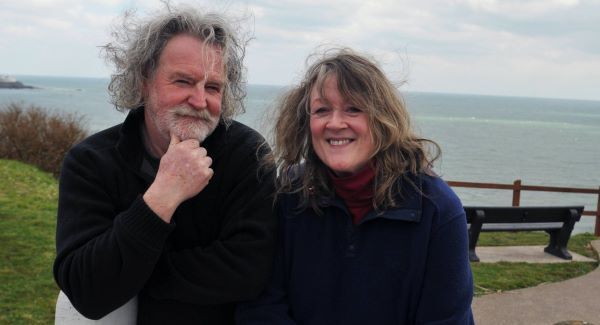
Willow Coyote was not her original name.

Willow Coyote brings her native wisdom to Cork

Raised in a rural Oregon neighbourhood, she led a conventional middleclass American life, until she met Cherokee native American Indian, Tony Talbert, and embarked on a journey that would take her so deep into native American culture that she would legally change her name to better reflect herself and her new-found culture.

Years later, a chance online meeting drew her to Ireland for love. She is now happily settled in Co Cork, and sharing her adopted Cherokee culture with Corkonians. “I was on the internet, looking for an Irish penpal. My mother had Irish roots, so I wanted to bring my grand-daughter here to give her a sense of her ancestry.”

Willow joined an online friendship service to make Irish contacts before her trip, which sparked a surprise whirlwind romance. “One of the emails I opened was from a Corkman named Noel. I was immediately struck by his gentleness, integrity, humour, and intellect. Six weeks later, he joined me in Seattle. We toured the States on a motorbike and it was clear we were compatible.

“Three months later, I visited him here in Cork. We realised that we were much happier when we were together so I accepted his invitation to move to Crosshaven in January, 2010 and we haven’t looked back since.”

Willow was open about her previous marriage to Cherokee poet, painter and sculptor Talbert. “He was in a wheelchair when I met him. He lost the use of his legs in an accident, but he had the most inspiring strength of character, and deep spirituality.”

“Experience reformed the romanticised view of Indians that I had, and revealed the harsh realities of their contemporary condition. I began volunteering and working with local communities to try to help readdress the imbalance in some small way and really dedicated my life to that from the early 90s.”

“We became involved with the American Indian Association of Portland and took The Portland Indian News, their two-page newsletter, to many more pages, and national readership. Tony was the editor, I was the associate editor. We met President Bill Clinton through our work on the paper, and we were the only Indian newspaper representing the Indian community at major conferences. Sadly, Tony died a few years later,” she says.

After her husband’s death, Willow focused all attention on her grandchildren, which ultimately led her to book the trip to Ireland.

Willow has now settled into Irish life. “I love my life here. Noel’s family has embraced me, I am so grateful for that. I’m also grateful to have met such warm, genuine people here. The pace of life is so brisk in America. I love Ireland’s civility and sense of antiquity,” she says.

Willow sees many comparisons between Indian and Irish experience. The mid-1800s saw an infamous period of US government forced tribal relocation. The “Trail of Tears,” displaced many indigenous nations across America. The Choctaw Indian people were among the displaced. When they heard about the Irish Famine, they gathered any money they could and sent it to Ireland for Famine relief.

“They knew personally about starvation and being displaced by an oppressing occupier in their homeland. They shared what they could with the Irish in empathy and in the triumph of the human spirit to survive and rebuild.

“Over the years, Irish people have travelled to America to walk the Trail of Tears in remembrance of the Choctaw’s generosity. I see the giving nature of Irish people in much the same way. You care for family members in need and you give through charitable organisations, despite what little you may have.”

“American Indian spirituality is based in reverence for the Earth, so it shares a common link with the spiritual practices of pre-Christian Ireland. Each culture was dependent on hunting, gathering and the cycle of the seasons for their survival, and each culture necessarily built up an awareness, reverence and celebration of that.”

Willow brings her Indian teachings with her to Crosshaven’s shores. “Western culture teaches us to process everything quickly and with our mouths moving. Traditional Indians consider, contemplate, deliberate and then, and only then, do they speak. Lessons in humility that I work on every day,” she says.

Noel Murphy, the man who brought her to Ireland, sits up in the armchair by the crackling fire:

“She still cannot understand how safe and relaxed it is here. How you can leave the door open or a car unlocked. There are times when I say ‘Listen!’ And she says ‘what?’ And I say, ‘nothing!’”

More in this section

Cookie Policy Privacy Policy Brand Safety FAQ Help Contact Us Terms and Conditions

© Examiner Echo Group Limited













