Out of Africa: a teacher’s tale of good versus evil
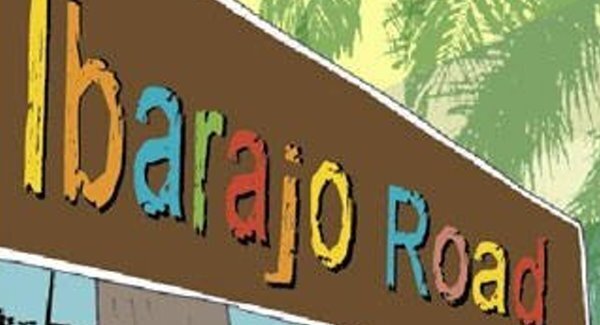
Allen now teaches in Singapore, but grew up in Nigeria, and he recalls that vigilantism was a part of life there at the time. “I remember seeing a man being savagely beaten by a large crowd. They had hung a sign around his neck saying he was an armed robber; I will always be glad I didn’t see how it ended.”
Allen agrees that there is a strong moral core at the heart of Ibarajo Road, which plays out as a battle between good and evil. “Working in an international school I see young people doing wonderful things to contribute to their own and others’ societies,” he says. “Of course, there are governments and individuals who do enormous harm and they are almost always driven by a want for power, money or what they believe to be divine command. But I have a strong faith in the human spirit, a belief that there is more good than evil in the world — or at least, that we have the capacity to make that true.”
In his novel, the character of Charlie undergoes the transition into adulthood and develops a strong sense of morality. Was Allen tempted to reward him rather than have him beset by tragedy?
“Tragedy is an integral part of Charlie’s journey,” he says. “But I do believe he gets his reward: self-awareness, happiness with Yejide and the people of Ilakaye. But the novel has proved controversial. A couple of publishers turned it down because of the ending, or wanted me to rewrite it, while others sang its praises. Certainly, I can’t imagine the story any other way.”
Allen agrees that the book is in some ways autobiographical. “It’s hard to write without something of yourself ending up in the story, but I wouldn’t like to guess which characteristics are mine. The story is inspired by my time in Africa and there are affectionate nods to people and places along the way. I wanted it to feel right, to seem authentic, but it’s not an autobiography. The plot is purely a product of my imagination.”
The society portrayed in Ibarajo Road is highly contradictory, volatile and often quite corrupt. Yet many of the characters retain a sense of hope for the future. Is this a reflection of Allen’s own attitude?
“Yes, working with young people has helped to reinforce that. There are so many people who want to see the world become a better place. Some people are often sceptical or worried about differences in culture, thinking we can’t get on, or that one race is superior to another, or that even suggesting there are differences is somehow derogatory. But we should embrace and celebrate these differences while recognising and sharing our common humanity.”
Allen is not sure if there was a cathartic element to writing the book. “But it was an emotional experience to revisit Africa through writing a novel. It’s a very special place to me, having spent most of my teenage years there, and I think it’s true what others have said, that it gets under your skin. I haven’t been back since I left in the late 1980s, but I would love to and am sure I will. Once you’ve been it’s impossible to forget.”
* Ibarajo Road by Harry Allen is published by Frances Lincoln Children’s Books.








