Be careful what "labels" you place on your child
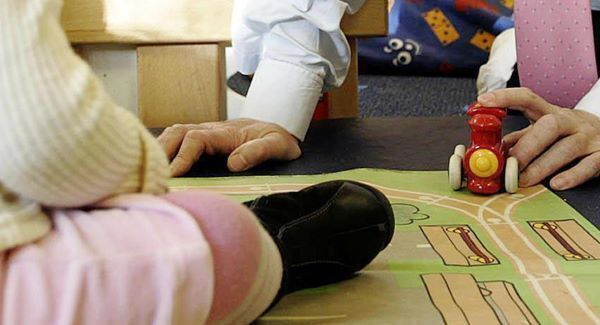
There’s nothing random about the labels we choose. We tend to hone in on the traits which most reflect our wishes or fears for them and label accordingly.
“Childhood labels form part of core beliefs, stick with us into adulthood and become part of our identity,” says psychologist and cognitive behavioural therapist, Dr Joanne Cooper.
“The most powerful labels come from home,” she adds. “We see this at family gatherings when adults fall back into their childhood roles of joker, peace-maker or whatever they think they’re expected to be.”
Clinical psychologist and psychotherapist, Elaine Fitzgerald, also cautions about attaching labels. “Labelling by siblings can have lifelong implications, with many growing up carrying the weight of negative labels such as ‘bossy’, ‘spoilt’ or ‘black-sheep’ from childhood,” she says.
As to how to know if you’re still carrying old negative labels, Dr Cooper says: “When we receive negative messages in adulthood which resonate with core beliefs that are linked to childhood labels, we feel our hearts sink to our boots.”
Few could deny knowing that feeling.
While you’d imagine that labels are harmful when negative and beneficial when positive, it’s not that simple. While the former diminish self-esteem, the latter can be equally confining, especially those which portray kids as the people we want them to be rather than the people they are.
“Negative labelling has a long-term impact on behaviour and on how we feel,” says Dr Cooper. “It’s common in counselling to find adults presenting with depression, only to discover that they have a pervasive anxious view of the world or of themselves because of labels applied to them as children.”
Positive labels, no matter how well meant, can also cause problems. “They’re best avoided as they put kids under undue pressure,” says Dr Cooper.
“That’s why when praising a child it’s better to say ‘You’re great at calculus’, than ‘You’re a mathematical genius’.”
Elaine Fitzgerald says: “Three-year-olds labelled ‘really clever’ believe they’re smarter than other kids and try to live up to a label which may not reflect who they are.
“While it’s right to praise kids for what they’re good at, praising them for being the kind of person a parent wants them to be encourages cunning.”
Studies appear to confirm that tagging kids ‘bright’ has many downsides.
Not only can it deter them from working hard, it also ill prepares them for academic failure, so much so that it makes them question their identity. It also encourages cheating at exams, as kids strive to deliver the results they believe are expected of them, and it can result in the avoidance of pursuits which might end in failure.
Interestingly, the research also shows that not only do kids tagged ‘hard- working’ respond better to academic failure than those tagged ‘bright’ but they also work harder next time around.
School-teachers play a role. One study, which later became known as the Pygmalion Effect, showed that the greater a teacher’s expectations the better a pupil performs. It also confirmed that pupils internalise positive labels.
Not all positive school labels are welcome, however. According to a poll carried out by American high-school memorabilia site memorylane.com, almost one-third of those labelled ‘Most Likely to Succeed’ regard it as ‘a curse’.
As to how to break a labelling habit, Dr Cooper says that when correcting a young child, parents can begin by focusing on the desired behaviour and avoiding negative labels. “Do this by explaining why it’s kind to share, to a child who doesn’t want to, and avoid calling him ‘naughty’ or ‘bad’ in the process,” she says.
“Ensure that labels never stick,” advises Fitzgerald. “Remember that children are ever-changing, unique individuals, and that when a heavy child is labelled ‘fat’, the fact that she may also be kind, generous and witty is ignored.”
While parents are working on ditching the labels, we can take solace from the fact that according to the experts, occasional labelling ‘isn’t too bad’.
“It’s the drip-drip effect that’s more harmful,” says Dr Cooper. “The more regularly a child is labelled, the more he internalises the message.”
*Dr Joanne Cooper: rewindcounselling.ie; Elaine Fitzgerald: elainefitzgerald.ie
CONNECT WITH US TODAY



Be the first to know the latest news and updates









