Try, try again pays off for Lynne and Irish women's rugby
We played like a family, everyone put their bodies and hearts on the line.”
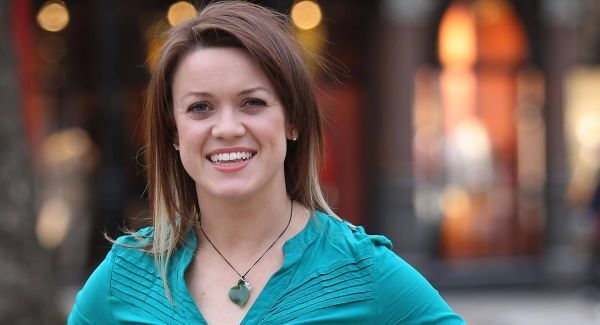
Aged 31, the 5’3” Cantwell, who weighs ten stone, is Ireland’s most capped player. Vice-captain for the past four years, she earned her 78th cap against Italy on Sunday. For the past decade, Cantwell has endured the defeats of a team finding its feet.
Year after year, the squad learned tough lessons. Players left, pursued other interests, got married, had children. Cantwell stayed. Perseverance pays off.
“The friends you make, the bonds are incredibly strong, because you go through so much, such highs and lows, in such a short and intense atmosphere. It takes years to experience that kind of friendship. It’s really powerful and special,” she says. The intensity is reflected in the dedication. As amateurs, the players have jobs, sacrifice their evenings for training, give punishing performances on the pitch. Up until last year, players were paying for petrol to attend training.
Even now, with Six Nations glory, there is no let-up for the girls, who fly to Hong Kong tomorrow for the IRB Sevens World Series competition. From there, they fly to compete in China.
“Life is hectic at the moment, it’s overwhelming. There are fantastic opportunities, but it’s an incredibly hectic schedule for an amateur,” Cantwell says.
Dubbed ‘the women’s version of Brian O’Driscoll’, Cantwell’s schedule allows for just two weekends off between January and July. “It’s great, but its tough when you are trying to hold down a full-time job. It’s fairly crazy,” she says.
Originally from Rolestown in north county Dublin, physiotherapist Cantwell is based in London. She began playing rugby when she studied sports science at the University of Limerick. “Women’s rugby was becoming a big thing in UL. I’d never played before in my life. We were a pure football household before that,” Cantwell says.
Rugby has since dominated her free time. But for all the tears and the tries, the passion and glory, she wouldn’t change a thing.
“I feel unbelievably privileged to have experienced it, because you put in the hard work and you do it because you love it,” she says.
Cantwell became the first female recipient of a Guinness Rugby Writers of Ireland IRFU award in 2011. She’s played in various positions with Ireland: in the centre, on the wing and at fly-half. Her speed, agility and precision passing is ability coupled with four to five training sessions per week.
She hasn’t built up muscle bulk like some of her teammates. “Training is mixed. For 15s, it’s strength and power-based, 7s is more speed endurance, less emphasis on contact. I’m a little different by choice. I’m not one of these girls who wants to put on big muscle mass, definitely not at this stage in my career,” she says.
Cantwell values her time outside of rugby. She is as likely to be found glammed-up in heels as she is in a jersey.
“People can be shocked when I tell them I play rugby, but I’m quite proud of that, to be honest. Yes, I’m small and I’m a very feminine person. I’m also an athlete who likes to play competitively,” she says.
Cantwell has learned “incredible lessons” from more than a decade of rugby. “What’s quite scary about it, sometimes, are the intense highs and lows you feel, when you experience them as intensely as in an international sporting setting. Then, when you experience them in a work setting, or in a relationship, they are kind of familiar to you and you think, ‘right, this is the right way to deal with this’,” she says.
The squad has remained off the radar of mainstream media, until now. A record 3,100 supporters, President Michael D Higgins among them, turned out in Ashbourne on a recent Friday night to support the team’s 15-10 win over France. But Lynne is philosophical about the lack of coverage of women’s rugby. “Each year, we set our goals within the squad and we have been achieving them year in, year out. The type of achievements that are recognised by the public and the media are the ones they want to know about and they are the ones we have just achieved. Those smaller goals are what keep you going and, obviously, the love for the game. I genuinely didn’t know if I would have been around to see this day. I feel really lucky to have seen it, because there are plenty of girls that have gone before that have contributed as equally as I have and have not seen it,” she says.
Cantwell has been lucky not to have sustained any serious injuries during her iconic Irish career.
“I feel lucky not to have had any injuries that have made me stop. What I’ve definitely learned is that this game owes nothing to anybody and it doesn’t respect anybody.
“You never take for granted what you have and, as a result, you appreciate every game that you have, because you know some people ended their careers not based on their own choice,” she says.
One thing that has changed is the calibre of players, coming up through underage structures with a “good understanding of the concept of the game. You are starting to see girls joining clubs now that have been playing since they were 12 or 13, whereas we started at 18 and knew nothing, so that’s really good to see.”
Taking each game as it comes, Lynne’s not sure when she will hang up her boots.
“The one thing we have in common is that we do it because we love it, because we are all amateur. When the times comes that you can’t give everything to it, then you’ll say ‘right, it’s somebody else’s turn’,” she says.
Whatever the future holds for this Irish squad, their extraordinary success this year is testament to the power of belief.
There was no such thing as women’s rugby in the time of the German philosopher, Johann Wolfgang von Goethe, but his words ring true.
“Dream no small dreams, for they have no power to move the hearts of men.”