Time to shelve those old storage ideas
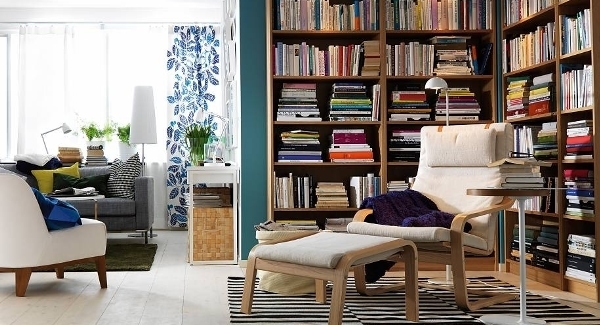
Shelving as an interior addition has unique talents.

Time to shelve those old storage ideas

Up-front or quietly present as discreet support, there are dozens of potential tailoring options for shelves, both free standing, built-in and set as individual supports. Don’t opt for the obvious, put some creative ambition into your next shelving project.

WORKING WALLS

Use a large bracketed shelf to act as a desk for light work such as using a laptop or sorting bills. To avoid overloading the dedicated brackets, add extra shelves for accessories around and above your position. Fasten your shelf-desk to both sides of a corner for extra stability. The standard table height applies at 70cm, with no more than 50cm to reach overhead shelving from a seated position. Pop a short filing cabinet under the surface if there’s available room.

OPENING UP

Include shelving in the framing of new walls as eye-catching shadow boxes. Paint the interior of the alcoves in a deliberately contrasting colour or a shift two shades darker than the surrounding walls for added drama.

Your architect can leave rangy theatrical voids between one room and another, the interior presents a stage for display seen and lit from both sides by ambient winks of light or by the inclusion of up or down artificial sources in the box. Niches can be lined in wood, and with small areas, it’s worth the investment in gorgeous tropical or Irish hardwoods.

GOOD FENCES

Large, stable, open shelved units can perform well as spatial dividers. Ensure they don’t rock by being touched, leaned on or by heavy footfall crossing the floor. Everything on the shelves should look good from both sides making backless varieties ideal for displaying flowers, plants and sculpture. Shelves higher than 180cm will be difficult to access, so play around with content. If you prefer an airy feel, choose a pale frame, and keep the contents pared to the minimum. G-plan and Scandinavian shelving units from the 60s and 70s are now collectable as key storage pieces, so keep your eyes open on your next secondhand safari.

LOVELY LEDGES

Rather than consigning your collections to a closed cabinet, set one beautiful single item on its own shelf. Flock a number of these platforms together and circulate your objects as a dynamic gallery. Small, chunky, floating shelves without visible brackets are ideal and can be painted to pop with colour. Less than 30cm between shelves will appear cramped, so give your pieces room to visually “breathe”. For a French brocante feel, a swirl of Rococo in a bracket shelf in gilded resin or wood held up by a twisted leaf, speaks vintage romance.

WALL TO WALL

Large shelves, fixed floor to ceiling across an entire wall, pack tremendous punch and matched to blind storage with large base cabinets or sliding doors can be a householder’s best friend. Frame finishing ends by doors or windows, with partition style stud-work to signal their importance, roots them to the architecture of the home. Paint the shelves and any uprights the same colour as the walls to marry them to the structural surrounds, as the book spines and ornaments will deliver frenetic colour. Terence Conran’s book Essential Storage offers a wide range of inspirational projects for ambitious DIY built-ins. Conran€18.75.

BOOK LEARNING

Arranging your display over larger shelved areas will take time, and variety increases visual appeal. Break up books with the odd ornament, (ideal for inexpensive box shelving). Place your favourite pieces and books within easy reach, and larger ornaments that have the scale to be enjoyed at a distance, higher. Arrange books by size, leave 4-5cm at the top of the spine to pull the book out easily and place larger books down flat to save stress on the spines. A closely spaced horizontal set of two shelves for an atlas or very large tome is a traditional touch and breaks up the dull repetition of system shelving.

BOXING CLEVER

Floating box shelving has become something of a cliché. There are a few tricks to getting a personalised finish. Place your boxes close enough to create a relationship, either as a linear horizontal group or set as four or more even-numbered parts, adding up to a rectangle or square. Use paint or wallpaper on the reverse face of the box to individualise boxes. Try a harlequin of different papers — bohemian and deeply satisfying for a few euro more. Don’t place anything on top of the boxes, just use the void. If boxes and straight edges are offered in the same range, try turning them to verticals, mixing sizes or even adjoining a box to a straight shelf. Large scale boxes look fabulous in long low hangings behind a shallow backed sofa.

TAKE A STAND

Fake the look of pure built-ins with freestanding tall modular units set on a supporting plinth and terraced together as flush to the wall as the baseboards will allow. You can thicken up the front edge of skinny shelves by applying a substantial trim of flush, plain baseboard or moulding. Paint to match. This trim will also stop books and displays from falling from the shelf or hang it low over the edge to hide strip accent lights for the shelf below. Moulding added to the gap at the top of simple systems between the top surface and ceiling, can lift it to pedimented bespoke pretender. Bridge difficult areas using a combination of hanging shelves and book cases, butted up against each other. Shelving can turn corners and fly over doors, not only increasing storage but once set with books, thickening up acoustic insulation between various rooms. Ring the changes by painting or wallpapering inside or out.

More in this section

Cookie Policy Privacy Policy Brand Safety FAQ Help Contact Us Terms and Conditions

© Examiner Echo Group Limited













