Putting poetry in motion
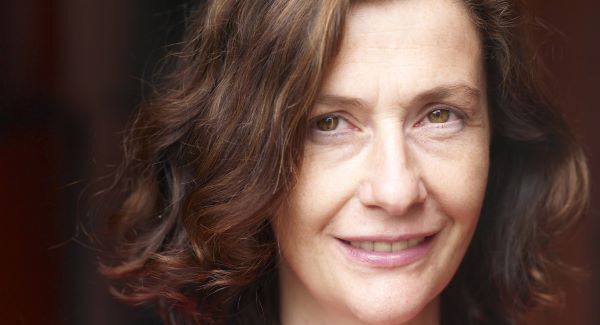
Martina Evans draws on her Mallow childhood for her new work written in the unusual form of an extended prose poem, says Colette Sheridan

Putting poetry in motion

CORK-BORN writer Martina Evans believes there are too many novels out there, too many words and well-rounded characters, not to mention a plethora of happy endings so beloved of publishers, keen on the feel good factor.

Although the London-based author has three novels under her belt, it is poetry that she is now concentrating on, and she will read from her work at the Cork Spring Poetry Festival next week.

Her fifth book, recently published, is a 10,000 word prose poem, entitled Petrol. It may sound heavy on the word count but it was distilled from an unpublished novel she wrote eight years ago that came in at 80,000 words.

Petrol is broken up into 39 sections. The title is a reference to part of the family business that the young narrator’s father operates. As well as a bar and a shop, Justin’s enterprise includes a petrol pump which is a source of fixation for 13-year-old Imelda, who fantasises about setting fire to Justin using the BP fuel.

It’s not that Imelda is a cruel child. She is more sinned against than sinning. Justin, an obnoxious character, is courting a woman called Clodagh, having buried two wives. For Evans, the Bluebeard myth is an influence on her poetic tale. In the original French folk tale, a violent nobleman with an ugly blue beard is in the habit of murdering his wives.

Evans (née Cotter) grew up in Burnfort, Mallow, where the family business comprised a pub, shop and petrol station. So far, so autobiographical. But Evans, 51, stresses that Justin is not based on her late father. However, she does mine aspects of her background for her writing. With a light humorous touch, she draws on the preoccupations of an Irish Catholic childhood in rural Ireland in the 1970s that include popular cultural references such as watching The Mary Tyler Moore Show on television.

Petrol reads like prose. Asked what makes it a prose poem as opposed to prose fiction or a novella, Evans says its poetic nature lies in its “intensity and music and the sense of skipping from one scene to another. The bits in between are not filled in. Nobody really knows what it is. My poetry publisher [Anvil] doesn’t know what it is. But it’s interesting that a poetry publisher accepted it. I didn’t try any other publishers because I was very keen that it would be seen as a poem”.

After writing Petrol, Evans wasn’t sure what it was or if it worked. Cork-based poet and novelist Thomas McCarthy read the manuscript. “He understood exactly what I was trying to do and that was a tremendous help to me. In fact, his poetic novella, The Merchant Prince, was influential in making me realise that operating prose and poetry at the same time could work.”

Evans says her writing is influenced by film. “I like my writing to be like a dream, with the words just flowing from scene to scene.”

The youngest of 10 children, Evans says she was always an observer and tended to be confused as siblings would individually tell her different versions of the same story. When Evans left school, she studied science at UCC but didn’t graduate. She always preferred the arts but parental pressure meant that she had to gear herself towards gainful employment.

After studying at St Vincent’s Hospital in Dublin, she began a 15-year career as a radiographer. In the late 1980s, she moved to London — a city she adores for its multi-culturalism and the anonymity it offers its inhabitants — and completed a degree in English and philosophy with the Open University. She began writing seriously. “I just kept writing my novels over and over again until I thought they were right.”

Evans, who has a 21-year old daughter, worked hard to become a teacher of creative writing, all the time working on her own writing. As well as running creative writing workshops, mentoring and taking up fellowships, her regular job is teaching at the City Literature Institute in London.

After already having a number of novels published, Evans realised in 2006 that she preferred writing poetry. One of her poetry collections, All Alcoholics are Charmers, even consists of three poems that started out as a novel.

Evans says she is drawn to poetry because it doesn’t have any rules — “and that’s because it’s not connected to the marketplace. The world of writing is changing because of the electronic revolution.”

Evans is revising her first two novels and publishing them electronically herself. Her third novel, No Drinking, No Dancing, No Doctors, has also been made available on Kindle. She may lean towards poetry, one of the most ancient forms, but this writer is also bang up to date.

x

More in this section

Cookie Policy Privacy Policy Brand Safety FAQ Help Contact Us Terms and Conditions

© Examiner Echo Group Limited













