Dallying with Darcy
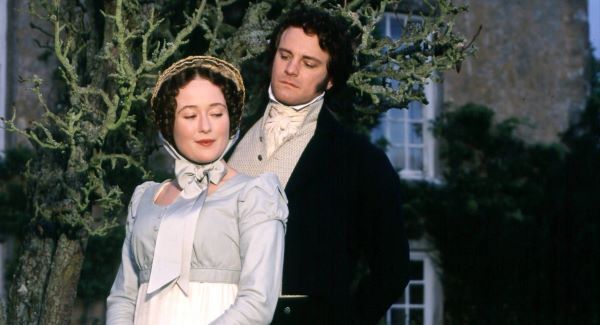
TO mark the tenth anniversary of World Book Day back in 2007, a survey was carried out in Britain which asked 2,000 readers what book they couldn’t live without.
Unsurprisingly, The Lord of the Rings featured, as did George Orwell’s classic 1984 and JK Rowling’s Harry Potter series. But sitting pretty at the top of the tree, replete with a bonnet and apron, was Jane Austen’s Pride and Prejudice.
Although it was written 200 years ago today, Austen’s most famous novel remains as popular as ever. It has so far sold 20 million copies since its publication and with every television and film adaptation, it takes on a new lease of life. Its story keeps us coming back for more.
“Well I think it’s partly because of the wit, the delineation of the characters and the details of description which are delightful,” says David Selwyn, chairman of the Jane Austen Society in England. “But also there’s something about Jane Austen’s style that is so pure and eloquent that it doesn’t seem to date. It doesn’t seem to me to belong to a certain period, even though it obviously does, but I think she writes an English that is so pure and normal that the characters, when they’re speaking to each other, could almost be speaking to each other today.”
“There’s also a thing with Jane Austen’s characters that they always behave in character,” continues Selwyn. “Austen understood that when you’re making a work of art everything has to belong.”
Pride and Prejudice tells the story of Elizabeth Bennet, the second of five daughters of a country gentleman, living near the fictional town of Meryton in Hertfordshire. Along with her sisters, and their long suffering parents, Elizabeth deals with issues of manners, morality and, most importantly, marriage, among the landed gentry of 19th-century England. This was a society in which saving face and avoiding scandal was of paramount importance, particularly among women.
Emma Regan is one of five coordinators of the Irish Feminist Network, an organisation that seeks to promote gender equality in Ireland. Regan also runs the network’s book club which recently featured Pride and Prejudice as its book of the month.
“We wanted to do something about women’s experiences two hundred years ago,” says Regan. “We wanted to see and discuss what women’s lives were like when their entire lives depended on their marriages. Pride and Prejudice was perfect for that. It was interesting how the different characters dealt with it. Some characters decide to marry on the basis of money, such as Charlotte Lucas [who marries Mr Collins although she does not love him]. I don’t think that was frowned upon by Austen because the situation she was in meant that was the most reasonable thing for her to do.”
For both Selwyn and Regan one of the main reasons for the novel’s popularity is Elizabeth Bennet herself. Although only twenty years old in the novel she is wise and worldly and much like her father, she has an acerbic wit that she is not afraid to use.
“I think the heroine is very admirable,” says Regan. “She’s a very strong female character, which you don’t often see in novels written at the time. Women tended to be weak and easily lead, whereas this character is independent. She’s intelligent, she goes after what she wants, she’s loyal to her family and she’s very likeable.”
Mary Breen is a lecturer in University College Cork. She specialises in 18th and 19th century English Literature. This year she is giving seminars on Jane Austen, and points out that there is one key reason for Austen’s continued popularity.
“I read Edgeworth, Scott, Richardson and all those kinds of writers,” she says. “None of them are current. Nobody would even dream of taking up books like Pamela or Clarissa, [both by Samuel Richardson], now to read them for pleasure. Those books and writers deal partly with stuff from the period like politics and social conditions; things that Austen doesn’t touch. And because she doesn’t really go near them, you don’t have to wade through the book to get to the story. So whereas they’ve dated, Austen hasn’t.”
For Breen, Austen remains current because she talks of things people experience every day – relationships, love, embarrassment and so on. Because human nature itself hasn’t changed, (and that is what Austen deals with), her books have universal appeal.
Another feature of Austen’s writing is that her characters are somewhat malleable.
“She never gives you full access to the characters,” explains Breen. “Although you get this vocalised kind of narrative and you do see the world through the characters’ eyes, there’s no stream of consciousness. You constantly have to do things as a reader. In our kind of jargon it’s what we’d call a ‘writerly’ novel, where you, the reader, produce part of the character yourself.
“So everybody identifies with someone like Elizabeth Bennett because she is partly made up of you. That’s why there’s always so much controversy when a new film with a new Elizabeth Bennett comes out.”

CONNECT WITH US TODAY



Be the first to know the latest news and updates









