So what will 2013 will be remembered for and why?
IT WAS an amazing year but for many it will be remembered most as the year Gaby wiggled down Wisteria Lane for the last time after eight years, the Late Late Show turned 50 and Agatha Christie’s The Mousetrap celebrated 60 years in the West End.
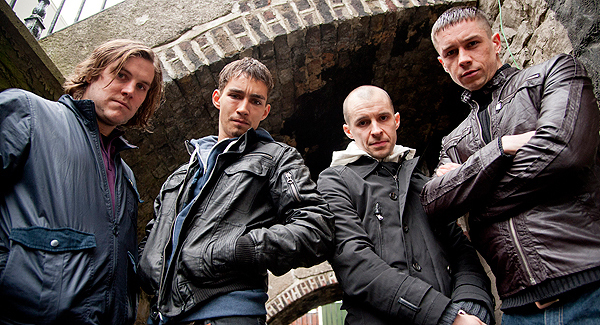
It was also the year we got over the glitz and glamour of The X Factor after nine series and got into the guts and gore of Love/Hate.
So as 2013 gets underway, it’s as good a time as any to ask what is that separates the survivors that hold our attention and the passing fads that catch our fleeting interest.
Yet, one of the great contradictions of 21st century life is the way we balance the brief and faddy, with the long-term and loyal. We can dip and dive at the same time.
Long before anything was trending on Twitter, marketing guru Seth Godin was investigating what makes a product a trendsetter.
“Become distinct — or extinct,” he says in his book Purple Cow (2000). Then find some ‘influential sneezers’ to pass on the virus of your great idea.
The Purple Cow is the remarkable product, outstanding in its field, but Godin says that’s not enough to make a trend.
Word of mouth recommendation — especially if those words are televised or uttered online — creates a human connection that binds us to products, whether it’s chocolate, books or TV series.
The Newsweek reviewer of The Bridges of Madison County scathingly compared Robert James Waller’s writing to the prose in a catalogue, but Oprah Winfrey’s imprimatur led to more than 12m sales. The book was a trend of its time, one many people now cringe to remember.
The Complete Works of William Shakespeare had an original print run in 1616 of around 500 copies, but has since sold anything up to 4bn copies, around 2bn copies less than the Bible and around the same number as Agatha Christie’s books.
I was in recently London for the 25,000th performance of The Mousetrap. I booked my ticket for the show that has been the same every day for 60 years on a phone that’s a year old, but already two models out of date.
Godin has one view on why the show remains a draw, while some West End shows close after six months. “The Mousetrap is new to almost every tourist who sees it. And it’s remarkable, precisely because it doesn’t change. I know that’s a paradox, but the fact is it’s that longevity that makes it worth talking about, right?”
“Yes human beings evolved to want safety and comfort. That’s a given, there are deep evolutionary reasons for this. But then our brains kick in and the virus of an idea … the memetic notion that ideas seek to spread, that what interests and excites us is the new.”
It’s a great explanation for why we become addicted to the instant update, but also want the Late Late and hour-long radio documentaries.
Newness and word of mouth account for the attraction of Mad Men and Fifty Shades of Grey , but not the sustained presence of the gospels and Hamlet.
Cilian Fennell was producer of The Late Late during Gay Byrne’s final four years. He thinks the key to The Late Late’s longevity is how it hooks into our human interest in where people are on life’s journey.
Our culture, he says, has become about quick hits and constant updating, the new and fresh, but our connection to celebrity, such as Lady Gaga (31.9m Twitter followers and counting) is very thin.
On The Late Late Show, it was the opposite. He speaks of “the moment you knew they’d put down the remote”, rather than the moment the audience picked up their iPads for real-time online discussion the show. “When the audience was silent, we knew we’d made the connection, not when they were clapping.”
One immediately thinks of those spine-tingling moments, like when Gay Byrne picked out Rita Hanley’s postcard for a competition the day after her daughter, who posted the entry, lost her life in a road traffic accident.
Shared moments that are visceral and deeply human, not easily rendered in 140 characters.
Fennell compares the repeated stimulus of computer gaming and checking emails to the dopamine hit an addict gets on a slot machine, tiny little antidotes to “the existential angst that we’re not being noticed”.
“Something that reflects accurately or symbolically the experience we have ourselves — that lasts; whereas something that just taps a little part of us, like a single emotion or an excitement — that passes.”
The Late Late has changed, and he says it would require bravery now to run items longer than 15 minutes.
Not because people have shorter attention spans, but media and broadcasters have come to believe that because we can communicate in short bursts, we must.
“I don’t think the public would like the Late Late to go,” he says, describing it as a cultural monument and a great way for society to connect.
“A big event on the Late Late is still the most talked-about event of the week,” he says.
If Fennell is right, then what will last in 2013 are not the hasty updates and newsflashes that occupy an increasing amount of our time. Forgettables like ‘Pulpo Paul’, ‘Vuvuzela’ and ‘Inception’ were among the top 10 Twitter trends of 2010, but two years on it’s easy to see why the human stories behind the Gulf Oil spill, the Haiti earthquake and the World Cup put them in the top five.
Sociologist Sherry Turkle, in her fascinating TED.com talk, ‘Connected but Alone’, says that in 2012, as texting turns 20-years-old, our plugged-in lives make us even more disconnected.
“People want to be with each other, but also elsewhere”, because what matters most to them is control over where they put their attention, she says.
“We’re setting ourselves up for trouble in how we relate to each other and how we relate to ourselves and our capacity for self-reflection,” she adds.
Texting, tweeting and emailing allow us to edit our presentation and remain separate, while on The Late Late Show a live, squirming Taoiseach demands our full attention. What we will remember from 2013 won’t be the shiny new American sit-com or Colm Tobin’s witty twittering. The stories we take from 2013 will be the ones that touch us on a more human level. “Good stories always bring us into truths and allow us to kiss the darkness,” says Fennell.
Dr Maureen Gaffney, in her book Flourishing, describes ‘connectivity,’ as being attuned to what’s happening inside and outside of you.
It’s the opposite to what Turkel fears, that “you can end up hiding from each other even as we’re all constantly connected to each other”. The antidotes are moments like the end of The Mousetrap, after the curtain comes down and the audience is asked not give away whodunit. We’re told that by watching the play, we have become part of the story.















