Sticking to his principles
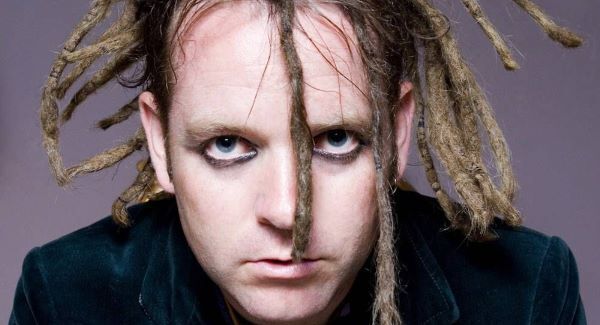
PETER WILSON, aka Duke Special, is a reluctant pop star. “Entirely by accident, I had some early singles that became moderate radio hits,” says the piano-man. “I never intended it. What people heard of me on the airwaves was just the tip of the iceberg. It didn’t give the entire picture of what I was about. A lot more was going on under the surface.”
He became moderately famous six years ago, when his album Adventures in Gramophone was nominated for the first Choice Music Prize. Looking back, Belfast native Wilson talks about the period as if it happened to someone else.
“I’d been touring and touring and nobody had paid any attention. It was strictly under the radar,” says the singer, who this year released his seventh album, Oh Pioneer. “After the Choice, newspapers started saying ‘hey, who is this guy?’ And then I got on the radio. Gradually things started to take off a little. It was at the end of a period of intense hard work.”
Soon he had notched up two major hits, the lilting ‘Freewheel’ and the lush, romping ‘Sweet Sweet Kisses’. In Ireland, at least, he was a star – and hated it. By his lights, he was an artist, not a mere entertainer.
“Some people think of me as mainstream. Getting on the radio in the first place was completely unintentional. For my early career I had been entirely in a different sphere. Don’t get me wrong, I’d love to be on the radio again. The thing is, I would never compromise. It would have to be on my own terms, not with something I had written purely to be successful. I can’t even begin to imagine what that would be like.”
Rather than pander to his new fan base, Wilson decided to throw a curve-ball. Having parted from Universal Ireland, in 2010 he recorded an idiosyncratic triple-album, The Page, A Book and The Silver Screen. It was inspired by Mark Twain’s Huckleberry Finn, surrealist novelist Paul Auster and the mid-20th century theatre composer Bertolt Brecht, and was partly recorded in Chicago with iconic producer Steve Albini.
Many fans didn’t know what to make of the results. Which was precisely the idea. He loved bamboozling people, upending their expectations.
“With every single album I try to do something completely different,” he says. “I have no interest in regurgitating something I’ve tried previously. That would bore me tremendously. I want to continue moving forward as an artist. You can’t just keep at the same things over and over. Where would be the satisfaction in that?”
For each project, he sets pre-imposed limitations. With The Stage, A Book and The Silver Screen, all the influences were to be literary (Paul Auster was so chuffed at the results he invited Wilson to brunch in Brooklyn). On Oh Pioneer, Wilson worked with stringed percussion, imbuing the material with a luxurious orchestral sensibility.
“When me and my producer, Paul Pilot, sit down to plan a record, our first conversation is, ‘what are the boundaries?’. It helps focus the mind. Having parameters is extremely useful. If you didn’t have artificial boundaries, the blank canvas might be overwhelming.”
“The other influence on Oh Pioneer was my love of working with orchestras. That was something I wanted to replicate. So we had a meeting and said, ‘the major flavours on the record are scored percussion and Hammond organ’. It’s great to have rules – even if you allow yourself to break them occasionally. In a weird way, it’s very freeing.”
Oh Pioneer has received a mixed reaction, he says. “At first people are like, ‘oh, I’m not so sure about this’. After a few listens they’re saying, ‘actually it might be the best thing he’s done’. It’s great that they are taking the time to get into it. But it is frustrating as well because, if you want to get on the radio, it needs to be immediate.”
Wilson never went back to a major label and now self releases all his music. This presents a whole swathe of logistical challenges. On his previous album he covered marketing and manufacturing costs by inviting fans to chip in towards the overheads. The more they paid, the greater the access they gained: some fans received private shows in their houses; he brought one group on a tour of his neighbourhood in Belfast.
“I’m very grateful to everyone who contributed, but I don’t think I’ll do it again..,” he says diplomatically. “It was useful because, without a label, obviously you have to pay for all of these things, like marketing yourself. But that level of access isn’t something I think I’d be interested in dealing with a second time.”
Wilson’s music is highly theatrical so it is no surprise to learn he has ambitions to write for the stage. He has already made impressive progress in this direction. In 2011, New York’s Metropolitan Museum commissioned a piece from him. Around the same time he was hired to score a controversial reworking of Brecht’s ‘Mother Courage and Her Children’.
All of this was a learning experience, he chuckles. The Met show was acclaimed. In London, however, he fell foul of the city’s infamously blood-thirsty critics, who took visible delight in dismantling both the play and Wilson’s music.
“I was familiar with music critics,” says. “This was something entirely different. For one thing, they have a press night, which all the critics come to. A lot of them, I think, would have preconceived notions, depending on what they think of the play, or of the director.
“It divided opinion and got some extremely mixed views. Which is what was intended, I think. The director, Deborah Warner, had no interest in pandering to critics. Ultimately if you are making any sort of art, you need to have thick skin. If you were influenced by critics, then you’d never do anything ever again.”
* Duke Special plays Lime Tree Limerick, Sunday, Cork Opera House, Monday














