Is the internet taking the Mickey?
ROBERT Levine, one-time features editor at Wired magazine and former editor of Billboard, has written an excellent introduction, Free Ride: How the Internet is Destroying the Culture Business and How it can Fight Back, to the huge gap that divides media and technology counterparts.

Is the internet taking the Mickey?

Media companies create content, such as music, text and film. Technology companies mainly distribute. Disney and Warner are content; Google and its subsidiary, YouTube, distribute.

Levine says technology companies have it all their own way, while media companies struggle to keep up. Levine takes issue with Chris Anderson, his colleague at Wired, who believes that because distribution costs are falling, ie broadband is getting faster and cheaper (although Ireland lags behind in this regard), most cultural offerings will inevitably be free.

Anderson has a point: the internet is eroding the newspaper industry. Time Out is free, given away on the London Underground, as is The Evening Standard, while in New York, The Village Voice is available for free outside grocery shops. In 1984, Stewart Brand famously said “information wants to be free”. Levine provides a voice for those less than impressed with this trend.

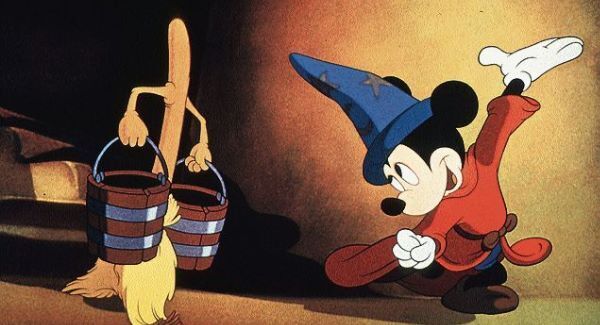
Levine nails his colours to the mast, citing article 27 of the 1948 Declaration of Human Rights, which guarantees authors and artists copyright protection on their work. Copyright lasts for 70 years after the death of the artist. It was 50, but was extended after intense lobbying by Disney in the United States, partly to protect the Mickey Mouse cartoons. In Europe, it is also 70 years.

Efforts by the media to retain control over films, music, and books that many people say should be in the public domain have alienated public opinion and resulted in widespread flouting of the law.

In 1999, Shaun Fanning, a 19-year-old student at Northeastern University, created file-sharing software, called Napster, and set in motion a technological revolution that killed sales of records and CDs and impacted on DVD sales. The media companies’ reaction was to have Napster shut down. Victory was short-lived, as Kazoo, Grooveshark, and other peer-to-peer file-sharing programmes replaced Napster. There is plenty of legal traffic in downloading and streaming of music and movies: Netflix, a broadband service, is inexpensive and legal, as is iTunes, but the content accessed on these commercial services is equalled, if not outnumbered by, illegal distribution through file-sharing services and downloading.

Levine is no fan of file-sharing, but his contempt for illegal downloading sites, such as Pirate Bay, knows no bounds. He says that for culture to continue to influence society, it is vital for those who produce the goods to be paid properly. When people bemoan the dearth of interesting new music, Levine says it is because technology companies want to pay little or nothing for content. Consumers also expect content to be free. Levine says the promise of the internet may be irredeemably damaged by a flood of low-value content. Levine admits to telling the story from one side. The restrictions placed on the use of cultural material by copyright holders have, in many cases, turned public opinion against copyright protection. When the writings of James Joyce emerged from the 70-year rule, in January of this year, the liberation and celebration in the publishing and literary worlds was palpable. Considered one of the most important modernist writers, Joyce had slipped from public awareness, as his estate placed onerous restrictions on when, how, and where his writings could be used.

Levine details the differing business models employed by media and technology companies. He describes Apple’s ‘walled-garden’ approach, by which users of its products do not have access to many of the features and potentials of the technology they have purchased. Because Apple products are so user-friendly, few people object to these restrictions.

The control that Steve Jobs imposed in the early days of Apple allowed Microsoft to make hay while the sun shone, but, as margins on PCs grew more slender, Apple kept their eye firmly on high-quality design and ease-of-use. This made a success of the internet music shop, iTunes, which, in turn, along with iPods and iPhones, fuelled the meteoric growth of Apple, while other companies struggled to survive. The company that Levine appears to have in his sights is Google, which has maintained the original vision of the internet, using free access to information to create economic growth. By making content free, Google has generated such colossal internet traffic that advertisers have followed in droves.

Levine is good on identifying the reasons why companies have succeeded or failed. He contrasts closed systems, such as Apple, where content must be bought and is only available to those who pay, with open systems, where material is given away free. He says that open-system businesses will eventually become unsustainable. The web is an open system; app stores are closed. While there is a trend towards closed systems, there is also no doubt that the internet has become so powerful that it may be impossible to control or police in the way that Levine advocates. Freedom of speech means the internet is not policed or taxed. Facebook may, after days of media pressure, remove pages that are prejudicial, but it, and other distribution companies, maintain they only provide pen and paper; they are not responsible for what people write. Similarly, the peer-to-peer sharing providers say they are not responsible for content. Whether or not this is true is being argued in courts.

The outcome of peer-to-peer sharing and piracy has been visible in high streets around the world, as record shops close their doors. Traditional television has also decayed in quality, as movie-on-demand services have become available on the internet.

Television is moving away from traditional broadcast technology and will probably end up being a predominantly internet-based service. The recent switching off of RTÉ’s analogue signal transforms Irish television into a digital service, and, just as importantly, frees up bandwidth that can be auctioned off in a ‘spectrum auction’ to mobile phone companies. While, in the United States, the public are encouraged to track progress on spectrum auctions on the FCC website, in Ireland, although similar auctions began in May of this year, no information on progress is available from Comreg, the Irish regulator for communications.

Levine’s book is conventional, moving from an analysis of business trends to a vivid description of the offices of a young internet company near Zurich, to quoting artists whose careers and incomes have steadily been eroded by internet piracy.

Levine has done his homework, conducting 100 interviews, as well as tracking legal cases in different parts of the world. He identifies a central problem: the reluctance of major businesses to acknowledge the true scale of piracy, and their willingness, instead, to bolster profits by offering features that don’t work well on the internet, such as 3-D in cinemas.

By making films in 3D, media companies protect themselves against internet pirates, who copy films and have them online even before they have been released in cinemas. Levine devotes several pages to Eircom’s deal with media companies to control piracy, and cites a recent case where UPC, the Irish division of Liberty Global, was taken to court for not following Eircom’s example. While Judge Peter Charleton found the law was in UPC’s favour, he acknowledged the damage done to musicians’ careers by piracy.

With tens of thousands employed in this country in companies such as Apple, Microsoft, Facebook and Google, Ireland has more than a passing interest in the digital world. A paperback book may be an old-fashioned, analogue way of conveying information, but it is easy to carry and doesn’t need batteries. Levine cannot foresee the future, but in Free Ride he has given a good introduction to the ways in which the world of culture and media are being shaped today, and will probably develop in years to come.

The arguments will have to be unpicked thread by thread for sense to prevail. Copyright of 70 years is increasingly seen as unrealistic and restrictive, a denial of the original intention of the law, which was to foster creativity. The limitations on fair use of copyrighted material are also excessive. By reforming copyright law so as to make it reasonable and enforceable, it would be possible to cut down on opportunistic litigation and make it easier to pursue the real culprits, those who have no interest in free expression, but simply want to profit from the work of others.

x

More in this section

Cookie Policy Privacy Policy Brand Safety FAQ Help Contact Us Terms and Conditions

© Examiner Echo Group Limited













