Change we believed in
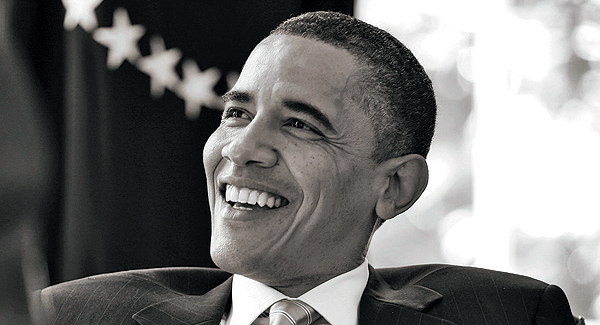
There were moments when it almost seemed normal. This would mostly happen on days when you could squeeze in a second campaign event somewhere in the north eastern swing states.
Familiar autumn weather. Another identical looking press pass pinned to your lapel.
A similar, shallow warm-up act from whatever congressional candidate was nearest to the quaint colonial town.
That speaker would then hand over to some higher-ranked player vying for the senate seat or the governor’s office.
The stiff security detail took their places. The roadies tended to the rigs. With minutes to go the television crews swept in, scrambling for space and functioning hook-up wires that ran to the low scaffold riser.
Predictably the pool photographers would arrive and elbow out the local snappers, who would have taken up prime positions an hour earlier.
Finally the elite political journalists, embedded with each campaign, arrived off the bus and took the cordoned-off seats.
The pep-rally playlist rang out. The national anthem was played. The introduction was made. There were roars.
And then came the speech. The same speech.
The same speech that was delivered at the southern tip of Florida and up to the top of the Great Divide in Montana.
It had not changed in weeks, save for the odd shift in emphasis. But the crowd hung on it like they heard it for the first time.
Because, in most cases, they just had. The coincidental choreography of national media bulletins meant that if there was no new news they just moved down to the next paragraph of the stump speech.
It was repackaged as if this fifth-choice sound bite had never been uttered before.
The crowd cheered in the same places and pepped up on cue. Finally, with a last grip of the fist, Bruce Springsteen’s The Rising belted out of the Tannoy and the man they came to see walked off stage.
Sometimes it was not until the first few lines of the subsequent report ran across the computer screen that the surreal nature of this routine became obvious:
“Presidential candidate Barack Obama said…”
That was 2008. A country, that since its inception had embarrassed itself with racism, was about to pick a black man to be its leader.
A black man who was once educated in an Islamic school, raised by a single mother and passionately liberal in his views.
After eight years of war mongering, Christian fundamentalism and division, America was on the cusp of change. The allure of what looked destined to happen coaxed me through 34 states to chase him and his rivals.
This was all done with a 12-year-old Ford Explorer bought from Craig’s List; a general country-wide road atlas; a tiny budget and a light-weight two man tent. Conventions, debates and celebrations, all fixed to the rigid American presidential campaign calendar, became something very romantic.
It had charmed me out of my job and across the Atlantic in the same way vast sections of American society, who never voted before, discovered democracy for one season of “Hope” and “Change”.
Obama dragged us into a colourful coalition that joined together in stadia, school halls, streets and sea resorts. There was nothing normal about what we had become. The audacity of the ambition for Obama brought an incredible electricity to every one of his stops. So no matter how many times the stump speech was thumped out there was always something to take away.
There was magic in the crowds. Their reactions broadcast the extraordinary effort they made just to see a man speak for 10 minutes about politics and national issues that had little immediate bearing on their lives. It was not his promises but what he promised. For everybody who attended those events it was something that, despite his own nervous adherence to the stage managed formula, was a once in a lifetime event.
It has not been repeated during his current bid to win a second term. It will not happen again. In 2008 the country he was trying to court knew this: the enthusiasm it generated was hard to contain. Sometimes it got dangerous.
His team, desperate not to turn anybody away with a sour taste, attempted to channel increasingly large crowds in quickly selected locations that could not cope.
The atmosphere did not have the hostility of rival football firms at grounds in England. But often there was a naivety when it came to crowd control similar to what had underpinned the worst stampedes of the 1980s.
Everybody had to wait patiently for hours to be scanned for guns and bombs. But then it appeared nobody thought of what would happen if the crowd itself started to crush. Broadly speaking candidates knew which states and districts they would focus on, that rarely changes.
The same select swing states, simply because they are liable to change their vote, are given the overwhelming amount of each candidate’s time.
But the exact diary will not be decided until the latest round of polling is in and has flagged which towns need attention and which can be ignored because the result is tied up.
If you wanted to get accreditation you fill out an online form and when you arrive a local volunteer at a desk had your pass waiting for you.
Getting there on time means watching schedules like a long range weather forecast and asking the atlas to see what was possible.
It meant on one evening, after John McCain spoke to a half-full sports’ hall in Toledo, Ohio, I left to drive 1,100 miles south to the only show worth seeing the next day.
Obama was about to share the same stage as his former rival, Hilary Clinton, for the first time. Reflecting the Clinton’s residual popularity with America’s immigrants, a park in Orlando, Florida was chosen.
The route to Orlando went through three vast areas of Kentucky, Tennessee and Georgia, where the only time a campaign bus might pull up is to fill up its tank. They are not swing states.
Yet 25 hours later in Florida, with a bigger and more volatile electorate, the state had been spoilt with almost daily events by at least one of the presidential candidates, their vice-presidential picks or the aspiring first ladies.
But even in a region jaded from the attention it receives, Obama was different. And the prospect of seeing him on stage with Clinton intrigued people.
Clinton, who had to bury her pride and hostility to help elect the man who denied her a shot at the presidency, had the power to organise her appearance.
A booster step was placed behind the podium so that she would not lose stature and she had weeks to prepare her words.
The crowd had no such luxury. They had very little time to plan or at a minimum pick a good spot to saviour the moment. They left work and raced past the tables of hawkers who always got to Obama gigs on time to peddle printed pictures, bumper stickers and knock-off posters.
Anybody familiar with the “hats, scarves and headbands” sales technique on All-Ireland Final day would have recognised the quality and quantity of the goods on offer. On the main entrance routes there were no metal detectors that day. Most of the crowd could not get close enough for it to matter.
The result was a scene that could have been lifted from the bible story taught in primary schools when the tax collector, Zacchaeus, climbed up the tree just to hear Jesus speak.
In Orlando the racially diverse crowd pressed themselves to see through the trees and sculptures to catch the Democratic Party duo.
They climbed branches, hung off gutters and scrambled to claim any conceivable vantage point.
For many they had to be content with just hearing what was said from around a corner. Incredibly they were.
The following night, in Miami, the same steamy atmosphere surrounded the seaside venue.
Campaign plotters had picked a poor place and organised inadequate crowd control. Wheelchair users and the elderly were forgotten about and eventually squeezed through after the place had been filled.
Very few could see where Obama was, let alone pick out what he was doing. The squeezing and shoving was intense. The event had to be paused to allow the heaving to settle. People in the crowd held oblivious youngsters above their heads just to see by proxy. It was like an intergenerational periscope, to bear witness through their children’s eyes.
Although it followed the same script as dozens of other swing state stops, a policeman conceded afterwards that it would have erupted into riot were it not for the goodwill that went with Obama’s message of 2008 - Yes We Can.
Despite his positive tone, at that stage he was a marked man. Terror plots were foiled and lone gunmen were intercepted by the FBI.
Yet security was never as well organised as the image that was portrayed.
Twice in 2008 the same nomadic and eager Italian journalist blagged his way behind the scenes, with no pass to speak of, to find himself in the company of the man who at that stage was the focus of the world’s attention.
He was not out to grill the Democratic nominee. He wanted, and got, new footage for his on-the-road documentary.
Neither time did Obama bat an eyelid and, when asked, repeated a few lines in Italian for the international audience.
The off the cuff organisation and peripheral edginess was not confined to Obama events.
That summer Sarah Palin had joined John McCain’s ticket and brought with her a posse of right wing supporters and thinly veiled racist catch phrases.
She courted military families and poor rural white communities.
At a hangar in Virginia, near to America’s largest navy base, people walked around with posters linking Obama to Osama Bin Laden. It was patriotism at its most tasteless.
There was no subtlety in the language or the message. There was also an anger at what the vote was likely to result in, within her crowds.
But her handlers, mindful of the risk of cameras showing her speaking to a mob of slack jaws, would ensure the crowd that filled the bleachers immediately behind her back, were as moderate and as racially diverse as possible.
These are the most important people in the crowd because they are a sample of the supporters the campaigns want you to see — not a reflection of the people who queued for admission.
These people are the image that the country sees because in most venues the risers for the television cameras are a standard distance from the stage.
These cameras tend not to do too many panning shots, because they are usually capturing images for a few different networks and do not have time to organise artistic views.
So the pictures on the nightly television news rarely tell the complete story, if at all.
But at least Palin attracted a crowd. Joe Biden, at a school hall in the same state of Virginia, brought out such a poor show on a Saturday morning that a few of us in the press area were moved forward so at least our heads helped fill the gap between the cameras and the stage.
In Pennsylvania Cindy McCain spelled out her vision to a group that would barely constitute a choir, even if the few people there were ever in need of converting to the Republican message.
WATCHING this year’s struggle through the portal of those same television cameras is different. The romance is gone.
From a distance the concern and the chaos does not seem to be as pressing.
Obama’s 2012 slogan “Forward” embodies another type of message. Bertie Ahern used the mantra “forward” in 2007 but he could never have carried off “Change”.
Similarly the nightly consternation is not as obvious.
In 2008 everybody who wanted to see Barack Obama accept the nomination for the Democratic Party at the Mile High stadium in Denver, had to queue in snaking lines for hours just to get close to the ground.
It was as though the waiting line for Landsdowne Road started at St Stephen’s Green and nobody cared.
During the course of that day a roll call of rock stars and famous faces trotted out to gee up a crowd that struggled to get past security on time.
By nightfall there were 75,000 people in the stadium for a speech signed off with sensational fireworks.
In August 2012 Obama attended his party’s convention and was supposed to accept the nomination in another football stadium, this time in Charlotte, North Carolina.
There were rumours buses had to be organised from out of state to ferry in supporters to fill the venue.
Fortunately for him the seasonal eastern storms brewed up at the last minute and killed off the idea. It was all moved indoors to a more normal venue — at least in terms of American presidential politics.
Obama has attracted big audiences this time. More than 30,000 turned up in Wisconsin to hear him.
But this has been the exception more than the rule.
However, as I learned in 2008, pictures and reports can only ever tell a snippet of the story.
Twitter and Instagram give a flavour of what is happening away from the press corps, but it remains a poor translation.
In 2008, news bulletins, articles and social media would never have captured the extraordinary effort made by both parties to sell a single message to an impossibly disparate country.
This saw the candidates genuflect to the decadence of Orange County, Los Angeles where the right wing rich filed into an auditorium and evangelicals quizzed them on their morals.
But driving away from California, the country revealed the deprivation of sprawling residential trailer parks, and the creaking river rat towns crumbling along the Mississippi. These are forgotten by the candidates and the country.
There was the dedication of student and campus committees volunteering energetically to pass messages between Team Obama and their beloved grassroots.
And this competed with the feral debauchery of a biker festival in South Dakota where John McCain graced the same stage as Kid Rock and a clutch of topless drunken women.
Finally there were the frantic nights leading up to the election. Obama’s grandmother had passed away and he was emotional returning from her funeral.
When they got their turn the people of Cleveland, Ohio squeezed in to a city centre park. Bruce Springsteen, so long just a CD song that played at campaign events, turned up to sing live.
The choruses of “Bruuuuce” reverberated.
Then the Democratic nominee, who was on course to achieve the impossible, spoke out over the crowd with a steely conviction that captured the energy that made him special.
So much about the scene and the speech was a rehash of a plethora of other stops Obama had made on route.
But that night he still had the power to excite with a routine that played out like it was being performed for the first time.
CONNECT WITH US TODAY



Be the first to know the latest news and updates

















