Short sharp love stories
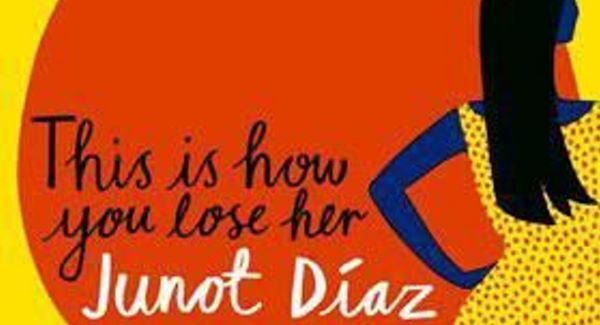
This is How You Lose Her

Short sharp love stories

Junot Diaz

Faber & Faber, €12.99;

Kindle, $12.05

Review: Billy O’Callaghan

Alhough he’d already made waves with a fine debut collection, Drown, in 1996, Junot Diaz shot to literary stardom when his 2007 novel, The Brief Wondrous Life of Oscar Wao received a stack of honours, among them the Pulitzer Prize and National Book Critics Circle Award. The novel told the story of a young Dominican boy, obsessed with science fiction and the need for love, facing the trials of life in Patterson, New Jersey, and was remarkable for its portrayal of the immigrant experience, its brazen flouting of the rules of language and, most notably, its ability to successfully juggle narrative voices.

The stories in this new collection all fixate on love, but of the shattered and tragic variety, after the final warning has come and gone. As subject matter it could be turgid, but the break-ups and subsequent breakdowns bring a clarity almost too honest to contemplate, and what emerges is instead funny and terrible and, in unexpected moments, genuinely moving.

In tracing, albeit in loose, scattered order, the coming to America and the growth of the collection’s central character, Yunior, these nine tales hold to one another like pearls on a chain. Yunior knows what he is, and why he behaves as he does. It’s genetic, the pressures of a domineering culture, and it’s the self-absorption of wanting beyond the bounds of what he has and yearning to have again all the good things that, through his own selfishness, he has lost.

For authenticity, there is little to match Yunior in contemporary American fiction. The voice is again what sets these stories apart — even the peculiar second-person narratives work — and it is as assured as we have come to expect: rich with vulgarity, sexism and bastardised Spanish slang, but full also of true penitent confession, and of an understanding gained from growing up the hard way and having learned hurtful lessons.

To flesh out these stories, Mr Diaz draws characters that fit every generous stereotype, and then somehow, with some casually suggested revelation or expressively filthy turn of phrase, brings them leaping to life. The men are brash, cheating Dominicans, gutter lotharios, and the women invariably strong and ghetto-mean but soft as jam on the inside and open-hearted, tolerant of too much but not quite everything. The language of their collisions is crude but somehow romantic, poetry of a kind, and affecting because of its heroism in the face of always impending doom.

There is a novel, Monstero, on the way from Mr Diaz, but this new collection is no stopgap. Actually, it is a beautifully rendered work, cohesive and in its way enlightening.

With these stories, and particularly in how they knit together, they represent his finest fiction yet.

More in this section

Cookie Policy Privacy Policy Brand Safety FAQ Help Contact Us Terms and Conditions

© Examiner Echo Group Limited













