Danish musicians go far north and far out
Efterklang’s haunting sound is encapsulated on new album Piramida, recorded near the Arctic, says Pádraic Killeen

Danish musicians go far north and far out

SINCE their formation in 2000, Danish art-rockers Efterklang have adapted and developed in surprising ways. Initially a 10-piece, Efterklang debuted their fascinating collision of the orchestral and the electronic on 2004 album, Tripper. Such collisions have become a hallmark, as has the scale of their ambition. On their second album, Parades — their best — the songs were each crafted from at least 150 individual audio tracks. The band’s artistic course took another turn on their last album, 2010’s Magic Chairs. They embraced indie-pop — earning comparisons to Arcade Fire and Cold Play — while sacrificing none of their sonic complexity.

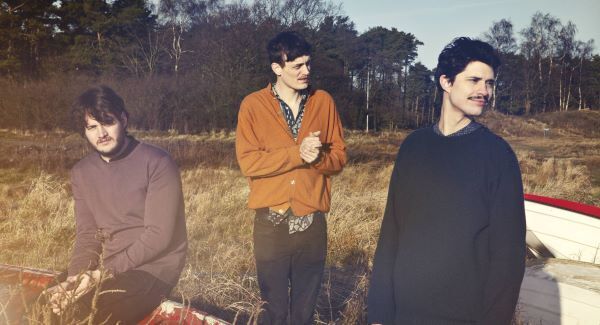
The band have downsized. Efterklang are a three-piece: singer Casper Clausen, bassist Rasmus Stolberg, and multi-instrumentalist Mads Brauer. The three grew up together on the Danish island of Als.

Not that these three men are Efterklang. ‘Efterklang’ is a concept that comes to life in different ways and in different settings, whether via live orchestral performance or small-scale film collaborations. This week, the band return to Ireland for two shows, in Dublin’s Meeting House Square, and in the Cork Opera House. Efterklang will perform their new album, Piramida, with the assistance of Major Lift Orchestra, a group of Irish classical musicians.

For Piramida, released later this month, Efterklang were inspired by a visit to an abandoned Russian mining settlement on the Norwegian island of Spitsbergen, a short 1,000km from the North Pole. In the deserted city, the band made 1,000 sound recordings of everything and anything they heard.

“With each album, we always have a slight idea of where we’re starting,” says frontman Clausen. “It’s the only thing we have — this slight idea. This time, we chose to start with a location. We received an email a few years ago, from a Swedish film director, and he sent us some photos of this abandoned ghost town up in the far north.

“We were all intrigued. When we started talking about the new album, these images came back to us, so we applied for grants to go up there. Finally, after a long time, we were given permission to visit there, in August last year, for nine days. We collected sounds and walked around the city, trying to make sense of the place. Then, we went home and spent the next nine months making music from those sounds.”

So what do you record when you’re in a ghost-town a stone’s throw away from the top of the globe? “The city used to have 1,000 people living there, so it has everything you can imagine,” says Clausen. “The world’s northern-most grand piano is there. Of course, the idea of messing with that was irresistible. It’s quite quirky-sounding. There were these large gasoline tanks, which were amazing. They had great reverb inside. We were able to climb to the top of them and each of the chimneys on these tanks had their own, distinct note. We also went into the hospital and the swimming pool. We recorded everywhere. The sound you hear at the beginning of [new song] Hollow Mountain is the sound of this brown tank we found. The insulation cover was worn off and all these spikes were sticking out from it and each spike had a distinct note. So the ‘ding-ding-ding’ sound at the beginning of Hollow Mountain is us playing on that tank. It was a great adventure.”

A ‘ghost town’ seems an appropriate setting for Efterklang. There is something ghost-like about the band’s music, anyway — which is at once a celebration of the human and of something more elemental.

“It’s hard for me to know how the music connects to people,” says Clausen. “But, for sure, the way we make and create music is sometimes to avoid the human aspect of it. It’s more about a spirit than the individual, somehow, if that makes sense. It’s hard to put it into words and that’s how it should be. But the motivation we have in making music is never founded too much in the individual. We’re always trying to collaborate and to expand our horizons. The music that we make takes off in the moment when we lose control of ourselves.”

* Efterklang & the Major Lift Orchestra play the Meeting House Square, Dublin, as part of Absolut Fringe, on Sep 14, and Cork Opera House on Sep 15.

More in this section

Cookie Policy Privacy Policy Brand Safety FAQ Help Contact Us Terms and Conditions

© Examiner Echo Group Limited













