A different kind of police procedure that toys with preconceptions
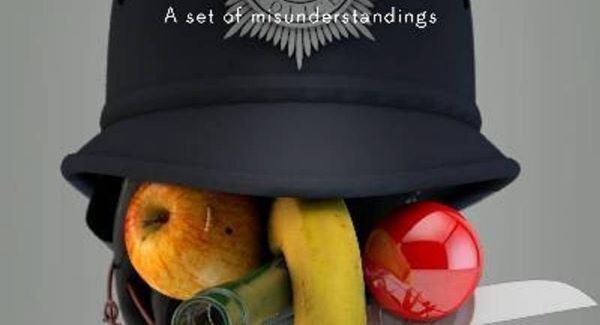
Hawthorn and Child

A different kind of police procedure that toys with preconceptions

Keith RidgwayGranta, £15.99

Review: Liam Heylin

Dubliner Keith Ridgway’s entertaining and literary novel deconstructs the police procedural and puts it back together as a weird kind of character study.

Hawthorn and Child are two detectives on the case. Someone’s been shot. The victim’s semi-conscious description of what happened includes the words ‘old car’, and there is a reference to running boards on the lines of those cars used by Prohibition-era gangsters.

After about 50 pages of pretty deep immersion in the detail of this incident, its significance never emerges. Of course our expectation is that it will emerge — from countless crime books and movies — that the old car was a red herring or it was owned by somebody who was being elaborately framed for a crime. But no, these are only our expectations. Ridgway has abandoned this and moved on to something else. He has other fish to fry.

He introduces a young man who is asked to be a police snitch feeding information on his north London criminal boss. Caught in a vice-grips of conflict between cops and robbers this man plans a kind of rush for the Mexican border. We might expect to find that he was in the old car in the first section of the book and that… But again the story trails away.

Crime genre lovers may well hate this book. It is a novel much more interested in being a literary puzzle than a whodunit of any kind. But as a stylish exercise that throws characters into a strange cut and paste of often disconnected scenes — and also abandons characters that are about to become very interesting — it is an oddly enjoyable and edgy read. You really do have to roll with it though. Some readers are not going to like the way things drift and then disappear altogether.

Also, it is probably worth warning that a couple of scenes are dayglo lurid and may prove stubbornly resistant in getting them out of your head.

The narrative moves around in willful, disjointed, and unexpected ways. One of the detectives has a hyperexplicit scene roaming through a Turkish bathhouse but it is not clear if it is part of his fevered imaginings or if it is real. Later, in a passage loaded with scatological detail, a man rushing to the toilet of a hotel complex after too much holiday food falls into a swimming pool with dire and disgusting consequences for himself, not to mention the swimmers or the readers. Be warned.

Before we know where we are — and often in this highly entertaining book we don’t know where we are — there is the oddly funny parsing and analysing of the manuscript of a fantasy novel where packs of wolves go at each other. No matter how odd it gets, there is always the feeling that Ridgway is in control.

Apart from the fantasy novel critique, books feature in interesting ways within the novel. In the relationship between a young man and woman their feelings for each other are never articulated, or by Ridgway on their behalf. However, we do learn that they write everything down in a notebook that they stash in the kitchen for each other to read.

Even though the emotional content of that story is referred to, it is literally put in a drawer to which we are never given access.

Whether the novel is rambling loosely from one wilful observation to another or trapping itself in an intense circular dialogue there is a weirdly funny quality.

Modern, edgy, uncompromising, it manages to deliver on a sense of what it is for the characters to be human. It also never loses its soul even if the planning notes for this novel might have read like something dry and academic.

Messing with the crime genre format gives the book its shape. But it is like a crime book played by a jazz musician — he’ll throw you a basic riff and then go away and work away like a madman on a certain phrase. Eventually he might return to the core melody.

For instance, in the opening section everyone is trying to remember details about a car out of which a gun was fired. The victim is muttering clues from his hospital bed, the witness is trying to remember salient details, and the detectives are trying to crack it all open. But instead of going where we expect the genre to take us there is a subtle whiff of angst as everyone concentrates on the clue for all they are worth. And it is all they are worth. If the victim does not remember or the policeman does not solve then they risk disappearing into a kind of oblivion. It is not the victim they are trying to save. But this lone fact floating in a topsy-turvy world might just enable them to salvage themselves and become real.

Sometimes the academic study of a book can bleed it of its vitality but this is an Irish novel which would reward study by any reader. The word ‘dream’ is mentioned in the first and last lines of the novel, and certainly it is a work which explores subconscious layers. But it does so not by characters sitting around talking about their feelings. Instead Ridgway gets into the depths of his characters by picking at stray details with forensic intensity until they become strangely alive.

The insistent drive of the writing and its odd urgency about sundry issues carries a gently warped humour.

You may finish this relatively short book wondering what the hell it was that all about. But you may find yourself returning for a second read. Some elements of the book have a nastiness, some catch a fragility and vulnerability. You just never really know where you are with it.

As it is, Ridgway has delivered a book that catches the reader off-guard, keeps us working, and still grips us after the last page.

x

More in this section

Cookie Policy Privacy Policy Brand Safety FAQ Help Contact Us Terms and Conditions

© Examiner Echo Group Limited







