Dreams from my father
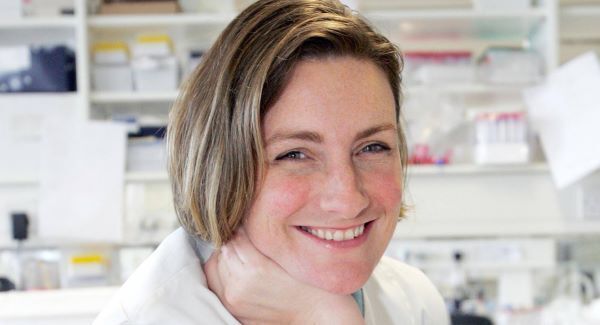
ORLA Dolan was six when her cousin, Chiara, fell off a swing in Bantry and split open her chin. Straightaway, Orla’s dad, Professor Gerry O’Sullivan, said: ‘Give me a needle and thread and put on the kettle’.
“He stitched her up right there, and it was the first time I made the connection that dad was a healer, that he fixed people.”
Orla’s father was a renowned surgeon and researcher who founded the Cork Cancer Research Centre (CCRC). He pioneered the development of four new cancer treatments. He developed new surgical innovations, was a past president of the Royal College of Surgeons in Ireland and received numerous awards. He died last February, aged 65, from multiple myeloma.
Today, Orla, 38, continues her father’s great legacy. Her work at CCRC, the centre he founded, is all about ensuring scientists and clinicians have the necessary resources for their research.
“I don’t want lack of money to be the reason someone doesn’t get an effective treatment for their cancer,” she says.
Sitting at her desk at CCRC, just four months after her beloved dad’s passing, she says it still feels surreal. “Dad travelled so much that it’s almost like he’s away — you continuously expect him to come through the door. He absolutely loved being a surgeon. He had an unbelievably bright mind, was incredibly driven and so well read. He hated bureaucracy — where he wanted to be was with his patients and doing research.”
He was a workaholic and, as such, not a “hands-on” dad, says Orla, whose brothers, Gearóid and Eoghan are 37 and 33 respectively. “Dad could go to the shop and buy milk and bread but I don’t think he knew where anything in the house was. Our mum, Breda, ran everything around him.
“We could have been annoyed that he wasn’t around and that — when he was — he was tired. But we respected and knew what Dad did. The type of surgery he did meant he could be at work from 8am, get home at 11pm and be called out again at 2am — and not necessarily for one of his own patients. They might call him from another hospital, saying they’d had a man in three times and were at the end of their tether about what to do, and Dad would get into his car and go save this person’s life. And, despite the fact he was saving lives, he was humble. As children, people would come up to us and say ‘your father saved my life’ and spend 20 minutes telling us.”
His work brought Gerry O’Sullivan around the world and Orla attended five primary schools. She was meant to make her First Holy Communion in Chicago but did so a year later while at school in Durrus, Co Cork. In Iraq, during the Iran-Iraq War, where Gerry spent 18 months working on kidney transplantation, she remembers Saddam Hussein’s face on school copybooks and milk cartons. But her earliest memories of Gerry resonate with his passion for his work. “I remember him late in the evenings, sitting in a rocking chair. With one hand and his eyes closed, he’d be pulling a loop of thread and practising tying knots, practising technique. Or you might see him watching a video of an operation he’d done or was going to do.”
There were times when Orla said ‘enough!’ “I’d frogmarch him down to the shops and say ‘this is what I want for Christmas’ or ‘this is what you’ll get Mum for her anniversary’. I could do that because I was the only girl. Dad wasn’t great for talking about his feelings but you knew he loved you. I often heard nice things from other people that he’d said about me.”
Yet when it came to expressing his feelings, he came up trumps on her wedding day. Orla married Oisín Dolan in June 2000. She admits she hadn’t been looking forward to the car ride alone with her dad from their home in Bishopstown to the church in Monkstown.
“The whole time I’m thinking ‘we won’t have a deep and meaningful moment because Dad won’t do that’ and I end up talking to the driver about the interior of the car! And then at the reception Dad gave the most phenomenal speech. It was so complimentary to me and to my mother. It was humorous but he still said all the nice things.”
A trained scientist, Orla worked in business management for six years with companies in the US. Back in Cork in 2006, she was happy to say ‘yes’ when CCRC asked her to help on a temporary basis with fundraising. “I caught the bug,” she says. Within six months, she’d joined full-time. Her brief was to expand fundraising to keep pace with the research being done at the centre. Orla presided over the launch of Breakthrough Cancer Research, CCRC’s new fundraising arm for research into treatments for poor-prognosis cancers. Her team recently ran a successful Drive For Dads golf fundraiser, with support from fathers and golfers Michael Flatley, Padraig Harrington, Paul McGinley and Shane Lowry.
“Twenty thousand people are diagnosed annually with cancer. Between 7,000 to 8,000 people succumb to the disease. Our work focuses a lot on poor prognosis cancers like ovarian, oesophageal and lung.”
The CCRC job was a “perfect intersection of things”, says Orla. “It seemed to me to be a no-brainer. I understood the science. I’d worked in business management and strategic planning, so I was able to bring those skills to expanding fundraising. I knew the CCRC team were incredibly dedicated — it was easy to go out and be passionate about the work.”
Orla says she couldn’t have taken on a job with her father if she hadn’t first charted her own course. “It’s really difficult to work with someone you’re related to unless you’ve proven yourself in your own right. I’d been successful, I’d been promoted several times, people had relied on me to be in charge of budgets, so I was able to come to the table with confidence.”
The job meant she got to know new sides of her dad. “I always knew he was smart and he wasn’t a toot-your-own-horn sort of person. Sometimes I’d get annoyed that he wouldn’t fight his corner in boardroom arguments. Then I realised he didn’t sweat the small stuff. I’ve adopted that now. I saw that he was a real motivator — people fed off his enthusiasm.”
Working at CCRC is an emotional seesaw. “I’m constantly reminded. I’m talking about him everyday in the past tense. I see his face looking up at me from articles we put out before. Yet I feel proud to be able to continue his legacy, part of which is the centre he created — in 10 years’ time, that centre will still be what he created.”
* See www.breakthroughcancerresearch.ie; telephone 1890-998998 or email info@breakthroughcancerresearch.ie

CONNECT WITH US TODAY



Be the first to know the latest news and updates

















