Game on: Resilient Irish rise to Olympic challenge
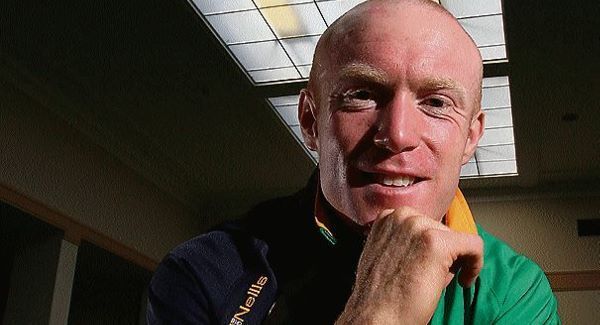
The Games, which run from August 29 to September 9, feature 4,200 elite athletes from more than 150 countries – and as such are the biggest yet.
Even so, the Irish team, spread across 10 sports, has high hopes of repeating the successes of Beijing 2008 when our team of 45 athletes returned with three gold medals, one silver and one bronze.
This year’s team, which travels with 50 support staff, contains five current world champion athletes.
The Paralympics is always a fascinating event – as much for the incredible personal stories of the competitors as for their physical achievements.
The Paralympics is indeed all about sport, but it is also an inspiring saga of sheer human endurance and determination of people who focus only on what is possible.
ONE Sunday morning in 2001, 20-year-old Mark Rohan was travelling by motorbike to play a football match for Westmeath at U21 level: “I came across a bad patch on the road and lost control of the bike. It hit a tree,” he recalls. “I came off the bike and ended up in the ditch.”
As Mark lay there for two hours, going in and out of consciousness, nobody noticed anything amiss: “Nobody saw me because I was in the ditch and the bike was just there by the side of the road; it looked as if it was just parked.”
Then, an alert motorist stopped. “He thought something might be wrong so he walked the road — and he found me lying in the ditch.
The next thing he knew, the young man from Ballinahown near Athlone was in hospital in Tullamore. He had broken four bones in his back and several more in his feet. Four ribs were broken. His lung was punctured. The accident also damaged his heart and smashed his collarbone. “There was a lot of internal bleeding,” he recalls.
Mark was transferred first to the Mater Hospital for almost a fortnight, and then to the National Rehabilitation Hospital. In all, he says he was in hospital for several months; from Nov 2001 to Jun 2002. He was paralysed.
“I had to learn to use a wheelchair, wash myself dress myself — all the basic parts of living.”
After leaving hospital, he took up archery and wheelchair basketball. “I competed with the Irish team in 2005 and captained the team in 2007. I played wheelchair tennis as well and always took it very seriously.”
An apprentice electrician with the ESB at the time of his accident, Mark went back to work with the organisation in 2003 and three years later he commenced a degree in sports management at UCD. “I’m a full-time athlete now and eventually I hope to do a master’s in sports development.”
In 2007 he bought a hand-cycle to use for training purposes — but then he began to like the sport itself. “I loved the freedom of it. I loved the sensation you experience from hand-cycling — you get a great sense of freedom and forget about your disability. Hand-cycling allowed me to get out into the fresh air and the countryside.”
In 2009 he competed in the World Championships near Milan, while Mar 2010 saw him win his first European event in Dubai. He finished that year by winning the World Championship in September, in a road race in Quebec in Canada. “There’s great travel involved. You have to hit certain targets to qualify for the Paralympics — one of these is to win a medal in the World Championship in Denmark in 2011. I did that and then I knew I was going to London.”
Now aged 30, he says: “For me it was the support from friends, my employers, and sporting organisations that helped me get this far. It wouldn’t have been possible without that. I’m heading off in mid-August to compete in two individual events at the Paralympics — a road race and a time trial in London.”
Eimear Breathach was only 17 and on holidays with her family when it happened.
“It was the summer holidays before my Leaving Cert year. It was the end of July 1996 and we were on holiday in Galway.
“I dived off rocks in the sea at Carraroe, and I’m not 100% sure of what happened next – I either hit the bottom or I hit a rock.
“I remember not being able to lift my head up. I couldn’t move my feet or arms. I knew I was in trouble.”
Frightened, she devoutly hoped the two friends who were swimming with her would not simply assume that she was messing around.
“Luckily they realised something was wrong, There was another family on the beach and together they all got me out of the sea on a surfboard.
“The Shannon-based rescue helicopter came out. I was flown to hospital in Galway and then to Dublin the following day.”
The Dublin-born teenager spent several days in the Mater Hospital before being transferred to the National Rehabilitation Hospital in Dunlaoghaire.
“At first I couldn’t move at all. Gradually I found I could lift my arms and use my little finger.
“Eventually I got partial use of my hands, but my legs were no longer functional. Realisation dawned gradually that I would be in a wheelchair for the rest of my life.”
“I was in the National Rehabilitation Hospital for about 11 months, and when I came out, in June 1997, I was in a wheelchair.”
Before the accident Eimear had played basketball, camogie and football.
“I was on about five different squads between the three sports.
“While I was in the National Rehabilitation Hospital we had sports and I played table tennis.
“It was a very accessible sport and I really enjoyed it. My interest grew from there.”
Eimear returned to school the following September and started to study for the Leaving Certificate exam.
She went on to study commerce at UCD and later got a job as an insurance underwriter and continued playing table tennis.
She now boasts a range of top-class titles, including the 2003 Irish Open, the 2006 and 2008 Liverpool Opens and the 2011 US Open, and she was a member of the Irish team which competed at Beijing 2008. She competed in her first international table tennis competition at the age of 21 in 1999.
“It was the Belgian Open. It was my first international competition and a great learning experience.
“From there I went to more international tournaments, and started to get selected for the European Championships. Then I qualified for the World Championships in Taiwan.
“I played well there and in 2006 I qualified for the world Championships in Switzerland and for the Paralympics in 2008.
“The girls I played against there are now Numbers One and Three in the world so in hindsight I did better than I believed I did at the time.
“Last year I attended eight international tournaments in order to qualify for the 2012 Paralympics.
“I love sport. I’m proud of it. If I like something, I work hard at it and I like table tennis.
“I’d be a bit stubborn so I tend not to give up on things.”
Now 33, she puts much of her success down to the support of her husband, Michael Hickey and a loving family.
“They’ve had to make sacrifices because of my lifestyle — last year I had to travel to eight international tournaments for instance.
“It’s all about me at the moment and I’d be conscious of that.”
CONNECT WITH US TODAY



Be the first to know the latest news and updates

















