Hook, line and sinker
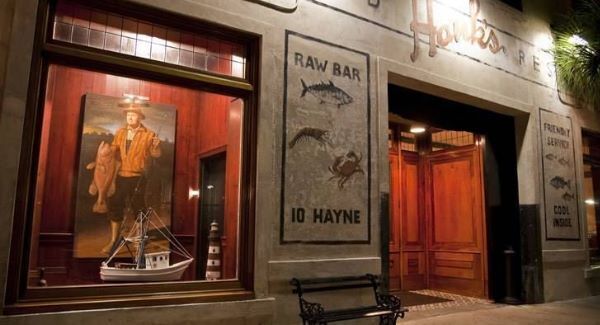
WHEN Hank Holliday wanted his beloved Charleston to reassert its unique culinary identity, it was only natural that he would turn to a Limerick man.
After a decade spent honing his craft in New York and Los Angeles, serendipity brought chef Frank McMahon and his wife Gigi to the old colonial town on the South Carolina coast in 1994. Five years later he was running the kitchen at Elliot’s on the Square — that’s when Holliday decided to scout the competition, in search of the one final piece for the new seafood restaurant he had installed in a century-old disused warehouse.
Raw materials for a renaissance in the town were plentiful: a seemingly limitless bounty of seafood and a generous soil offering up fresh produce. In spite of that, it was a “culinary ghost town” when McMahon arrived there first. Now, 13 years after it first opened its doors, Hank’s Seafood Restaurant is at the forefront of a thriving dining scene and gearing up for Independence Day celebrations today. Constantly fielding requests for recipes, Holliday proposed a cookbook which eventually became the hit Cool Inside, McMahon’s beautifully curated guide to southern cooking and the influences he brings to the tables he oversees as executive chef.
“I think what’s attracting people is that it’s not your run-of-the-mill cookbook,” notes McMahon. “There’s a good story in there, well-written, the history of Charleston, food from past and present.”
Charleston is situated in the so-called Lowcountry, blessed by an abundance of the obligatory prawns (or shrimp, as they refer to them in the US) not to mention crab, sea bass, triggerfish and vermillion snapper. On the ground, okra and tomatoes are indigenous.
The deep south will never shake off its troubled past. Charleston is, after all, where Porgy and Bess forged their tragic romance amidst the chaos of the fictional Catfish Row. But this vast expanse of land which sweeps through the old states and down onto the Gulf Coast can look to food as a redemptive product of a troubled history. Charleston is one of those cities where the southern hospitality is matched by its food.
“I had a feeling about Charleston and Savannah, they have strong Irish roots,” recalls McMahon who was living in Santa Monica in California when he and his wife decided they would return to the east coast to settle down.
“I didn’t know a lot about Charleston, I knew a hurricane hit it in 1989. My wife’s in the medical field. The headhunter at the Medical University in Charleston called her, not even knowing that we were interested. I told her to take the interview and the rest is history.”
The story stretches back further of course. McMahon’s father Tony and his Austrian mother Traudel were both chefs and not long after Frank was born in Germany, the McMahons moved to Limerick and on to Caherdavin. Frank attended St Munchin’s but was earning his keep in the catering industry from the age of 12. His father worked at various restaurants and he also opened his own one in Clare: Thissilldous (pronounced “this’ll do us”).
“Back in those days, Ireland was in the doldrums. I was trying to figure out if I’d go into hotel management, would I be a chef, would I go to university. But this way of life was set out for me, why not follow it?”
He got an opportunity to work a summer in the US as a 20-year-old. “When I became legal I attended the Culinary Institute in New York. I was seven years in the New York/Connecticut area and left for LA in 1992.”
Not everything went smoothly that day in 1999 when Hank Holliday decided to drop in on the “wild Irish chef” at Elliot’s to see what he was made of. When mussels spawn — which happens a handful of times a year — it is impossible to tell until the customer opens up their own shell. Not every batch can be tested and it was rotten luck. But he wanted that job at Hank’s and stepped up his game for the second course.
It was the beginning of a relationship built on compromise. As opening day approached, McMahon finalised an elaborate menu which led Holliday to set down a marker for his ambitious young charge: “We’re in the south. We’ve got to have Lowcountry cuisine and there has to be fried seafood. This modern, contemporary stuff will not fly.”
The southern palate is not to be toyed with and McMahon and Holliday met in the middle. But over the years, Charleston has evolved at an enormous rate, something which is reflected in the diversity of his recipes. McMahon also brings his own influences to the book, be it combining scallops and the red cabbage of his Germanic background or extolling the virtues of the Limerick fish and chip shops of his youth.
The experimentation is all well and good — how an outsider like him treats corn, okra and grits is the dealbreaker.
“Once you understand it and eat it, it becomes another beautiful thing to work with,” he says.
A phrase that could be applied to the south in general.
“It is what it is,” McMahon acknowledges. “There is no hiding the stereotypes, they’re definitely there. There’s a rich history with the civil war. The north-south divide isn’t as bad as it used to be but it’s still a factor. History dies slowly.
“But it’s very hospitable. People are always blown away by it when they come here. Especially in the service industry where you can become a bit jaded dealing with the public. There’s a genuine southern hospitality that’s hard to match.
“The beauty about Charleston is that it has great weather, great history, great food and fantastic golfing nearby. We’ve been very fortunate as well with the teflon economy we have here, it’s been buffered against what has gone on elsewhere.
“Industry is coming here now. Boeing set up their headquarters here. It’s hard to beat this place at the moment. I don’t stick around in places, I have itchy feet. This has been home since 1994 and it’ll take a long time to get me out of here.”














