Art in the everyday
FROM gaining an insight into the seemingly mundane work of chambermaids, to seeing an iconic building through the senses of a young blind man, the Irish premiere of Parallel Cities, produced for the Cork Midsummer Festival, is an intriguing project. Continuing until July 1, and developed by artists working in interdisciplinary arts, it started in Berlin in 2010 and has also been executed in Buenos Aries, Warsaw and Zurich. It is curated by Lola Arias from Buenos Aries and Stefan Kaegi from Berlin.
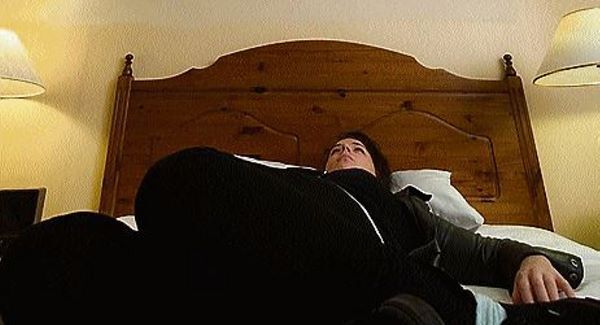
The Cork production includes ‘Chamber Maids’ at the Maldron Hotel in Shandon. The event is for one audience member at a time. You are given five keys to five bedrooms. In each, you are given clues that allow you to build up a portrait of the cleaning staff. The information is gleaned through the workers’ voice recordings, photographs and installations. ‘Chamber Maid’ could be described as documentary-like. It demands of audiences their willingness to bear witness to the lives of the people under the microscope, people who are normally anonymous.
You will get to know Anna, a 40 year old Polish woman, who talks about the dreaded hen parties that stay at the hotel, leaving streaks of fake tan all over the bathrooms. In a letter, she writes: “I am a ghost who enters your room while you are not there. I see your unmade bed, your underwear, your books, your rubbish...”
A Latvian chambermaid talks about how she had to move to Ireland for work and leave her daughter behind, paying a minder €100 per week to look after her. Planning to move her young child to Cork, she is happy to be working legally, having had to do back-breaking casual work such as potato picking when she first came to Ireland.
At midnight one night last week, about 15 of us were shown the workings of City Hall. Eventually, we gazed out at the city from the top floor of the Civic Offices where our host, Robert, played a piece of music he had composed himself on his accordion. Before that, the entertaining and spiritual 20-year-old gave us a truncated version of his life story, including how he suddenly became blind as a young boy.
In this piece, entitled Rooftop Review, Robert showed us how, even without sight, a building can be known and a life can be fully lived despite having a major disability. Robert brought us into the council chamber and was able to point out which chairs were allocated to each political party member. He sat in the Lord Mayor’s seat and prayed for the city’s councillors. A student, he said he had only been brought into City Hall two weeks prior to the Cork Midsummer Festival. He finds his way around by following banisters with his cane and gliding his hand along walls.
A bus took us to the Barry’s Tea factory in an industrial estate for a project called Factory. Managing director, Tony Barry, spoke about his job and brought us into the boardroom, decorated with photographs of elephants carrying the company logo on their backs. Barry told us how this unique piece of advertising was achieved. His grandfather was always interested in publicising the family firm in eye-catching ways. There happened to be a circus in town and the elephants were corralled into a photo opportunity.
As well as meeting factory workers who spoke about their jobs, we listened to the company’s tea taster who spoke about regularly travelling to Nairobi to taste tea. However, more detail about the process of tea-tasting would have been interesting.
For The First International of Shopping Malls, we were bussed to a shopping centre whose identity we’ve been asked to keep secret for fear that disclosing it would alert the security staff, spoiling future visits during the festival. There was a distinctly conspiratorial air about the experience, with the project leaders supplying us with ear phones and radio transmitters. We all separated from each other, once inside the mall, and followed instructions on how to behave. We had been warned that we could attract attention unless we succeeded in becoming just one more anonymous shopper/browser in this ‘Utopian place.’ A shopping mall, according to the festival catalogue, is “like a whole city assembled in an idealised form below a glass roof. The goods displayed in shop windows sit there and patiently await their future owners.”
The voice on the radio device spoke of how shopping malls manipulate people. They are timeless places with no clocks. Back in the 1950s, people spent on average about 20 minutes shopping. Today, the duration of a shopping expedition is four hours.
While I walked around in a trance-like state, I could see two security men keeping an eye on me. If they had been watching closely, they’d have seen myself and about 20 other people changing our rhythm, walking slowly and then speeding up, as we responded to the beat of the music played to us on the transmitter. We were told not to speak to each other but instead, to yawn when we passed a member of the troupe. It was all mildly amusing and attempted to provide a critique of consumerism. We were even asked to follow members of the public and try and guess their social class based on how they were dressed, how they looked and how they moved.
For a voyeuristic piece called Prime Time, a small audience was brought to two apartment blocks opposite each other on St Patrick’s Hill. Standing on the street, wearing headphones, we listened to the recorded life stories of the various occupants of the apartments who stood or sat at the windows and variously strummed a guitar, played darts and showed off a fish tank. Most of the occupants were non-Irish citizens including a Pakistani family, Poles, a Hungarian and a very serious looking Spanish woman. The Pakistani family included a mother-of-two who sat at her window working on a sewing machine.
The Quiet Volume at UCC’s Boole Library is about library behaviour. Wearing headphones, sitting beside just one other participant, we were alerted to the sounds in the supposedly silent library and were instructed to focus on particular words and read passages from books. It was a self-conscious experience as we peeped at other people nearby, wondering what they were reading.
The only non-ticketed event in the programme takes place at Kent Station, entitled Sometimes I Think I Can See You. Writers Ray Scannell, Kathy Darcy and Elizabeth Rose Murray discretely tapped away on their laptops, writing about what they could see in the train station as well as what they were imagining.
Their ongoing narratives could be read on overhead screens. One writer wrote about an international ring of spies that were catching trains all over Europe. Another focused on a man and a woman sitting in the station and their relationship to each other. A bunch of children obeyed a writer’s instructions to box in slow motion and later danced, unselfconsciously. It was a cheering sight.
Parallel Cities could be described as a site-specific project that engages the audience. By going behind the scenes the audience is no longer a passive consumer. The workers, reluctant initially to tell their stories, become the actors in their own drama. After hearing these tales from the Maldron Hotel, you will never take chambermaids for granted again.














