Lifelong love: Expert advice for those in long-term relationships
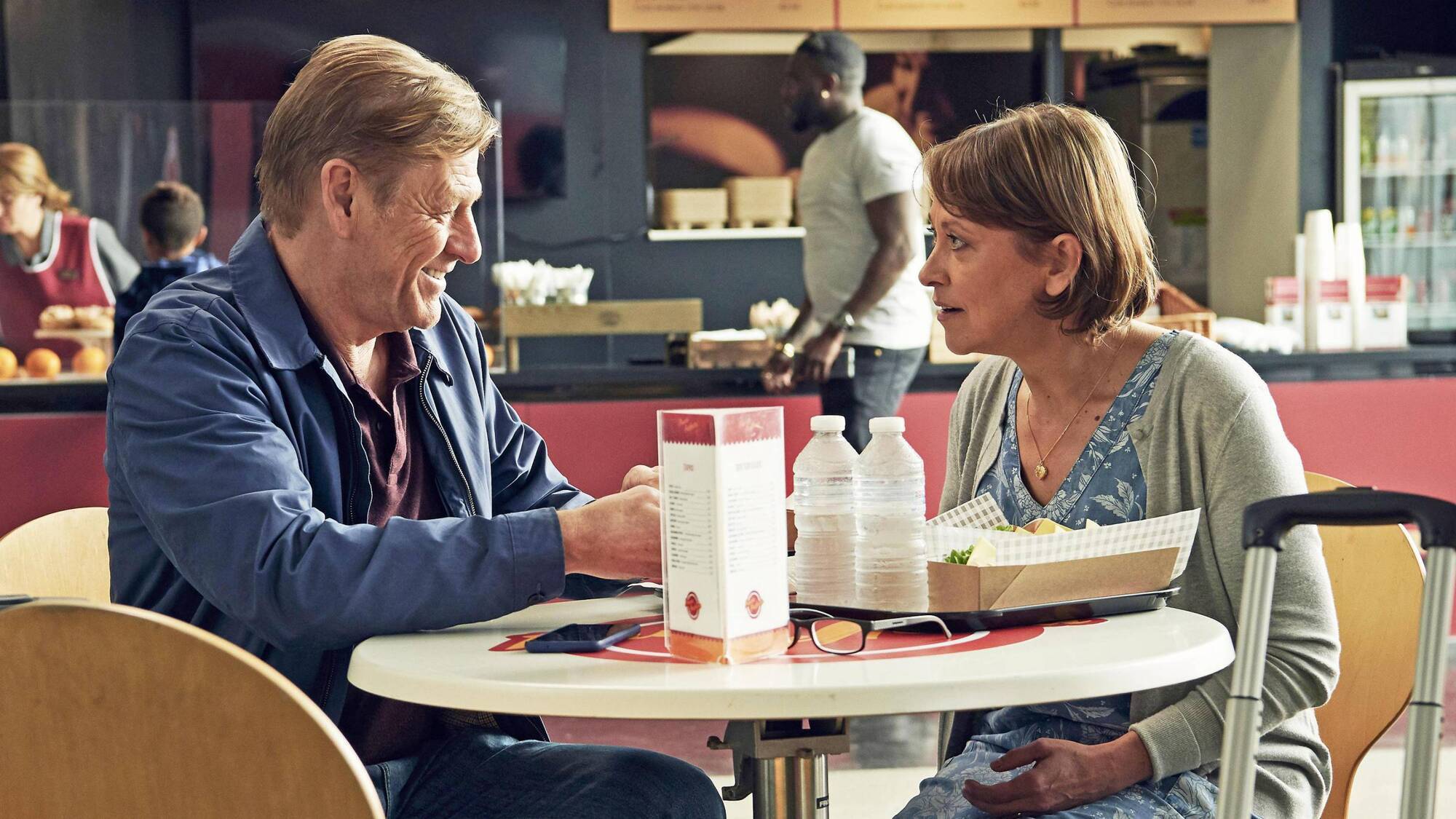
Sean Bean and Nicola Walker in a scene from the BBC drama 'Marriage'.
the BBC drama starring Sean Bean and Nicola Walker, has created a divide among those watching it. Some are enraged at its slowness, its apparent lack of plot and the mumbling dialogue interspersed in the deafening silences. Others marvel at the authenticity of this quiet portrayal of a long-term relationship and the mundanity that goes along with it.
In episode two, Sean Bean says, “27 years, eh”, to which Nicola Walker replies, “oh, don’t” with a small smile, and you feel the weight of everything they’ve been through in just five words.
Whatever you think about the programme, it perfectly shows the complicated nature of lifelong love. Sean Bean’s character Ian is at a crossroads. He’s been made redundant, his mother has recently died and through the screen, you can feel his struggle for identity Change is inevitable over decades-long relationships and can often be the catalyst for breaking up. Cork-based psychotherapist Karen Murphy who specialises in couples’ therapy, says that when there is change, how you communicate is the key to getting through it.
“The words we should use are 'vulnerability' and 'openness' because though change is inevitable, it is hard. A common difficult change we see is when children leave home. Children are a great distraction, and I see a lot of couples who can navigate the parenting, the minding and the talking about the children, but when it comes back to just the two of them, they wonder what's left in the relationship. I see it so often and I think that's what the programme Marriage shows so well, is how deep a gulf there can be.”
Sharing how you feel around times of big change is essential, and communication generally is what relationship counsellors say is missing from struggling relationships. “We're just not taught how to have difficult discussions; how do you say to someone, 'actually, I have a different opinion', or 'I want something different from you',” Murphy says.
“It's easy for people to come together, fall in love, and be good. But of course, that's not life. It doesn’t always stay that way. We're always going to have challenges, differences, different wants and different needs. We're all going to have our sensitivities or vulnerabilities. What’s important is what happens when they come to the forefront and how we navigate them. Many couples come to me and say, ‘we have a really good marriage, we never argue’, but that isn’t necessarily a good thing. You need to be able to navigate having arguments.”
Dublin-based psychotherapist Niamh Crowley says learning how to argue and have those big conversations is crucial to a successful partnership.
“We’re not arguing effectively. We think that confrontation is really bad. It’s not - it's just that we're not doing it right.”
Both therapists would like to see counselling at the start of relationships becoming normalised, so couples could lay out what they want from the beginning and plan for a life together.
“I think it would make the journey easier for people,” Crowley says. “You would set down your core beliefs and your values. What you’re both looking for in the next 10 years? What's the vision for you as a couple? Decide if you are having children are not, what happens to your careers if you do, where you want to live? Lay out all your hopes and dreams, and figure out if this person you’re with is going to be able to go along that journey with you and if you’re compatible. Also, what will you do if you do come into troubled water?”
Crowley is talking from personal experience. Married for 12 years, she and her husband went to counselling when they were just one year married. “We went to counselling early on, I just thought, who is this man, I don’t know what to do, and he's not even listening to me. We were together four years before we got married, so I don't know what changed, but I think life got so busy and we just weren't listening to each other. So we went to see someone for 10 weeks, and it was a game changer."
She closely follows Dr William Glasser’s choice theory, which emphasises a person's control over their feelings and actions. "He wrote a book with his wife Carleen called and when we were going to couples' counselling, our counsellor gave me a sheet, and she said, 'put this on your fridge'. It was a list of Glasser’s seven caring habits and seven deadly habits. The caring ones are supporting, encouraging, listening, accepting, respecting, and negotiating difference, while the deadly ones are criticising, blaming, complaining, nagging, threatening, punishing and bribing. These have been on my fridge for 11 years now and there are still times that my husband will come to my office to say, 'Niamh, you've just done two of those on that deadly list'.”
Relationships need ongoing work if they are to survive the ups and downs of life. “I think some people realise that they are work, and some don't," says Murphy. "Psychotherapist Ester Perel says we expect one person to give us what a whole community gave us before and that is just not possible. In one of my training [courses], they said yes, there's a high divorce rate, but the thing that isn't talked about is the long-term miserably married."
Counselling allows couples to explore all options. If the relationship is over, most couples can see that themselves over the course of counselling, says Murphy. However, she adds, others may seem doomed to divorce, but they get so much from talking to someone neutral that they find a new way to stay together.
Along with establishing clear communication, couples need to look at their relationship from all sides. “Renowned American family therapist Terry Real says that if what you gain in the relationship is greater than the grief of what you don't get in the relationship, then it's positive," says Murphy. "There is always something that you don’t get from a relationship, something that you expected but isn’t there and it’s important to acknowledge that. What Terry Real says is that, on balance, if what you’re getting is more than what you’re not getting you’re in a good place.”
What makes the BBC's such a compelling watch is the way any of us in a long-term relationship can recognise ourselves. Sure, the bickering over the jacket potato in the opening scene could be any of us but the quiet kindnesses, the kisses and the stolen knowing looks reveal an enduring love that many of us hope to know.

Bill and Celine Stevens have five children, 10 grandchildren and have been married for 52 years. They spent the evening of their 50th wedding anniversary in April 2020 in lockdown and celebrated by wearing black tie and drinking champagne. They are my mum and dad.
You don’t often get to sit down and quiz your parents on their relationship and ask their advice for other couples, but I’d suggest anyone who can should.
“There’s no big secret,” Bill says, “just being tolerant of each other and not being in each other’s faces all the time.”
“I’d agree with that,” laughs Celine. “We go our separate way for an awful lot of things.”
“But we also have a lot of shared interests, travel, theatre, gardening. Lots that we did together,” Bill points out.
It was a very busy house when we were growing up, but mum and dad always had dinner together and went away on trips (a perk of my dad’s job) when they could, which mum says made the transition easier when we left one by one.
“It's good to make space for each other. You were all coming in from school for dinner and he was coming in later, so it was nice for us to just sit and have our dinner on our own, and we never turned down an opportunity to go away when one was offered. It was hard when you left at the beginning, but I think we adapted very quickly.”
Bill nods along in agreement, “It was just a new chapter.”
I ask if they have advice for other couples, but they don’t want to give any.
“I wouldn’t advise anyone - you really have to find your own way,” Celine says. When pushed a little, she offers: “Compromise, don't make everything 100% about the children, take time for each other and remember that you're a couple.”
“Love and friendship are the foundation,” Bill says. “But you also need trust, honesty and generosity.”
Fifty two years is a long time and I want to know if feels that way but when I ask, without hesitation, and at exactly the same time, they both say, “It doesn't feel like that.”
Then they looked at each other in a way that made me cry the whole way home.
CONNECT WITH US TODAY



Be the first to know the latest news and updates