Conor Creighton: We resist love but it is the answer to everything
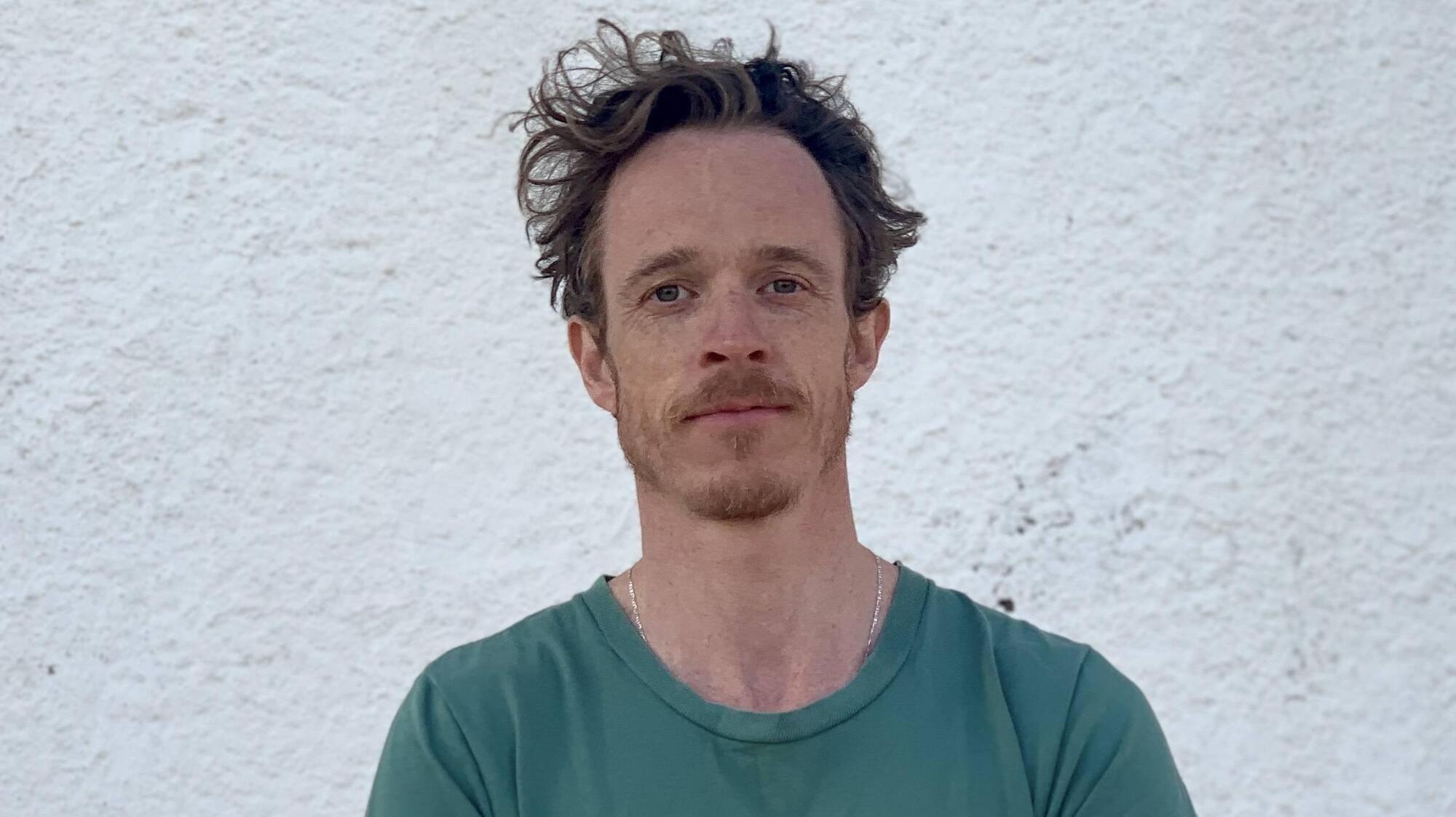
Conor Creighton offers some basic dating advice 
Conor Creighton: We resist love but it is the answer to everything

Conor Creighton: A very Irish insult is to say of someone that they love themselves.

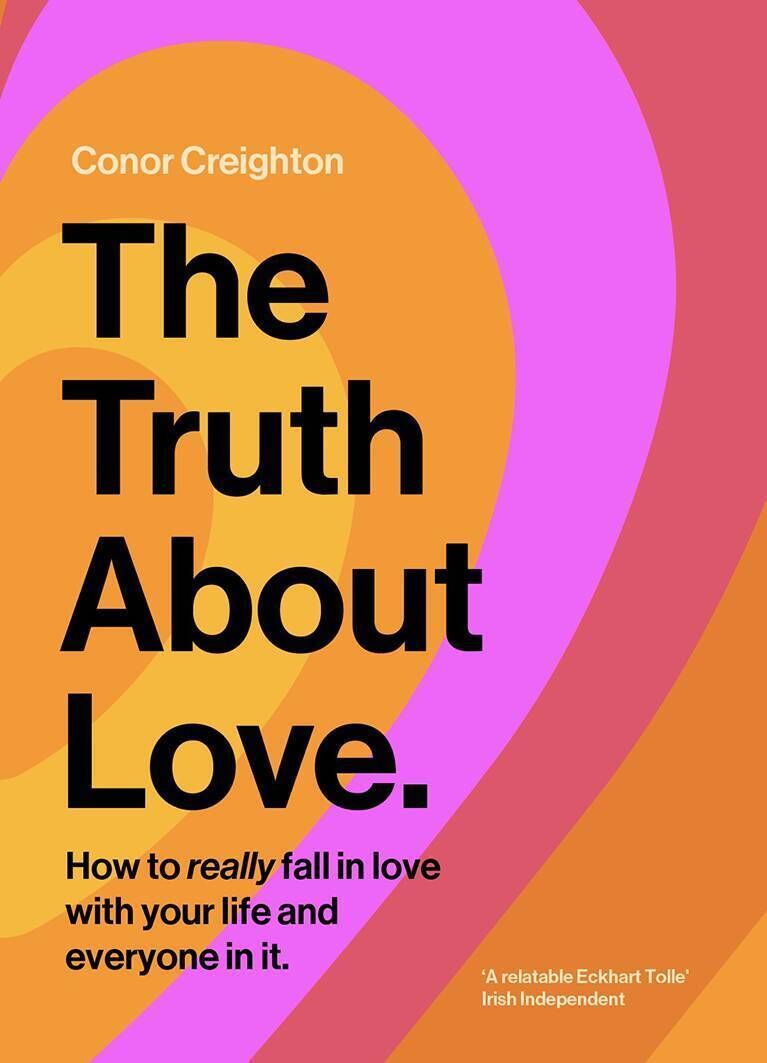
  • The Truth About Love 
  • Conor Creighton 
  • Gill Books, €14.99

Our ideas of love tend to be narrow. We focus on romantic love, a thing that somehow comes to us from mysterious external sources (or maybe Tinder), that has a life of its own, and envelopes us in some kind of magical cloud that fogs our logic — the French call it amour fou, which literally means insane love. It is something that we are conditioned to stand around and wait for, like a taxi, something that whisks us away, which is a narrative that works better in rom coms / disaster movies than in real life. The only other kind of fervent love we are encouraged to collectively express is for our children or for our football team.
Conversely, a very Irish insult is to say of someone that they love themselves. This implies great egocentricity, self-absorption, vanity, etc. Equally, saying ‘I love you’ to friends and family members who are not small children still sticks in our throats; there is a lingering sense of phoney Californianism about it, an embarrassment, a reluctance. We find it easier to slag people off than to express love, to show anger than to express love; we can have sex with people more easily than we can love them.

But most of all we withhold love from ourselves. There is no greater critic than the inner critic. Deprogramming this harsh inner voice so that it is replaced by a kind, friendly one that cares about you and has your best interests at heart takes time and effort, but when this change begins to happen, it doesn’t just benefit you — it benefits all around you. Loving kindness is not something that you consume, but that you create, that others then pick up on and respond to. It’s contagious. If enough is generated by enough people, it can create wider change — a kind of love tipping point, badly needed in our current world.

Meditation teacher, Conor Creighton, had this experience of transforming his inner critic to something kinder and more loving when he discovered meditation a decade ago. After a varied career involving lots of travel, in 2012 he did his first Vipassana, a 10-day silent retreat in the Buddhist tradition, and wrote a book about his experience, This Is It. He’d been unhappy in relationships, both with others and with himself — until Vipassana changed his perspective around what love is. His new book, The Truth About Love, looks at what love can be beyond its romantic parameters; how love is auto-generated, flows outward, and is for everyone, not just your romantic interest or your kids. But especially it is for yourself.

The Truth About Love by Conor Creighton

“I do a lot of one-to-one work and noticed the one thing we all come back to in conversation is the importance of developing a loving relationship with yourself,” he says. “What I noticed is how awkward a concept this is for so many of us. How we resist love. Yet it is the answer to everything.”

Creighton was born in 1980 in Kildare, and after a chaotic childhood overshadowed by parental alcoholism, he moved around a lot and had a lot of jobs. He also had a lot of co-dependent love-addict relationships. Suffering from anxiety and depression, he began his recovery via the ceremonial hallucinogen ayahuasca, before completing his first Vipassana, the famously tough 10-day retreat where there is no talking, no reading, writing, screens, distractions, externals — just you, sitting with your thoughts in all kinds of discomfort for long periods.

“Before the Vipassana, I’d taken a lot of plant medicine, psychedelics,” he says. “With Vipassana, it was the first time I noticed how strong I was, how much resilience I had to put into a very difficult scenario.

“Vipassana is purposefully difficult, because eventually you need to surrender, and in that surrendering you recognise, ‘oh wow, I’m capable of anything’. Moving towards pain and discomfort is a very loving thing to do. Previously, I’d thought seeking pleasure and happiness was the most loving thing I could do, but with Vipassana, moving towards pain and fear and going back to trauma was the most loving thing.” 

Coming from an alcoholic family, he had “a pretty unhappy relationship” with alcohol himself. 

“But there was always a very strong self preservation streak running through me,” he says. 

Even during periods of my life when I was suicidal, there was always something pulling me back from the brink. 

"I think that was related to all the love I received as a child. There was a lot of chaos growing up, but there was so much love.”

He now has a loving relationship with both his parents, and remarks on the fluency of younger Irish people around emotions and mental health vocabulary.

“They’re so aware of their wounds,” he says. “When I grew up, we were trained to be entirely numb to our feelings. Among the men of my generation, there was a complete numbing. There is a much greater awareness in younger men of what a shackle masculinity is, how outdated so many of these patriarchal ideas are.

“The problems that we have as people today is the lack of love we bring into our institutions, our society, the family, our relationships. I feel that we have devalued this sense of love — we have repositioned love as something quite whimsical, quite soft, maybe even something that’s not necessary, that’s less important, and this is very much a product of the patriarchy, of late stage capitalism.”

Creighton argues for a return to “the primacy of love, to introducing a loving intention to everything you’re doing”.

“Is there love in your work? Does your livelihood involve hurting other people? Is there cruelty in your diet? Do you really love your children? Are you letting your children live the lives they want, or are you placing some kind of power and order on them?

“And in our relationships, can we truly say we love other people when we may not even love ourselves? I encounter this with clients all the time, and with myself my entire life — I was walking around the world with a giant gaping hole in my centre which I was constantly trying to fill with other people’s love, consuming other people. It was very much a capitalist form of relationships.”

Which is exactly what dating apps encourage us to do — to consume and discard others; this has been normalised as a valid way of interacting. No wonder there’s a lack of love. Humanity is not designed for, or best served by, algorithms.

Meanwhile, Creighton remains happily single. “My spiritual path began as a management of depression and anxiety, a management of all my destructive elements, but in the past few years it has blossomed into a very loving, nourishing mystical adventure, which is where I am now,” he says.

“The mystical adventure has been falling in love with myself, and falling in love with my own life, and really viewing this life and everything I have as this very precious thing that I want to savour. I think this is why I haven’t been in any kind of long-term committed relationship in a while — this is just too enjoyable.”

Basic Dating Advice by Conor Creighton

  • Be kind to everyone — we don’t know what’s going on in the lives of others.
  • Do not expect things from others that we wouldn’t readily give of ourselves.
  • Look at the type of people you’re attracting.
  • Nobody can complete you — but they can show you how to complete yourself.
  • Be endlessly curious about other people as well as about yourself.
  • Manage your expectations. Choose conscious selfishness — you need to put yourself first.
  • Don’t take any of it too seriously.
  • Address internals like loneliness yourself, rather than ‘fixing’ it by dating.
  • Be tolerant — people are our teachers, especially the ones who get under our skin.
  • Do as Buddha does — embrace the Four Immeasurables: equanimity, love, joy, compassion.
  • Be calm: bad behaviour is a reaction to when we are engulfed by fear.
  • Be loving: it’s in your own self interest for everyone to feel love.
  • Be kind: compassion for others means recognising that what someone feels is valid.
  • Be joyful: the loving part of our brain knows there’s enough fortune to go around.

x

More in this section

Cookie Policy Privacy Policy Brand Safety FAQ Help Contact Us Terms and Conditions

© Examiner Echo Group Limited