Edel Coffey: The power of clothes sizing over how we feel
Pic: iStock
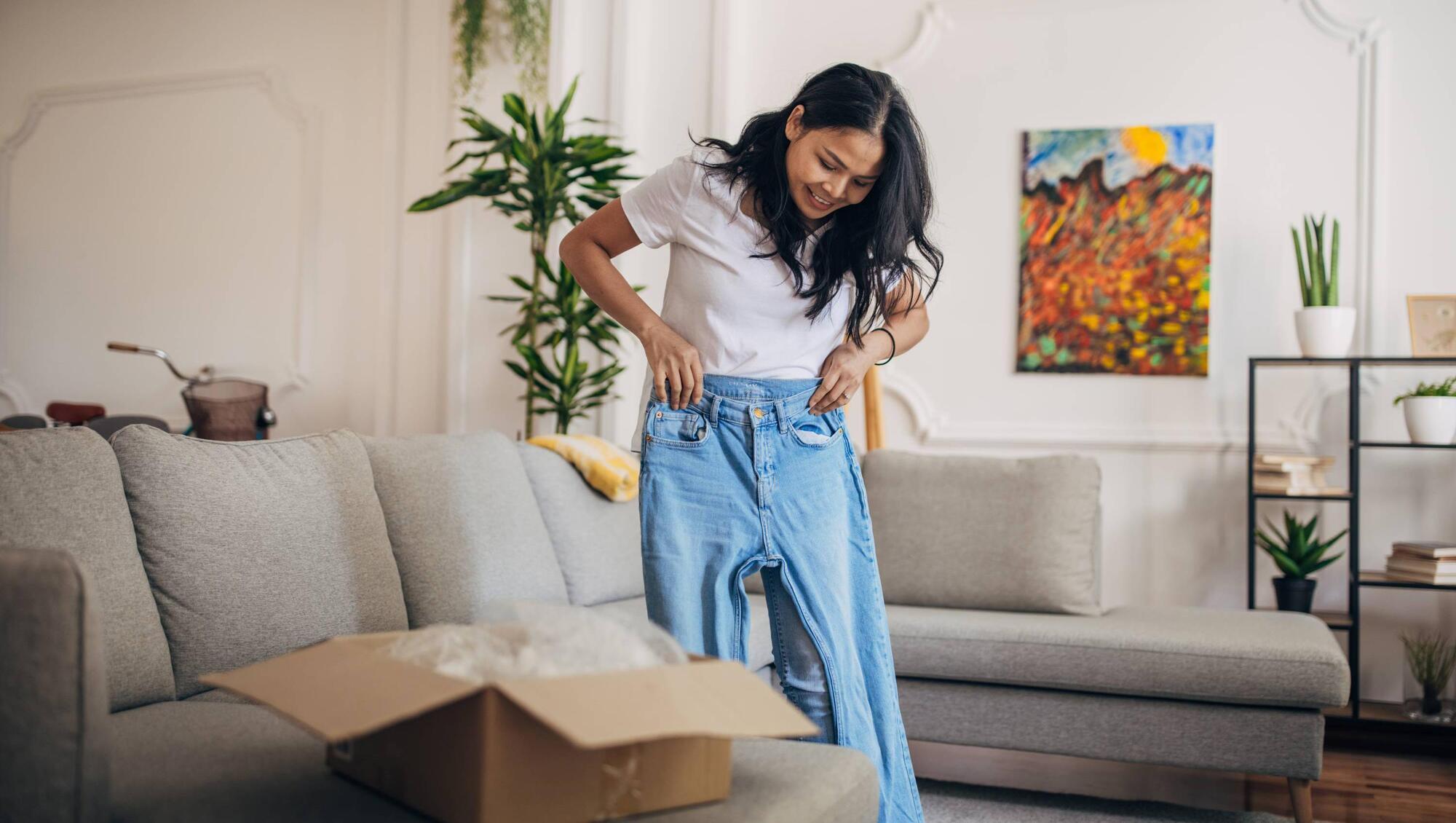
As I write, I’m waiting for a delivery of a pair of trousers I bought online.
When the delivery notification flashed up 'arriving today', I felt a pang of anxiety – will they even fit, I wondered?
I bought them in ‘my size’ but as most people know by now, just because something is in your size, it’s no guarantee that it will actually fit you.
Sometimes ‘my size’ fits me. Often, it’s too big, and just as often it’s too small, to the extent that ‘my size’ really can’t reliably be called my size.
My WhatsApp groups are full of conversations with female friends that go like this: Has anyone bought anything from shop X? What is their sizing like? Should I size up or down? Or buy ‘my size’?
Even shops themselves seem to have made some concession to the strangeness of sizing by adding their own qualifiers in their online sizing guides, such as ‘fits true to size’ or ‘buy your regular size’ or ‘size down if between sizes.’
Some even go so far as to allow you to enter your measurements and they will make a qualified estimate based on other customers’ measurements and the sizes they purchased and more importantly the sizes they returned to give you the best guestimate of what size might actually fit you. (I love this service.)
I was thinking of this a few weeks ago too because of the Molly Mae Hague kerfuffle, where the former Love Island contestant, a beautiful, slim woman, posted a story on Instagram showing her wearing a pair of jeans from Zara in a size XL or 14.
They fit her perfectly and looked great. Hallelujah, I thought, it’s not just me who is a different size in every shop I go into. It’s not just me who has to adjust my size, and sometimes my mood, depending on which dressing room I find myself in.
Sizing has become so varied as to be almost meaningless. We’ve all had that experience of going into a shop with money to spend, looking for something nice, picking up what you think is your size only to discover in the changing room that it doesn’t fit and feeling a bit deflated as a result.
Conversely, if we happen to fit into a smaller size than usual, we feel like we’ve achieved something, even though we know that our bodies haven’t changed either way.
We’re not supposed to think this way anymore. We’re not supposed to be so wed to the idea of being a certain size, a certain number on a sizing label, but somehow the number even though it has become more and more meaningless with vanity sizing, seems to have retained its power over us.

Clothes really have such power over how we feel.
Recently, after a summer in shorts, T-shirts, and Birkenstocks and no make-up, I decided it was time to smarten up.
I decided I was going to revive the 90% of clothes in my wardrobe that haven’t been worn since before covid. I picked out an actual outfit, put on some heels, accessorised — it’s been a long time since I’ve used that word — and realised I had a spring in my step as I went about my day.
I felt better about myself as a result. I had to run to the local supermarket on my way home and the lovely woman on the till was taken aback that the haggard mam who usually trudged through the shop now looked like a member of Leo’s get-up-early brigade.
The fact is, we all know that clothes have the power to make us feel good or bad. I think Molly Mae has done us all a favour by showing that her apparently perfect body has to adjust for size in different shops too.
No big deal. She found the size that fit her best, and looked best, which is how we should be dressing ourselves all the time instead of squeezing ourselves into something uncomfortable just so we can tell ourselves we’re a smaller size.
Surely it’s better to ask ourselves ‘does this fit me’ or ‘do I feel or look good in this’ than ‘is this my size’. I think we should all be shopping this way instead of feeling down about the fact that we had to size up in one shop or elated that we had to size down in another.
I know a woman who gets all of her clothes made by a local seamstress. This might sound extravagant but she told me how much it costs her and it’s less than the equivalent amount it costs to buy the corresponding items of clothing from an average high-street shop.
And guess what? She always looks incredible because her clothes fit her. I doubt her measurements match any off-the-peg sizing either, because here’s the thing, without wanting to sound like an absolute mam, we are all different sizes so how can standard sizing fit us all?
Clothes that fit properly can make us look and feel great. So why would we let a little number on a label make us feel so bad, particularly when it’s clear that the numbers have lost all meaning.