Séamas O'Reilly: The Twelfth of July — and the North's complexities
'Flattening the complexity of the six counties’ divisions into religious lines has always been a bugbear of mine — not least because it’s so difficult to avoid'
Séamas O'Reilly: The Twelfth of July — and the North's complexities

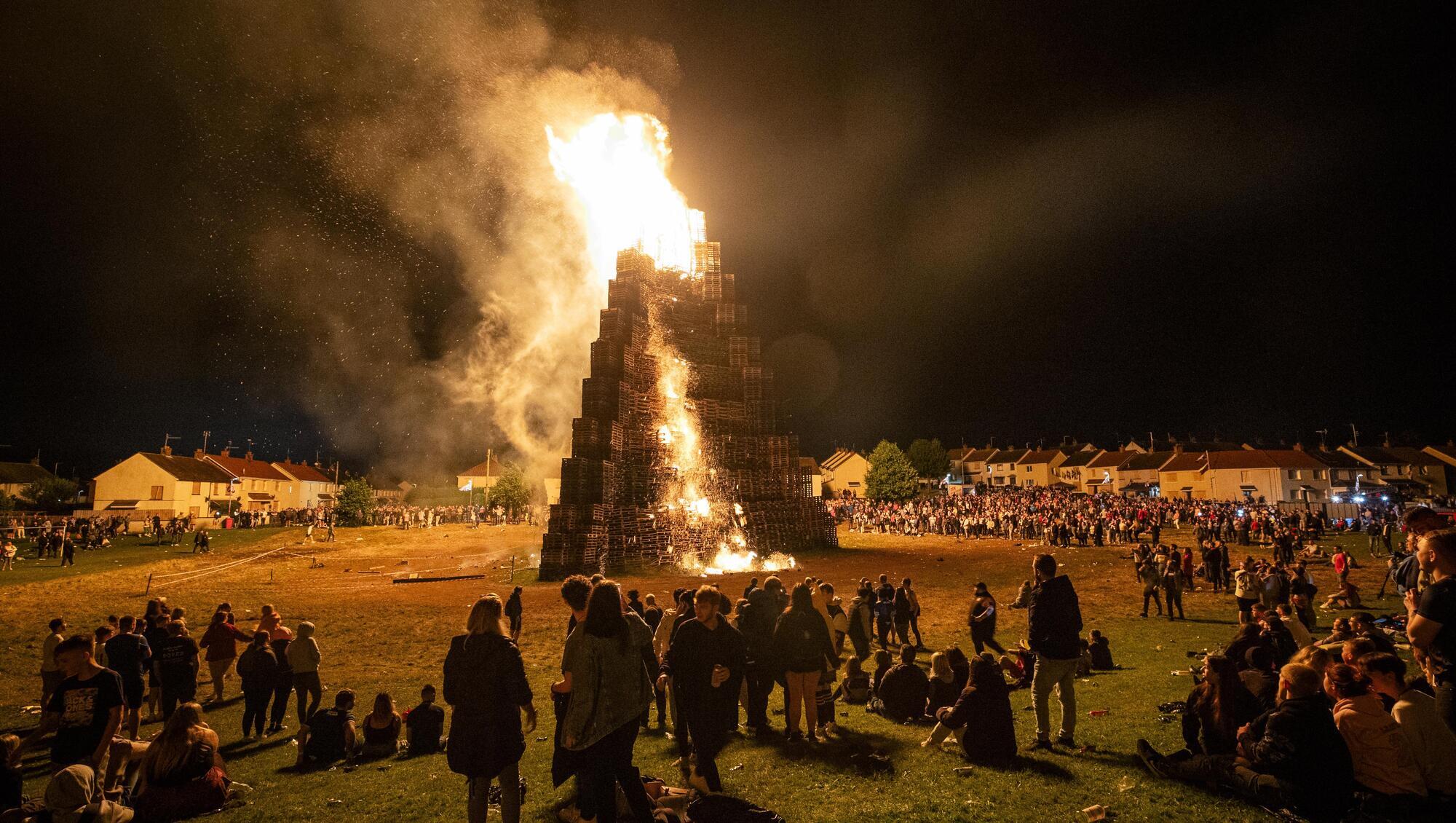
People watch the burning of the loyalist Corcrain bonfire in Portadown, Co Armagh, to usher in the Eleventh night ahead of the Twelfth commemorations.

Last week, Green Party TD Paul Costelloe suggested that the 12th of July should be designated an all-island holiday, as a gesture of goodwill to the unionist tradition, perhaps even a reconciliatory olive branch for a future shared Ireland. 

Reaction was swift and, it should be said, not particularly glowing. 

On Wednesday, in these very pages, former Alliance Party leader John Cushnahan said such a move would be a mistake, albeit conceding he thought Mr Costello “a decent person”, who “naively thought his idea would be a gesture of reconciliation towards the unionist tradition”. 

I’ll restate those caveats here, and try to add my own thoughts on a tradition I know only too well.
During my childhood, the 12th of July was inescapable. 

Actually, “inescapable” is exactly the wrong word, since escape is exactly what most Catholics did, either getting out of dodge entirely or avoiding any travel that might carry a risk of
encountering such festivities. 

My father, for example, has lived his entire life in Belleek, Enniskillen, and Derry, and this week marked his 75th straight year of never being near a parade on the day itself.

What is inescapable, however, is the coverage of these events. 

Most of my awareness came from TV and radio, where the marches were presented with an air of baffling contradiction. 

The morning and nightly news would, for weeks, show skirmishes and fires, of towering pyres piled with burning effigies of loyalism’s usual bugbears; the Pope, Sinn Féin members, the Irish tricolour (more latterly these have been joined by GAA flags, LGBT symbols, and politicians from the Republic of Ireland).

Always, there was the sideshow of which parades had been blocked by the hated Parades Commission, sometimes spilling into rioting and confrontations with police for that reason alone.

Juxtaposed with such footage, however, was the breezy live coverage of the day itself, showcasing the flags, banners, and general merriment, with cheery commentary offered over scenes depicting a light, carnival atmosphere. 

The fact that an entire half of Northern Ireland found such marches distasteful was never examined here but would be immediately remembered minutes later on the next news bulletin via statements from Catholic residents who, unlike me, lacked the opportunity to avoid the events unfolding on their literal doorsteps.

At this juncture, I should address the queasiness with which I use the terms “Catholic” and “Protestant” here, something I usually steer clear of, wherever possible.

Flattening the complexity of the six counties’ divisions into religious lines has always been a bugbear of mine, not least because it’s so difficult to avoid. 

As a shorthand, it’s clumsy; eliding all of Northern Ireland’s secular politics and painting a false picture of some inscrutable Holy War between two equally intransigent brands of zealotry. 

It fails to distinguish between either the various factions of Protestantism, or the increasing prominence of people, parties, and organisations which do not cleave to either religious banner — or, indeed, any at all. 

On a purely personal level, I find it tiresome that this framing re-inducts me, and almost everyone I grew up with on both sides of the divide, into religions we either no longer profess to follow, or never have.

Unfortunately, such distinctions are impossible when discussing the Orange Order, the all-male fraternity which organises most events for the 12th, since it’s quite hard to view its beliefs as anything other than explicitly anti-Catholic.

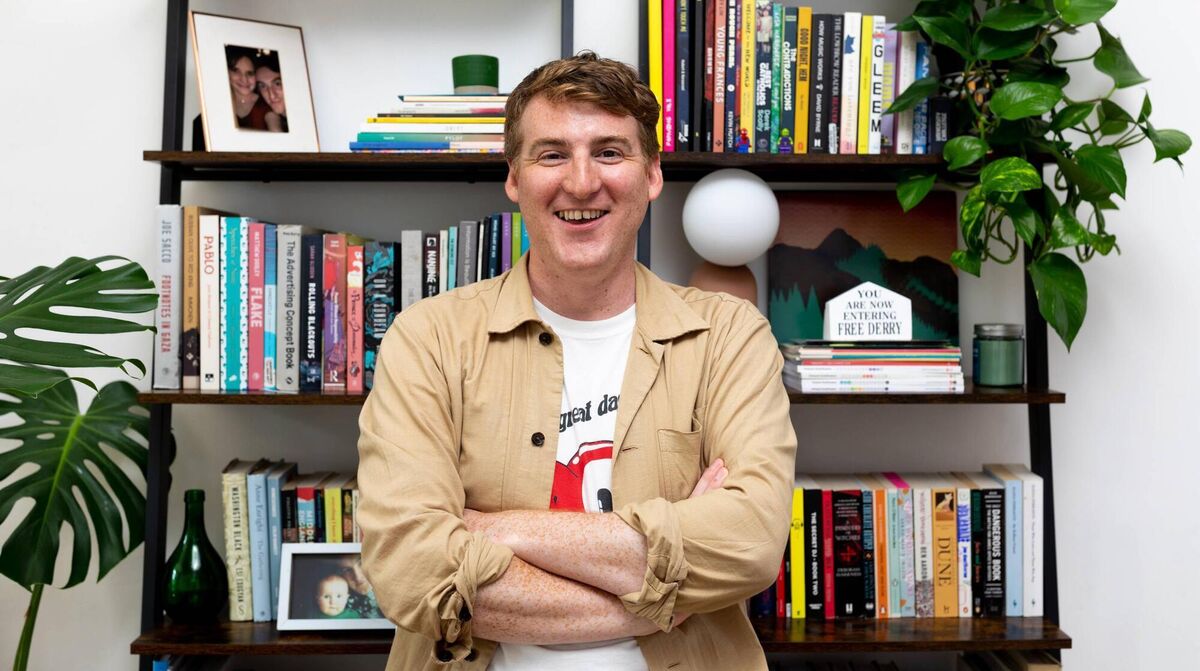
Séamas O'Reilly. Picture: Orfhlaith Whelan

I do not necessarily refer to the Order’s repeated reluctance to amend their routes to avoid Catholic churches or housing since, for the sake of argument, let’s put this down to their obsession with historical precision — an Order that walks through urban and rural Northern Ireland to commemorate a 17th-century battle in Meath, dressed in the bowler hat and gloves of early 20th-century bank managers.

We could point to the ubiquitous burning of Catholic effigies, or the prevalence of loyalist paramilitary slogans and banners at bonfires, but let’s take the Order at its word when it condemns these things each time they happen — which is dozens of times, without fail, every single year I’ve been alive.

Instead, it is more instructive to consider the articles of faith by which the Order itself compels its brethren. 

Members of the Orange Order in Northern Ireland do not merely profess their Protestant faith and refuse admission to Catholics, they are explicitly barred from marrying Catholics, or attending Catholic church services.

In 1984, Rev. David Armstrong, a Presbyterian minister from Limavady, was expelled from his local lodge simply for offering a greeting to the local Catholic church on Christmas Day. 

He eventually took exile in England following death threats. 

In 1996, shortly before becoming Grand Master of the Orange Order, Robert Saulters decried Tony Blair for having “sold his birthright by marrying a Romanist. He would sell his soul to the devil himself”. 

Saulters would serve as Grand Master until 2010. The following year, UUP leader Tom Elliott was disciplined by the Order just for attending the funeral of a murdered Catholic PSNI member.

In the past few years, there have been signs that the Order is growing less austere. 

“Bonfires are about celebrating one’s culture,” said Grand Secretary Mervyn Gibson on Monday, in response to a likeness of Leo Varadkar being burned near Dungannon, “these celebrations should not be to the detriment of other people’s culture.”

“It is disrespectful,” added DUP leader Jeffrey Donaldson, “if people want to earn respect and have respect for their own identity and culture then they have got to show respect for others.”

Such sentiments are welcome, and should be encouraged by anyone who wants to create a shared future for the island, whatever form that takes. 

But eliminating anti-Catholic rhetoric from the Orange Order will take more than them condemning the most extreme expressions of their central beliefs, or us tempting them toward unity with the promise of a bank holiday.

If we want to march toward a future of reconciliation and tolerance, we should be clear that this is a two-way street.

x

More in this section

Lifestyle

Newsletter

Eat better, live well and stay inspired with the Irish Examiner’s food, health, entertainment, travel and lifestyle coverage. Delivered to your inbox every Friday morning.

Cookie Policy Privacy Policy Brand Safety FAQ Help Contact Us Terms and Conditions

© Examiner Echo Group Limited