Louise O'Neill: You can write about anything you want but remember ‘first, do no harm’
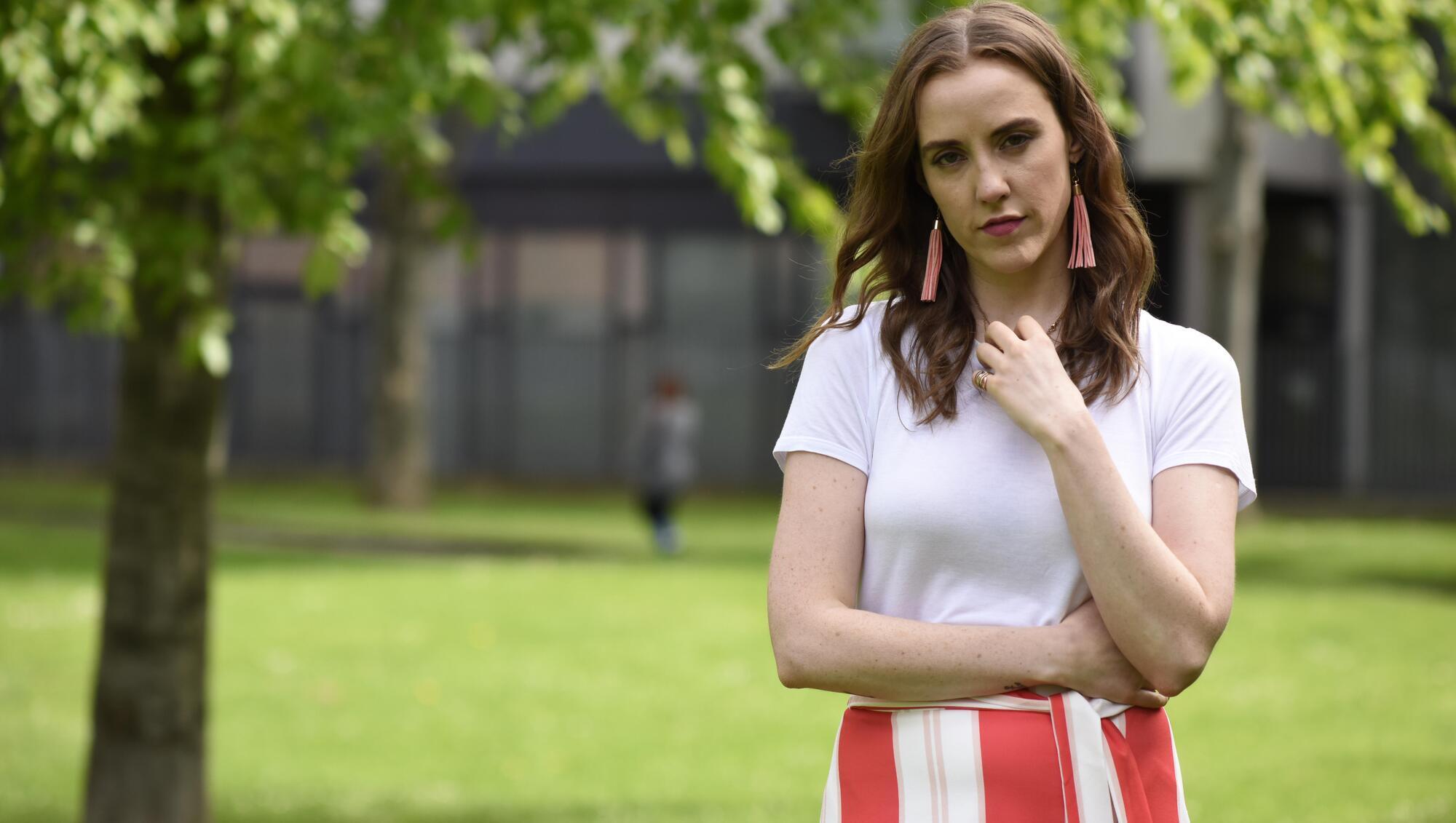
Louise O'Neill. Picture: Moya Nolan

I WAS first published in 2014, a year after the author Kevin Brooks was awarded the Carnegie Medal for his novel, The Bunker Diary, about a teenager who is captured, imprisoned, and tortured. It was a controversial choice, prompting numerous think-pieces and panel discussions about the state of Young Adult (YA) fiction, asking if it had become ‘too dark’.
Given the rather bleak nature of my own debut, perhaps it was not surprising I was asked to participate in some of these conversations. My argument then, as it is today, is that that a YA author could write about whatever they wanted — I couldn’t think of any topic I believed should be off limits — as long as it was done in a responsible manner.
‘Responsible’ doesn’t mean that an author can’t take risks or push boundaries, nor does it mean they shouldn’t explore trauma and grief and addiction in an honest, authentic way. I suppose what I meant was that the author’s intention should be this — ‘first, do no harm’. I was reminded of this last Saturday when reading Hadley Freeman’s final column for The Guardian. In her piece, she wrote about the changes she had seen in column-writing since she began hers in the year 2000, saying that “ideological disagreements were just a normal part of life on the paper back then”, whereas now, she believes that “a difference of opinion becomes a seismic breaking of alliances and certain topics are verboten in social situations”. Freeman finishes by saying that “… it’s ironic that at a time when column-writing has never been more desirable to so many, there is such an expectation of conformity of opinion”.
I disagree.
Like I said all those years ago, you can write about anything you want as long as you keep that simple caveat in mind— ‘first, do no harm’. I’m not talking about righteous anger or challenging the status quo or holding people to account for bad behaviour — that’s an integral part of our media landscape. Rather, I’m talking about acknowledging one’s position of power and trying your best not to hurt people who are already vulnerable or marginalised.
When we write our columns, we are trying to persuade the reader that our opinion is the right one and there is power in that. When I was given this column in 2016, I astonished by how many people approached me about it afterwards — not young millennials, as I had assumed, women who already shared my political ideologies and beliefs, but older people, men and women in their 60s, 70s, 80s, many living in rural areas. “I read you in the paper every week,” they would tell me, “and while I don’t agree with everything you write, it makes me think.” What a responsibility, I realised, to be in people’s homes every Saturday. My words read over breakfast, my opinions considered, debated, argued over. Maybe that is why we should hold columnists in national newspapers to a higher standard than some randomer in the pub, ranting about the political hot topic of the day.
They might find a handful of ears ready to listen, rather than the hundreds of thousands of readers who buy The Guardian or The Times every weekend. Over the last number of years, there has been an ongoing conversation about ‘cancel culture’ and free speech, with many using the quote (misattributed to the writer Voltaire): “I disapprove of what you say but I will defend to the death your right to say it.”
But free speech does not have to become hate speech in order to have real life consequences. It’s not always as blatant as Katie Hopkins comparing migrants to cockroaches; the dog-whistles and coded language used by many columnists is just as problematic. Referring to the first Black member of the British royal family as ‘uppity’ is not ostensibly racist, rather a subtle reminder that Black people of colour should ‘know their place’ in historically white spaces. The media’s moral panic about ‘protecting’ non-binary and trans children could make it more difficult for those children to access puberty blockers, as if their healthcare is a political issue rather than a private medical matter between the families and their doctors. So too, are the polite columns ‘just asking questions’ about trans people, delicately implying that trans men and women are not ‘real’ men or women, but something different, something other. I ask you, when has the dehumanisation of any community ever resulted in anything but an easy denial of their human rights?
As someone who is very proud to write for a newspaper, I want to believe that columnists should strive to be better than that. If we acknowledge the media’s ability to shift public feeling, the power to shape the narrative, shouldn’t we at least try to use that to create a society that is kinder, more compassionate, and more inclusive?
In the Second Self podcast, Laura Kennedy wants to create a space for intellectual curiosity. The first two conversations — with Blindboy Boatclub and Emma Dabiri — were absorbing.
The View Was Exhausting by Mikaella Clements and Onjuli Datta. An A-list actress and an international playboy act out their love affair in front of the paparazzi, but is all as it seems?