Ronan Smith: Tales of theatre, acting, and coping with Alzheimer’s
- If Memory Serves Me Wrong
- Ronan Smith with Sue Leonard
- New Island Books, €16.99
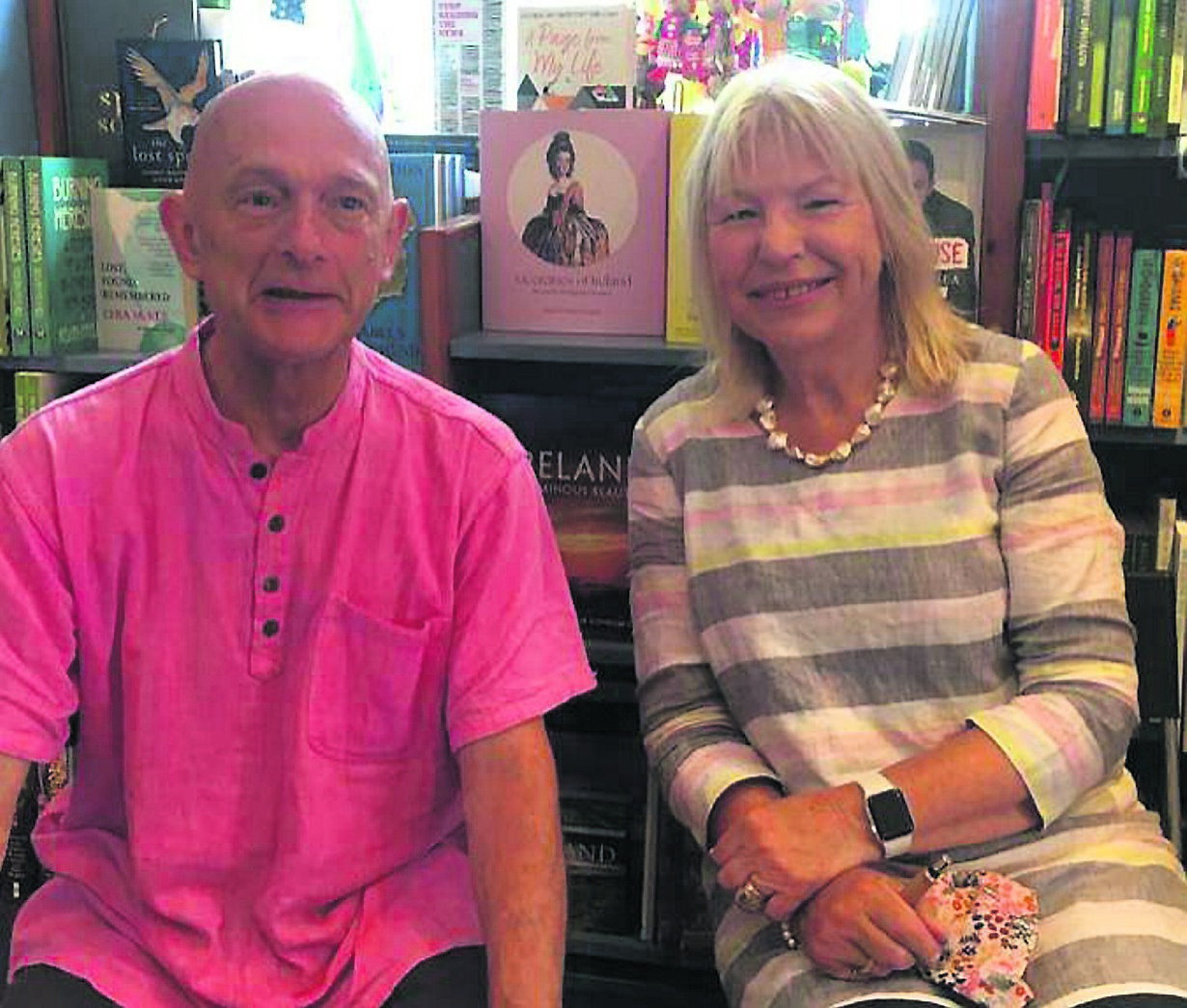
I first met Ronan Smith in the autumn of 2019. I’d been rung by a contact of his, and been asked, on behalf of his friends, to come on board and help get Ronan’s memoir out into the world. An actor and manager, Ronan had contracted early-onset Alzheimer’s disease — an illness that had killed his father, the theatre impresario Brendan Smith before him.
Before agreeing to take on this ghostwriting project, I read the manuscript written by Ronan in the years since his 2014 diagnosis. An amusing, sometimes heart-breaking account, this took us through his days as a child actor — on to his working life, and through his diagnosis of and years of coping with Alzheimer’s.
The theatre was Ronan’s lifeblood. Long-time manager of the Olympia Theatre, his father had founded the famous Brendan Smith School of Acting, as well as the Dublin Theatre Festival. No wonder that Ronan, having trained as a lawyer, felt compelled to return to that world. Starting as a film and theatre actor, playing on many of Dublin’s stages, he went on to run TEAM theatre, before, finally, joining John McColgan and Moya Doherty in their enterprises of Riverdance and The Pirate Queen.
He wrote of all this, but also of his father’s latter-day struggles with Alzheimer’s, an illness he never acknowledged that he had; and of his own involvement in those when, as a young actor, he had to protect his father’s reputation, and ultimately commit him into care. And then came his own diagnosis.
He wrote of the devastation that it wrought, and of his efforts to take control of the illness through diet, exercise and through managing stress. Renewing his advocacy for the Alzheimer’s Society of Ireland, started during his father’s illness, he came up with a mantra: “Prepare for the probable, work for the possible and hope for the future.”
Thanks to the understanding of the arts sector, Ronan was able to continue working — mostly in his role as line manager for the annual Gaiety panto — and although on the surface he coped well with this, underneath his composure, the stress of his failing memory dogged him day on day.
Arriving at their light-filled house in Lacken that first day, after a glorious drive over the scenic Wicklow Gap, Ronan welcomed me into a large, light-filled kitchen which overlooks the Blessington Lakes.
We sat at the kitchen table with his wife, the artist and former actress Miriam Brady, discussing the book over innumerable cups of coffee. Then Miriam produced a delicious lunch which included fresh vegetables picked from the garden. And we talked in the first of many sessions to be held over the autumn and winter.
Back then, it wasn’t immediately obvious that there was anything amiss with Ronan. He told anecdotes including one of his time on the film, Black Beauty, when, as a child, the director had bribed him to allow an actor to actually hit him in a scene, because the older man couldn’t master the fake slap.
He appeared to be keeping up with the conversation. He was charming, a little flirtatious and funny, making me laugh with his John B Keane accent, and it was only when, on another meeting, that he offered to make me coffee, and was confused about how the cafetiere worked that his condition became more obvious. But then Ronan is a performer — acting the part of better function comes naturally to him.
Our meetings continued through the early winter, and the more I got to know the couple, and their two grown children, Hannah and Loughlin, the more fond of them I became. And when I stretched my reach and met with some of Ronan’s close friends and former colleagues, it became clear that he is universally loved and respected.
By the first lockdown, the publisher’s proposal was ready, and the agent, Sallyanne Sweeney, sent it out. And although we had interest from two publishers within months, with the lockdown difficulties experienced by everyone in publishing, it took until the summer until we had secured a firm deal.
Meanwhile, I had been in England, helping care for my late mum during her last weeks of life, so it wasn’t until midsummer that I met the couple again.
Lockdown had not been good to Ronan. The lack of visitors and outside stimulation had done his condition no favours. He could no longer set the table; no longer work in the garden, but he was still able to walk his dogs without fear of getting lost.
Miriam had done everything possible to help him. In an act of inspiration, she had acquired a tabletop ping pong set, a game he adores and is good at. (Highly dexterous, he twice represented Ireland in fencing.)
“It’s an utter transformation,” Miriam told me. “He’s dramatic, shouting and laughing. It’s his happy drug, and he is transformed into the old Ronan.”
I worked on the book through the summer, helped enormously by the extensive diaries Ronan was generous enough to trust me with, but felt thwarted when another lockdown was announced to coincide with the date of my deadline.
Unable to book into my usual retreats — of Annaghmakerrig or The River Mill — I found a log cabin on Airbnb within 5km of home, and locked myself away to write throughout three days, and nights.
We end the book in November 2020 with a chapter written from Miriam’s point of view.
One night, she went to bed early, and asked Ronan for a glass of water. After three requests she heard the tap running, but Ronan walked past her door. When she called him back, saying, “I’m up here”, his confusion continued, but finally he arrived at her door, with the water, and asked her what was wrong.
Miriam said: “I just want a glass of water.”
“Yes, I know,” said Ronan. “And I am looking for you.” And on a mission, he walked away from her, down the corridor.
With Ronan’s continued deterioration, the stresses on Miriam have become overwhelming. She has some help from HSE carers, but the situation is becoming untenable. Ronan has made Miriam promise to put him in care, and not to spend extravagantly on it, since he will know no better. That day has not yet come, but it’s something Miriam struggles with.
In bravely writing his memoir, telling the world what it feels like to care for someone with Alzheimer’s and then experience it for oneself, Ronan is leaving an extraordinary legacy. His wish — one that he has worked so hard for — to spread awareness of the sadly growing illness that is Alzheimer’s, is to be realised.
That he has also given such an entertaining look at life in the world of theatre, the world that was his life, is an added bonus. But perhaps the greatest part of this book, is its portrait of a strong, enduring love.
As Miriam says, at the close of the book: “I’m in a dark world of constant worry, pain and grief, but I really love Ronan and Ronan loves me. I think of myself as his lover and wife, but as someone who also cares for him. He is my very best friend. I cannot imagine how I am going to be in the world without him.”