Louise O'Neill: Good mental health should be not be limited to those who can afford to pay for it
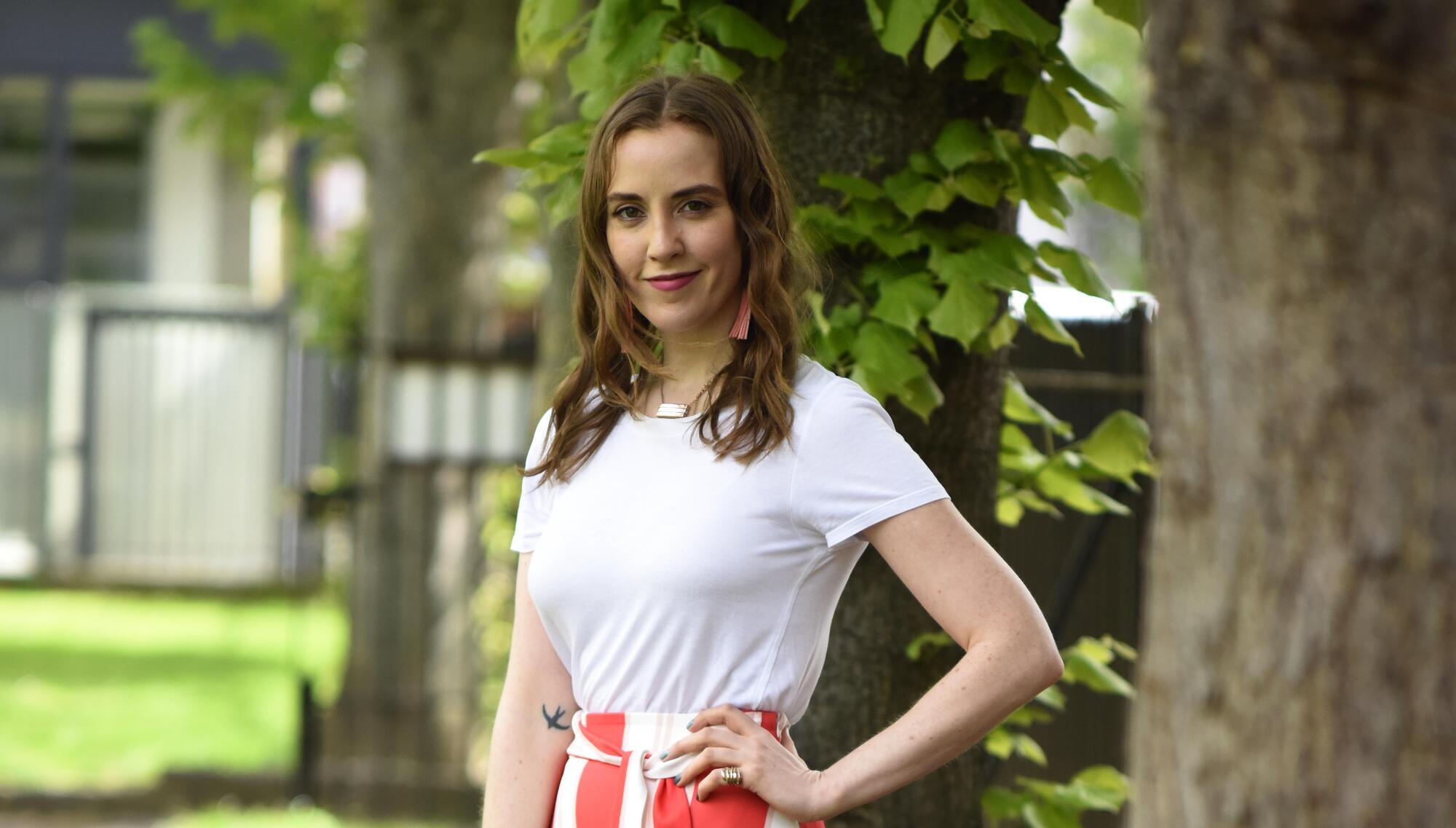
Louise O'Neill, author. Photograph Moya Nolan
On the morning of August 31, 1997, my father came in to my room, gently shook me awake, and told me Princess Diana had died. I burst into tears and didn’t stop for about a week. I find this reaction bizarre, looking back, and am at a loss to explain it.
I hadn’t been raised in a pro-Monarchy household; they were considered more of an oddity than anything else. But we watched the funeral together, crying again at Elton John’s hastily re-worked version of , the envelope with ‘Mummy’ scrawled across it in childish handwriting. I was just a little younger than Prince Harry, and he was the one I watched as he was hugged by weeping strangers, flushing a little but so stoic, preternaturally calm.

I imagined myself in the same situation, how hysterical I would be, and I wondered if it was a boy thing? A British thing? This stiff upper lip they talked about? A few years later, when I experienced loss for the first time, someone taken at such a young age that it seemed utterly impossible, I had a better understanding of what shock can look like.
In recent years, Harry has said: "My mother had just died and I had to walk a long way behind her coffin, surrounded by thousands of people watching me while millions more did on television. I don’t think any child should be asked to do that under any circumstances. I don’t think it would happen today.”
Obviously, this particular experience is not one many can relate to, but his grief is not unique — countless people across the world have lost their mothers in a devastating, harrowing manner. They, too, are entitled to righteous anger in the face of that loss, they too struggle with post-traumatic stress disorder, the unanswered questions, living with the pain that there has been no justice for their loved ones.
What must be acknowledged is that for many of those people, they don’t have access to the kind of help Prince Harry does, nor the financial means to procure it. While watching , the new mental health documentary series Harry has co-created with Oprah Winfrey for Apple TV, that was what struck me.
It’s clear that he’s in therapy — in a recent interview he talked about how ‘the body keeps the score’ and inherited trauma with such ease, there could be no doubt that this is a man who is doing the work — and that said therapy is having a profound impact on his life.
I can understand why some have reacted to the documentary with scorn, dismissing it as a vanity project for an over-privileged brat — a literal prince, for god’s sake — to indulge his sense of self-pity. The inimitable Marina Hyde (for my money, the best columnist in Britain today) described Harry as a “super-rich Californian wellness bore”, which is scathing and hilarious, but somehow, I cannot bring myself to agree.
As I watched Harry undergo EMDR (eye movement desensitisation and reprocessing — a psychotherapy technique in which you relive traumatic experiences in an attempt to process them) on camera, and refer to his inner child (how he reverted to “12-year-old Harry”), I felt genuinely hopeful.
To have someone with his platform be so open about his experiences — the PTSD, the panic attacks, the attempts to numb his pain with alcohol and drugs — and the steps he took to heal from that, might go some way towards destigmatising these issues.
Maybe then, we will see adequate funding in this area, ensuring everyone has access to appropriate services and support. Good mental health should be not be limited to those who can afford to pay for it.
I often think that celebrity gossip — and the royals are celebrities of a sort, whether they would like to consider themselves as such or not — has little to do with the actual celebrities.
Instead, our reaction to it is a sort of Rorschach test, reflecting back to us our own beliefs, prejudices, etc. And while there are legitimate criticisms to be made of (the juxtaposition of Harry’s narrative with that of Syrian children who’ve fled their homeland is an uncomfortable one), the response of the British tabloids is telling.
Wondering if Harry has had ‘too much therapy’, mocking his disclosures as too ‘American’, saying he is ‘attacking’ his family when he talks with great compassion about inherited trauma, speaks to a view of therapy — and indeed, of masculinity — that would feel embarrassingly regressive if it wasn’t so dangerous.
Too many people suffer in silence with mental health issues today. Too many people die as a result.
Even if you are wearying of the relentless coverage of Harry and Meghan, there is a value to what they are saying. I hope that message will not be lost in the maelstrom.
. This journal combines Daniella Moyles’s personal experience and her psychology training. It’s a wonderful tool for anyone in search of an authentic life.
. This fascinating documentary about the life of Tina Turner is unmissable. Available on Now TV.