‘Long way to go before transgender is normalised’
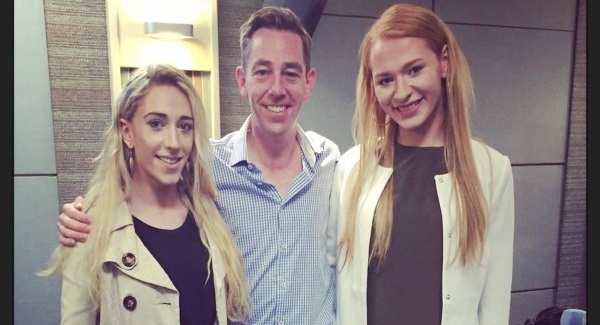
Nearly seven months after they featured on UK television, Chloe O’Herlihy is anxious to talk about the real struggles that transgender people face; challenges that she believes remain poorly understood.
Chloe O’Herlihy is aged 20 and her sister, Jamie aged 23. When we met Chloe she was brushing out her hair extensions. These were given to her as a gift, otherwise she’d never have been able to afford them.
So transitioning must be expensive?
“It varies although some transgender women decide not to physically transition, and just present as women,” she says. “The cross sex hormones are available with a medical card — but there is only one public gender identity clinic for people at St Columcille’s in Dublin”.
Due to the increase in people presenting as transgender, waiting lists for such treatment now stands at two years, which is quite the wait if you have been diagnosed with gender dysphoria, the feeling that one’s emotional and psychological identity as male or female is opposite to one’s biological sex.
“But if you focus on the surgeries it’s like saying that everyone who is transgender has to have them, and some people choose not to.
“As part of my journey, I will be having surgery. There will be many surgeries over the course of several years for me, the cost of medically transitioning can be up there in the hundreds of thousands.”
Chloe is at a crossroads as she’s an apprentice hairdresser but she won’t be able to continue her training if she wants to medically transition as she will have to “find a paying job”.
Physical appearances are enormous for a transgender person but conforming to societal standards of beauty is also a daily trial.
“Kiera Lambert hair consultancy contacted us after hearing about our story, and offered us these free hair extensions… that was huge for us. Being a hairdresser, I’ve dreamed of these types of extensions,” she smiles.
Chloe worries a lot “that I’m not going to pass — of not passing as a woman” and so, of being more susceptible to discrimination.
Transgender people face discrimination at work, school, university and when looking for housing.
Chloe regularly encounters “misgendering” when she is described as male or a man in the media. She believes it’s often intentional to create shock headlines but such coverage adds to stigma and causes further fear for people around family rejection if they come out.
The girls, from Cork City, are keen to tell their story so that attitudes will change. They appeared on ITV’s This Morningwith Phillip Schofield and Holly Willoughby last year and on Ryan Tubridy’s radio show on RTÉ.
She believes misgendering in the workplace is more often accidental and unintentional, but can still add to the distress caused by gender dysphoria.
It’s transgender health that concerns her most. Research in 2013 by the Transgender Equality Network of Ireland (TENI) revealed that almost 80% of the transgender people interviewed had considered suicide and half of those people had made at least one attempt.
Chloe believes these figures could be an underestimate as “a lot of trans people don’t reach the stage of coming out before deciding to taking their own lives” and so aren’t represented in these statistics.
Chloe and Jamie came out publicly in 2015 by way of video on social media. The girls said they didn’t want to have to engage in explanations every time they walked down the street and they also wanted to raise awareness about being transgender. Jamie described it as “intimidating at first” but “now I feel it’s liberating”.
Chloe and Jamie have been fortunate to have strong support from their mum, sister and friends, friends that are all part of the LGBT community.
“My number one support is my mum. I don’t know if I would still be here if I didn’t have my mum, supporting me from the start — her unconditional love and acceptance for everything I do, for all of my endeavours. Obviously having a trans sister is a major support for me. Although living in different counties can be hard sometimes,” Chloe says.
Jamie is based in Dublin.
What about transgender people who do not have such support systems? Who do they go to when they are suffering?
“A lot of transgender youth turn to social media for support. I’ve been contacted by hundreds of trans youth questioning their identity — and sometimes I don’t feel capable, or emotionally strong enough to answer all their questions. But from hearing their stories, I realise that what I’m doing has a purpose. And that by sharing my story I’m helping other transgender people come out — to live their truth.”
In recent years as LGBT becomes more mainstream, some have questioned the need for exclusively LGBT spaces?
“Yeah I think they’re important. We still face so much discrimination. It’s important to know that there are real physical spaces we can go and share experiences, and just get support in general.”
She speaks about how LINC (Lesbians in Cork) gave her funding for counselling. Why would a lesbian support group do this?
“For a long time, the LGB community pushed the T away, because gender identity and sexual orientation were separate issues for so long. There were no events or meetings for transgender people. We were just sort of tolerated in the LBG community. But now a lot of LBGT centres have opened up and are helping trans people.”
Chloe admits the media’s attitude to transgender people is improving.
“The headlines are getting better… nowadays we’re just about accepting trans people. But we are still fetishised and capitalised upon. People make money off us… I just wish that in 50 years time I could be sitting with my granddaughter and tell her that there was once a time when being transgender was strange.”
CONNECT WITH US TODAY



Be the first to know the latest news and updates