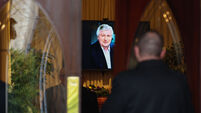
Gareth O'Callaghan: RTÉ 2FM hasn't worked for a long time — make it pay or sell it off
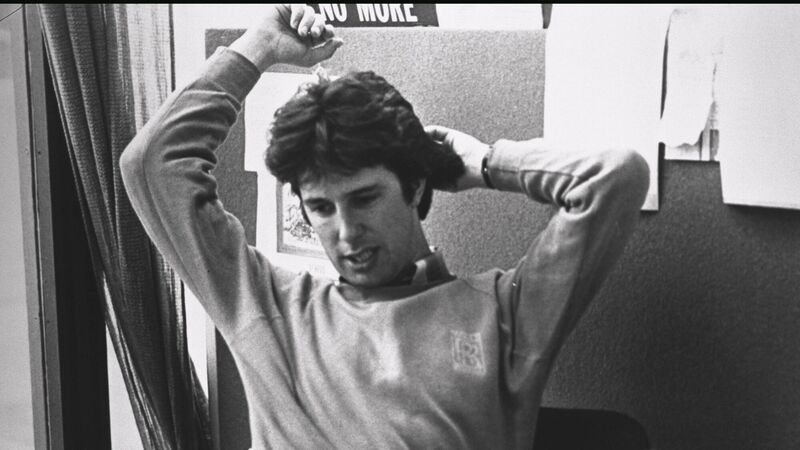
Gerry Ryan may have been right all along when he said he was worth every cent of his eye-watering salary.

In a world of swipes, clicks, and an insatiable need for distraction, there remains a glow of nostalgia in the sound of a radio voice that is instantly recognisable. Even if that voice is no longer here, nostalgia keeps it alive.
I found a recording this week of a conversation I had with Larry Gogan in 1989, minutes before I started my first show on RTÉ 2FM. Just as I was leaving his studio to return to mine, he said: “Remember, we’re not here to make history. We’re here to make memories and have fun.”
It’s a long time ago, but nostalgia has a way of keeping good memories relevant.
“Don’t fix it if it’s not broken” was Gogan’s mantra about the futility of changing something that should just be left alone. Many listeners of a certain age will agree that he’s missed; as is Gerry Ryan’s showy larger-than-life presence, and Tony Fenton’s joy and exuberance.
It was a family more than a format.
In 1989, I became one of the family. Each voice had its own tone and style, putting its stamp on the mood of the day.
Such was the success of its synergy — the sum total of its individual parts — it became known as the band.
Read More
During the 90s, 2FM was a barometer of Irish life for a generation. We were changing radically, moving away from a dark past, and the station edged us forward.
It focused on what people were thinking and doing. That was reflected in its listenership which, at one point, numbered barely south of 400,000.
It provided a service and it served a purpose. 2FM was relevant then. It’s not anymore.
Last week, for the purpose of this column, I tuned to 2FM. I quit after a few hours. I describe it as unrehearsed bedlam.
Why does it take three people to present a breakfast show? Why do presenters feel the need to laugh at each other so much? Why does everyone have to shout?
If there’s a reason why 2FM is being funded by the licence payer, then I need to know the reason. I renewed my television licence last week, which has left me €160 poorer.

Check the official figures for the utilisation of the licence fee and government funding for 2024, and you’ll find that 2FM was subsidised by the taxpayer to the tune of €4.4m — an increase of more than €500,00 on 2023.
I don’t have a problem with the €21m that was spent on RTÉ Radio 1 in 2024 — it is an excellent service — but a State-funded (and loss-making) pop music station is an abuse of public money. It makes a mockery of what the licence fee is for.
It’s not just in recent years that 2FM has been in the red.
Between 2010 and 2012, losses exceeded €13m at what the Independent Broadcasters of Ireland called Ireland’s “most expensive but least listened to radio station”.
2FM has been surviving in a GoFundMe mindset now for over 15 years. It would be easy to blame its financial losses on the strength of competition from Today FM, Ireland’s Classic Hits Radio, and a plethora of popular regional stations, but 2FM hasn’t competed in that market for almost 12 years.
Gerry Ryan may have been right all along when he said he was worth every cent of his eye-watering salary. It’s hard to believe that he is dead almost as long as the number of years his morning radio show ruled the airwaves.
At the height of his popularity, his show alone was generating close to €10m per year in advertising revenue for RTÉ. Within months of his death, listenership to the show had dropped by 30%.
It’s no exaggeration that he stamped his identity on his show in a way that would make it next to impossible to replace in the event that he left, which only slowly dawned on bosses in the months after his death.
Many will say he wasn’t the most likeable individual, but that also set him apart. It’s impossible to analyse what made him so popular, but there’s no doubt that his greatest strength was his ability to engage his listeners — often by listening while not saying a lot, which is an art in itself.
Ryan’s death was like a sink hole to advertisers. You can replace a presenter, but you can’t fill a void. Even the title of his book, , might go some way to explaining how he could be five different characters in a single three-hour radio show.
He was erratic, whimsical, wayward, impulsive, rude and endearing, mercurial and inconsistent. He would read a script once and then tear it up. He was as clever as he was rare. He became more famous in death than in life.
The “men in suits”, as Ryan called them, believed it would simply be a case of finding a successor.
Just give it a few months, let the sense of loss die down, and we’re back in business. It was an unexpected opportunity, as some of the top brass saw it, to work off a blank canvas at last, but that failed miserably.
This is not a eulogy to Gerry Ryan. It’s a lament to what was once a great station that Ryan was part of, where strong voices with resourceful minds were content creators long before the term had been coined.
They were entertainers, not influencers. They talked about their listeners, not about themselves. 2FM was the pinnacle of their career.
When Dan Healy took the helm in 2014, his mission, he said, would be an eight-month process of “destroying” the station to regain the listeners that Ryan’s death had lost.
“We have a big hole to fill,” he said. He succeeded only in making the hole bigger.
2FM continues to drift aimlessly, lurching along because it’s afforded the luxury. If it was a privately funded station, it would have been sold years ago — most likely at a loss.
These days, the station is aimed at the 15- to 34-year-old audience. You won’t hear Bowie or Queen or Guns N’ Roses on 2FM, because Healy banned songs from before 1990 when he took charge.
So that rules me out as a listener and a critic; except it doesn’t. As a licence fee payer, I am financing its survival. So I’m entitled to my say. Make it pay for itself or sell it. 2FM should play great music and employ skilled presenters, instead of sounding so often like an unsupervised classroom of 10-year-olds.
Age and relevance were never related when it comes to radio or music. Bruce Springsteen wrote when he was 25. 50 years later, it’s still a classic.
Nostalgia is a key component to social connection is these difficult times, and yet 2FM ignores its relevance by locking away the classics. Listen for long enough to new music on Spotify, and the algorithm will steer you back to old songs that have influenced modern trends. All new music is based on old styles, so why can’t 2FM play both? It’s what we did 30 years ago, and it worked.