Strategies to ensure competitiveness in Irish agriculture needed, farming body says
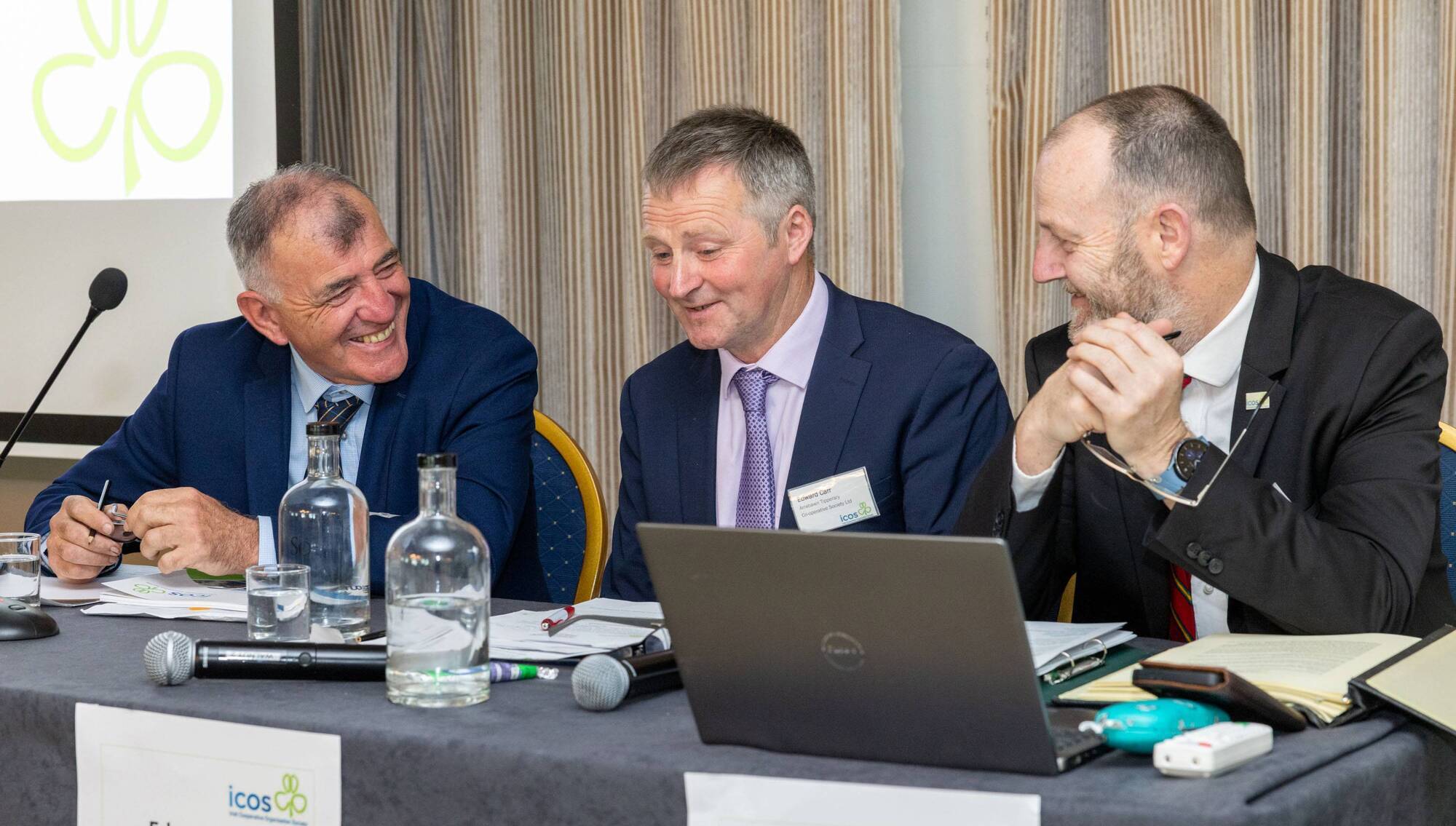
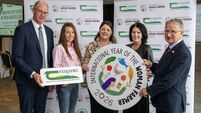
Seán Brosnan, vice-president; Edward Carr, president; and TJ Flanagan, chief executive, at the 131st AGM of the Irish Co-operative Organisation Society held in Portlaoise last Wednesday. Picture: Alf Harvey
Irish agriculture needs more “strategic collaboration” to remain competitive on a global scale, the Irish Co-operative Organisation Society (ICOS) said.
Speaking at the ICOS 131st AGM, ICOS president Edward Carr said: “This will require greater strategic collaboration, innovation and long-term thinking if Ireland is to remain competitive in increasingly demanding global markets.”
“With Ireland's milk pool expected to remain broadly static in the years ahead, the sector must focus on extracting greater value, improving efficiency and strengthening competitiveness,” he continued.
Mr Carr highlighted figures recently provided by Rabobank at a meeting of the ICOS dairy committee with agriculture minister Martin Heydon.
With high EU and global milk supply, Rabobank outlined consolidation trends and forecast EU milk production could decline by about 5% between 2025 and 2030. This drop reflects tightening environmental and climate regulations, land-use constraints, rising input costs, and an ageing farmer population.
Read More
Mr Carr said the sector needed an “open-minded approach” to enhanced co-operation across the sector, including joint ventures, shared services, strategic partnerships and other collaborative initiatives that can achieve scale, reduce costs, develop new markets and better manage volatility.
"Our co-operative model has always been built on collaboration, and there is significant scope for the sector to work together in new ways that strengthen farmer returns and safeguard the long-term future of rural communities," he said.
Mr Carr said the industry also faced a critical period of policy change at European level.
“The future of the Common Agricultural Policy, concerns regarding potential reductions in CAP funding, ongoing challenges with the Carbon Border Adjustment Mechanism, environmental regulation and geopolitical uncertainty all have significant implications for Irish farming and food production.”
He said Ireland and Europe must recognise that food security, strategic autonomy and environmental sustainability were “combined objectives.”
Mr Carr stressed generational renewal remained one of the greatest challenges facing Irish agriculture.
"We cannot take the next generation of farmers for granted. Young people will only commit to farming if they can see a viable future, a reasonable income and a supportive policy environment… Irish farmers also need to be supported and incentivised with measures that reduce the sector’s exposure to market volatility shocks.”
Mr Carr said it was “disappointing” the Government had not implemented an income stabilisation scheme.
“As proposed by ICOS, this would enable farmers to set aside up to 5% of their annual farm receipts tax-free during profitable years and draw down those funds over the following five years when incomes are under pressure.
"This would help farmers to manage income volatility, improve financial resilience and reduce reliance on emergency Government supports during market downturns,” he said.
The ICOS president also said maintaining a workable long-term nitrates derogation was critical, not only for the dairy sector but for the wider agri-food economy and Ireland’s family farm model. He highlighted the extensive work undertaken by farmers and co-operatives to improve water quality and environmental performance and said this progress must be recognised by policymakers.
ICOS also commended Ireland's livestock marts, describing them as one of the most important institutions in rural Ireland.
Mr Carr said: “The co-operative marts system remains central to ensuring transparency, competition and fair market pricing in the livestock trade. At a time of significant change across agriculture, the role of marts in protecting farmer interests and maintaining vibrant rural economies is as important as ever."