EU-Australia trade deal: 2027 target faces farmer protests as Mercosur begins
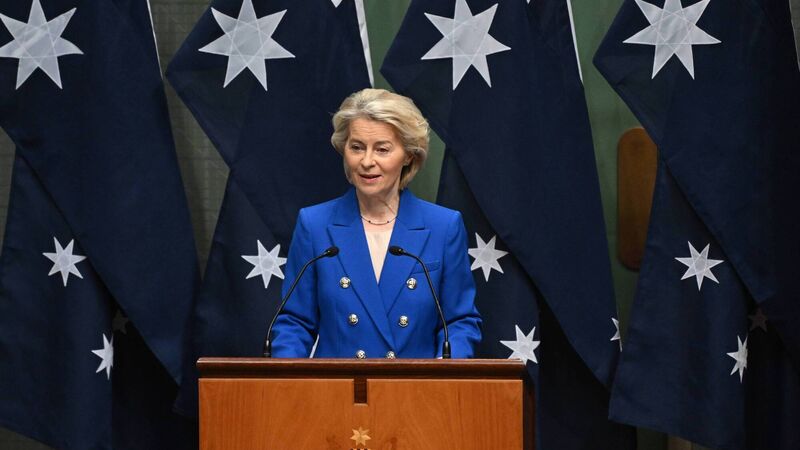
President of the European Commission Ursula von der Leyen in Australia: The EU will eliminate tariffs on 87.3% of Australian dairy products.
The first measures of the EU’s trade deal with Mercosur countries will be in place next month, but it could be well into 2027 before the EU’s trade deal with Australia enters into force.
The draft text of the deal with Australia will undergo legal checks and be translated into the 24 official languages of the EU. The European Commission will submit it to the European Council for approval by qualified majority.
Australia will require approval by the Federal Executive Council, and after that, both sides will sign the deal, probably later this year or in early 2027.
Then, it is expected to take up to another year for scrutiny by Australia’s parliament and consideration of Australian legislation, and for the European Parliament to ratify the agreement. Only then can the agreement enter into force, nine years after negotiations commenced in 2018.
Tariffs will be removed on trading in nearly all Australian and EU goods as soon as the agreement enters into force, a somewhat faster dropping of trade barriers than with the Mercosur countries of South America.
For example, almost all EU tariffs will disappear on wine, nuts, fruit and vegetables, honey, olive oil, most dairy products, wheat and barley, and seafood.
As for other commodities, there will be new or expanded tariff rate quota volumes for Australian exports to the EU of beef, sheep meat, sugar, rice, wheat gluten, skimmed milk powder, and natural butter.
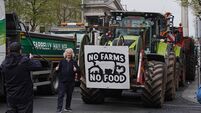
EU farmers and agricultural co-ops have said European agriculture has once again been the bargaining chip to secure broader EU trade and political objectives.
The trade agreement concessions to both Australia and Mercosur are described as unacceptable, worsening EU farmers’ vulnerabilities and pushing many family farms to breaking point.
“European farmers cannot continue to absorb the cost of bilateral trade liberalisation without adequate and truly effective safeguards,” said the Copa and Cogeca representative organisations.
However, the European Commission said: “EU farmers will have new export opportunities as Australia eliminates tariffs on key products such as cheese, wine, chocolate or biscuits, and breads.”
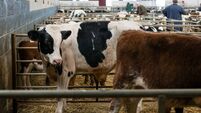
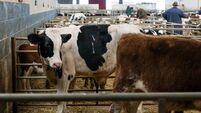
Farmers are also promised by the commission that EU producers in sensitive agricultural sectors such as beef, sheep meat, sugar, rice, and certain dairy products, are protected, by allowing imports from Australia at zero or reduced tariffs only in limited amounts, and subject to certain conditions.
And a safeguard mechanism “will allow the EU to act quickly if a surge in Australian imports causes difficulties for EU farmers”.
The deal gives the EU a more secure supply chain for critical minerals such as lithium, cobalt and rare earths. A defence and security framework was also agreed.
In agriculture, quotas will guarantee preferential access to the EU market for 35,000 tonnes of Australian beef (carcass weight equivalent) at full implementation of the trade deal after 10 years (on top of 99,000 tonnes of Mercosur beef).
At entry into force of the agreement, Australia will get duty-free access for about 5,600 tonnes, and access with a 7.5% duty for about 4,600 tonnes. These amounts will increase to 30,600 tonnes of beef over 10 years. And the 20% in-quota tariff on Australia's existing Hilton beef quota of 4,400 tonnes is to be eliminated at entry into force of the agreement.
There will be total guaranteed access of 30,851 tonnes of sheep meat after seven years, starting with more than 10,000 tonnes at entry into force of the agreement.
Australian farmers’ organisations are unhappy, because they had pushed for access for 50,000 tonnes of beef and 67,000 tonnes of lamb. Agricultural lobby groups in both Europe and Australia may seek to thwart the deal, with French livestock farmers already calling on the European Parliament to block it.
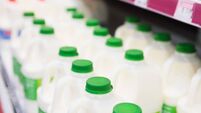
The EU will eliminate tariffs on 87.3% of Australian dairy products.
Concessions at entry into force of the agreement include elimination of EU tariffs at up to 8% on ice cream, and of a €170.60 per tonne duty on two existing cheese quotas from Australia into the EU.
But the EU gets annual duty-free access to the Australian market for 5,000 tonnes of butter, 2,000 tonnes of high protein whey, and 8,000 tonnes of skimmed milk powder. Australia will also eliminate the existing tariff on EU cheese imports of $1.22 per kilo, over three years.
Over three years, there will be elimination of EU tariffs of more than €2,000 per tonne on Australian cheese, dairy spreads, and fats and oils; of tariffs up to 8.3% on yoghurt, buttermilk and curdled milk or cream, and of EU tariffs on whole milk powder of up to €1,672 per tonne.
Guaranteed duty-free access within three years of 44,925 tonnes of Australian raw cane sugar for refining is agreed, starting with 17,500 tonnes at entry into force of the agreement.
There are similar concessions for Australian rice, wine, tree nuts, seafood, fruit, vegetables, honey, and olive oil.