Ask a solicitor: Solar developer wants to lease 15 acres of my farm
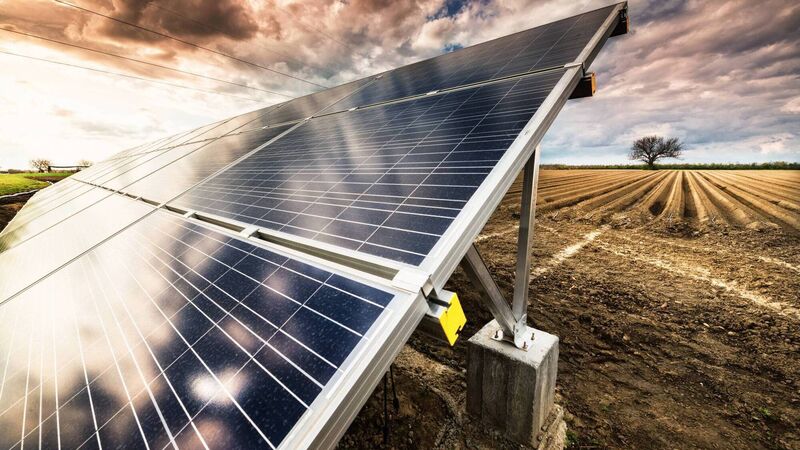
Solar developers often require permanent access roads for construction and maintenance. If these routes pass through working farmland, they can interfere with livestock movement, machinery access, and daily operations. File picture
Where land is actively farmed and intended to remain within a family, a proposed solar development requires particularly careful consideration. While the financial return may be attractive, the long-term legal and practical implications must be assessed in the context of the entire holding, not just the area to be developed.
One of the first issues is the duration of any lease. Solar leases commonly run for 25 to 40 years, often with rights of renewal. During this period, the land will be removed from agricultural use and subject to extensive rights in favour of the developer. This may restrict how adjoining lands can be accessed, fenced, drained, or worked.
Access rights are especially important on farms. Developers often require permanent access roads for construction and maintenance. If these routes pass through working farmland, they can interfere with livestock movement, machinery access, and daily operations. It is essential that access is carefully defined and limited to what is strictly necessary.
Another key consideration is future succession. Even where the folio is in one person’s name, long-term leasing arrangements can significantly affect the ability of the next generation to farm the land effectively or use it as security for borrowing. A successor may inherit land subject to a lease they did not agree to and cannot terminate.
The impact on entitlements and schemes should also be examined. Depending on the structure of the arrangement, participation in agricultural support schemes may be affected. This can have knock-on consequences for the overall viability of the remaining farm.
Decommissioning is another critical issue. At the end of the project, the developer should be legally obliged to remove all equipment and reinstate the land to an agreed standard. Without strong contractual protections, the cost and responsibility for reinstatement could fall back on the landowner or their estate.
Tax implications must also be addressed. Lease income is treated differently to farming income, and this can affect income tax planning and reliefs associated with the transfer of agricultural land. Independent tax advice should be obtained alongside legal advice.
Finally, it is important to remember that early-stage discussions are not informal. Even preliminary documents can contain binding obligations. No agreement should be signed without a full understanding of how it interacts with the long-term operation and future ownership of the farm.
A solar development may form part of a sustainable future for a family farm, but only where it is structured in a way that protects the land, the business, and the next generation. Specialist legal advice at an early stage is essential.
Jane Bourke is a solicitor practising in Walsh & Partners, Solicitors, 17, South Mall, Cork (021-4270200). Walsh & Partners also specialises in personal injury claims, conveyancing, probate and family law.
- Email: info@walshandpartners.ie
- Web: www.walshandpartners.ie
While every care is taken to ensure the accuracy of information contained in this article, solicitor Jane Bourke does not accept responsibility for errors or omissions howsoever arising, and you should seek legal advice in relation to your particular circumstances at the earliest possible time.