Irish dairy: Redefining itself as a global nutrition industry
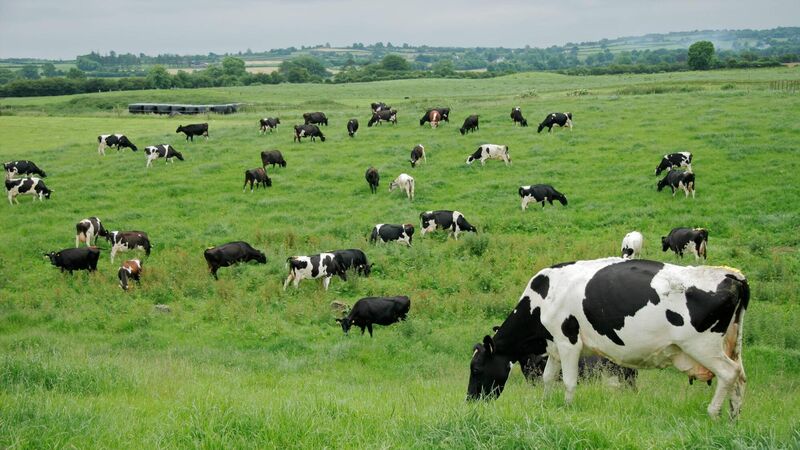
The unique selling point behind Irish dairy products is 'grass-fed'.
Forget about the Irish dairy industry, think of it instead as the nutrition industry, advised Conor Mulvihill, director of Dairy Industry Ireland, in a recent Teagasc Dairy Edge podcast.
He said: “We're very lucky in Ireland that we're world leaders in specialised nutrition. We produce here on this island over 10% of the globe's infant formula, for example. We also produce a lot of other dairy-based specialised nutrition."
“Our future is high-value, value-added dairy, and probably as an ingredient into special products like infant formula, young child formula, or lifestyle foods,” he said.
“I would challenge some of your listeners, the next time they're watching Formula One or , who are the main sponsors of McLaren? Optimal Nutrition, which is a Glanbia brand, of which Tirlán are a huge supplier,” he said.
He emphasised we do not have an internal market to support a milk price, and Irish dairy depends on global markets, but added: “Ireland is in a brilliant position in terms of the globe wanting this pure quality Irish dairy which we're able to provide.”
And the unique selling point behind these Irish dairy products is "grass-fed", said the director of Dairy Industry Ireland, which represents the industrial manufacturing dairy base in Ireland.
“We have a huge opportunity here to become the main and most respected nutrition industry provider on the planet through grass-fed product,” he said.
“Since 2018, we've had Brexit, we've had covid, we've had the Ukraine war, we've had energy spikes, we have Tehran stuff now as we speak. We've come out of each and every one of those challenges as an industry stronger than ever.
"Yes, we're probably in an era now, in terms of the last couple of years, of probably plateauing in terms of milk supply, that explosion from just under five billion litres to now just under nine billion litres, which is a phenomenal success story for not just rural Ireland, for the Irish economy, full stop.
“The value of dairy alone to the Irish economy is about €19bn a year,” he said.
He said challenges were likely to continue, including sustainability and generational renewal. “We're never going to go to a stage where we can all relax and focus on producing milk,” Mr Mulvihill suggested.
“We have seen that if you pay your farmers enough, they will take the actions in terms of environment etc that will deliver. If you pay your workers enough and farmers enough, you will get rid of generational renewal issues both on farm and in the factory gate.
“If you don't have generational renewal, you don't have an industry. If you're a young fella or young girl trying to come into the dairy industry and you see no long-term resolution to the nitrates directive, and you're expected to put €50,000, €60,000 into new slurry storage, or put robots into the milk parlour to help your lifestyle or whatever, you're going to be very slow to do that, unless Government and the EU give you that policy certainty,” Mr Mulvihill said.
He said 2025 was exceptional for Irish dairy, at least until the autumn, when 85% of the milk had been processed.
"You had the change of policy in America and globally where people wanted to move away from what were called ultra-processed foods and move back towards real food, which dairy was.
Now, despite rising input costs for farmers and processors, he discerns "green shoots".
“A silver lining to the tragedy that's happening in the Middle East at the moment is as oil prices rise, dairy prices rise, as long as I'm following it over 25 years,” he said.
“I think we can look forward to 2026 with better confidence than we had at Christmas”.
But Irish dairy processors need to trim costs, to remain competitive globally.
“In this post-nitrates era, I think we've only stopped the clock for three years. We haven't had a victory. We've only kicked things out to 2028.
He said processors must use these three years to look at automation, artificial intelligence, and digitisation, to ruthlessly root out costs.