EU Commission need to do more than ‘monitor’ fertiliser supplies and prices, says ICMSA
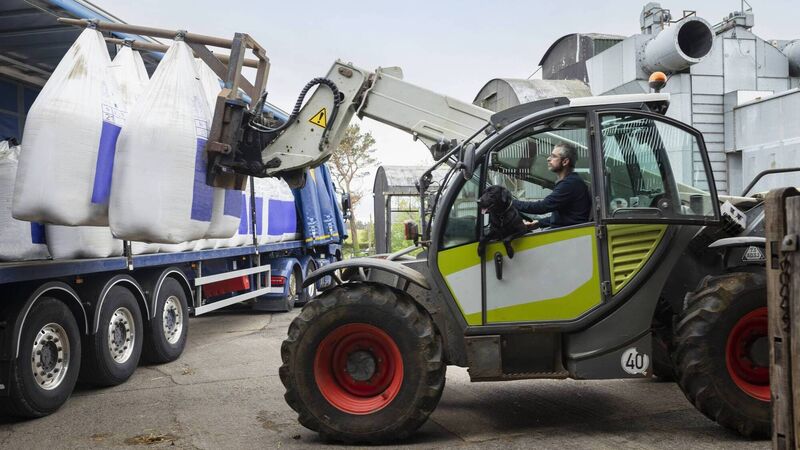
The ICMSA said that the EU Commission’s position of ‘delay, wait and see’ in the hope of a sudden ceasefire was not tenable and a policy response was going to be required immediately. File picture
The EU Commission say it is “closely monitoring the impact on fertilisers” due to conflict in the Persian Gulf, and the ICMSA has called for more.
Irish Creamery Milk Suppliers Association (ICMSA) president, Denis Drennan, says the situation had already moved well past “monitoring” and that action was required as what he noted was the “rocketing” costs of fertiliser, “crossed going the other way,” past the falling prices farmers were receiving for their milk and beef.
Mr Drennan said that the EU Commission’s position of ‘delay, wait and see’ in the hope of a sudden ceasefire was not tenable and a policy response was going to be required immediately.
“Farm output prices are not increasing at anything like the rate of increase in the costs of fertilisers.
"There’s also the fact that the vast bulk of fertiliser purchases will be completed by 1 May, while a significant portion of 2026 output will have been sold by 1 May at low prices – again, we have our prices falling or stagnant at the same time as a critical input price is soaring.
“Monitoring is not anything like the appropriate reaction, and we have suggested policy responses,” said Mr Drennan.
The ICMSA president said questions arise that will need an answer: what does the EU Commission propose to do to forestall massive food inflation as the increase in fertilisers is added to output prices?
Also, as with fuel, how can fertiliser that was already produced, already in the EU, already in Ireland, already in merchants’ yards increase by so much given that the war should have no impact on its price?
“This is a simple question; for some reason, nobody is prepared to answer it. The exact same issue arose with the Ukrainian war, where supplies already sitting in stock and merchants’ yards were immediately ‘jacked up’ by massive percentages and farmers were simply left to suffer the consequences,” said Mr Drennan.
Continuing, he said that the system is either unable or unwilling to address opportunism and price-gouging at the expense of the farmers, saying this policy of ignoring price-gouging will have long-term consequences for the family farms in a context where milk is already being produced below the cost of production.
He called on the EU to immediately instruct DG Competition to carry out an investigation on fertiliser prices over the past month and report within six weeks with recommendations on how to prevent future repeats of such price hikes due to external market shocks.
The ICMSA said the EU should implement immediate measures to support farmers, including the suspension of CBAM, zero tariffs on fertiliser imports for a defined period, and the CAP Crisis Reserve fund should be utilised to support farmers who paid prices for fertiliser above a specified level.
At a national level, the farming organisation has called on the minister for agriculture to consider allowing farmers to use straight urea for a defined period to cut the cost of urea-based fertilisers, amongst other measures.
“This is a very real crisis for farmers, and it’s immediate; it’s hitting them right now in a way that’s going to lower already massively depleted incomes and will also stoke food inflation.
"Telling farmers that you’re 'monitoring' this potential disaster is just pointless; it’s already clear what is happening, and what’s required now is a response along the lines ICMSA is suggesting,” concluded Mr Drennan.