EPA reports nitrogen levels went up by 10% last year
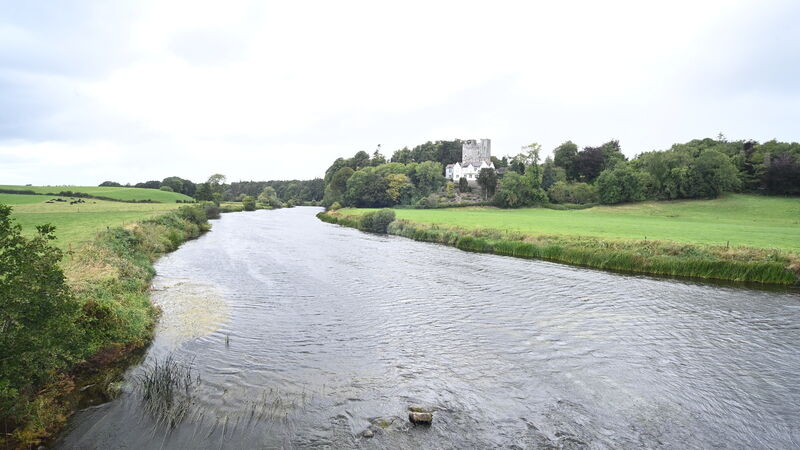
The River Blackwater is one of the 20 representative monitoring sites used by the Environmental Protection Agency's ‘Early Insights’ indicator reports. File picture: Larry Cummins
Early insight nitrogen concentration data show a provisional 10% increase in nitrogen levels in 2025.
The Environmental Protection Agency (EPA) publishes its ‘Early Insights’ indicator reports every six months on nitrogen concentrations in Ireland’s major rivers using data from 20 representative monitoring sites.
Among the 20 representative sites along major rivers in the Munster region are the Maigue, Deel, Shannon, Fergus Suir, Blackwater, Lee and Bandon sites.
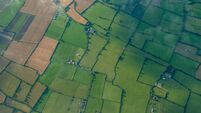
Catchment areas which require or have previously required nitrogen load reductions to achieve water quality objectives are primarily located in the east, south and south-east of the country.
Catchment areas which are consistently below levels that impact ecological health are primarily located in the west and north-west of the country, according to the EPA.
The EPA reports that catchment nitrogen levels are markedly higher in the east, south and south-east, compared to catchments in the west and north-west, “reflecting differences in farm practices, soil types and climate conditions.”
Across both groups of catchments, nitrogen levels have increased in 2025, relative to 2024.
Results from the monitoring sites show a rise in annual nitrogen levels by 10% between 2024 and 2025, which the EPA says is consistent with early indications of elevated levels from January to June 2025 data.
The representative sites are established to provide a “conservative estimate” of a national nitrogen concentration figure; the EPA expects the national figures to show an increase in nitrogen levels for 2025.
Although not matching the highs seen in 2019, which was almost 10 ton mg/L NO3, nitrogen levels in waterways at the representative sites average are once again above the EPA’s levels to maintain good water quality in rivers, at 8 ton mg/L NO3, reversing the progress made in 2024, which reached below the 8 ton mg/L NO3 ideal for the first time since 2021.
Factors influencing nitrogen levels and their fluctuation include weather patterns, agricultural land management, and source loading. Source loading is any inputs of nitrogen to the environment, ie, fertiliser.
Different factors may be dominant in different catchment areas depending on river flow, topography, and geology, all of which have an influence on the level of nitrogen entering waterways.
EPA highlighted three key factors influencing the uptick in nitrogen levels between 2024 and 2025 as the increase of fertiliser sales, a reduction in livestock numbers and wetter weather.
The department reported an increase of fertiliser nitrogen sales of 10.6% in 2024 compared with 2023, followed by a further increase of 12.5% increase in 2025.
EPA acknowledges that fertiliser sales are not necessarily directly correlated with losses of nitrogen to the environment, because of the influences of farm practices and farm soil type.
However, it is still an indicator of an increase in source loading and is considered a factor in increases in nitrogen concentrations in waters.
A decrease in stock numbers by 3.3% — as reported by the Central Statistics Office (CSO) between 2023 and 2024, 2025 figures are not yet published — lends to a decrease in source loading.
Overall, 2025 was wetter than 2024 with above-average rainfall nationally, contributing to higher river flow in 2025 across most catchments.
The EPA said that the weather patterns in 2024 and 2025 were mixed, with relatively normal nutrient transport conditions in 2024 and the potential for increased nutrient transport in the latter part of 2025, which may increase nutrient levels in 2026 and beyond.