Irish dairy processors to enter 'managed transition' amid drop in milk production
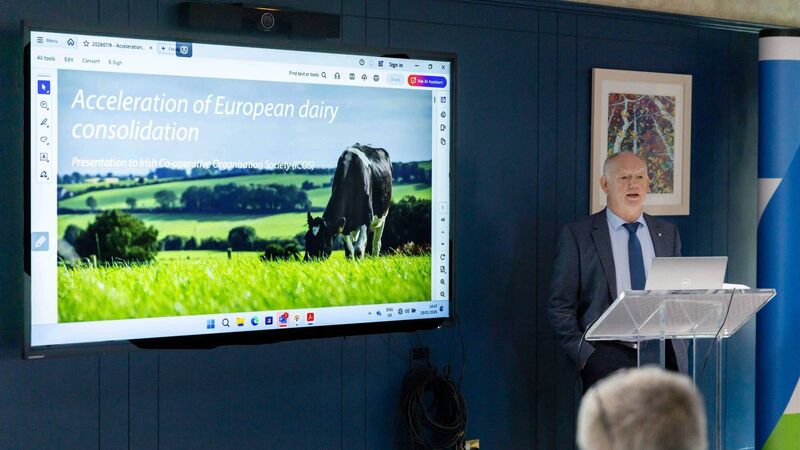
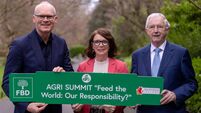
Eamonn McEnteggart, ICOS dairy committee chairman, said: 'In a European context where milk output may decline, Ireland’s grass-based, export-focused model remains well positioned, provided policy stability, innovation and investment continue.' Picture: Alf Harvey
EU milk production is expected to decline by around 5% between 2025 and 2030, prompting Irish processors to enter what they are describing as a "period of managed transition".
Senior Rabobank analysts told the ICOS Dairy Committee the contraction reflects tightening environmental and climate regulations, land use constraints, rising input costs and an ageing farmer population.
The analysis indicated these structural pressures will accelerate consolidation across European dairy processing as tighter milk volumes drive processors to seek scale, secure supply, improve efficiencies and manage volatility.
Rabobank noted consolidation can deliver efficiency gains of 4% to 5% of revenues through operational integration, procurement efficiencies and better asset use.
For Ireland, as a major global dairy exporter, maintaining competitiveness will be critical.
Also speaking at the meeting, agriculture minister Martin Heydon highlighted the importance of the CAP in the context of food security. He said there was too much complacency around food security, which he said needs to be addressed, and explained this will be a priority for the Irish presidency of the EU.
On other key topics, the minister said he recognised the concerns of ICOS on generational renewal, the CMO regulation, the CBAM Tax on fertiliser, income volatility and bovine TB and bluetongue.
ICOS Dairy Committee chair Eamonn McEnteggart concluded that the Irish dairy industry is entering a period of "managed transition".
While global dairy demand remains strong, particularly in growth markets outside Europe, future success will depend on efficiency, environmental credibility and strategic collaboration across the value chain, he explained.
“In a European context where milk output may decline, Ireland’s grass-based, export-focused model remains well positioned, provided policy stability, innovation and investment continue,” Mr McEnteggart said.