Kilkenny calf-to-beef farmer named Irish Hereford Prime Farmer of the Year
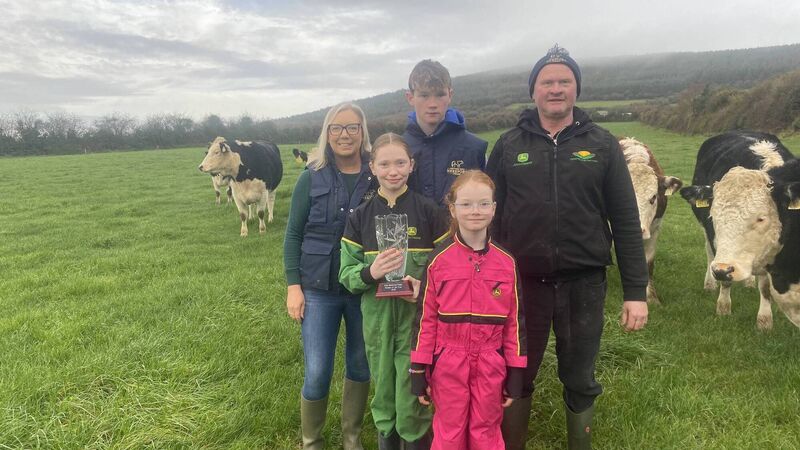
Edward Delahunty, wife, Lucy, son, Conor, and daughters Oliva and Eve celebrate the family's win
A progressive mixed farmer balancing dairy, beef, tillage and contracting has been awarded the 2025 Irish Hereford Prime Farmer of the Year title.
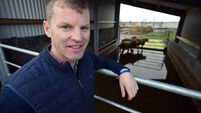
Edward Delahunty, who farms with his father Martin in Freshford, Co Kilkenny, says he is not “just” a pedigree man, but a commercial operator making Herefords work in a busy real-world system.
Married to Lucy, with three children, son Conor and daughters Oliva and Eve, and having a successful contracting business, with a mix of dairy, tillage and beef enterprises means the Delahuntys rely on their strong team of staff and family members to function efficiently and effectively.
He is a long-term Irish Hereford Prime beef producer and a strong advocate for the commercial benefits of the Hereford breed.
Originally a winter milking herd, with one hundred dairy cows on the milking platform, they are a 70% Holstein-30% Friesian type cow, which are achieving 6,500 litres on average, with 520kg milk solids. This spring will see Mr Delahunty's herd become a fully spring-calving-only herd.
In terms of sire selection, the Delahuntys buy in all their replacement heifers, which in turn allows them to run three Hereford stock bulls on their farm, rotating one bull at every milking and running one with replacement heifers.
When Mr Delahunty goes to purchase a new Hereford stock bull, he says he looks at the animal first and foremost, but then looks at its figures also. Interestingly, two of the bulls on the farm that sired the 2025-born calves showed impressive carcass weight figures on the ICBF Indexes at +24kg and +16.3kg for carcass.
He uses a Hereford bull over other traditional breeds as he believes they are about 10% heavier at finish when reared through his system. His opinion on the Hereford breed is very positive, and he believes there will be more Herefords born in Ireland in the coming years.
Mr Delahunty runs a considerable agricultural contracting business and has his own tillage enterprise. For this reason, the Delahuntys use 100% stock bulls on their farm due to the busy spring they tend to encounter every year.
He also buys in 30-40 Hereford-cross calves, both male and female, from neighbouring farmers every year.
He brings all stock through to finish, and with the average value of each animal having increased by about €800 more due to the rise in beef prices, this has boosted the profitability of his beef enterprise significantly. He mentions the late spring in 2025 and the resulting late turnout caused the carcass weights of his cattle in 2025 to be 13kg less than those achieved in 2024.
Commenting on why he favours the Hereford breed, Mr Delahunty says: “They are a very docile breed, my father Martin is getting older, but he is still out around the farm, so for us having bulls that are easy handled is important.
The Delahuntys are very loyal Irish Hereford Prime suppliers over the years, with a huge affinity to the Hereford breed and its positive attributes. Mr Delahunty has a very positive outlook on farming, with the current demand for protein, both in a beef and a dairy context. He believes profitability in farming is more positive now and it is, in fact, regulations that are the biggest barrier for young people starting out.
“I could have more cows here, but I love the beef side of farming, especially the calf-to-beef, which is ideal with docile Hereford cattle,” he says.
The beef cattle are generally at grass from St Patrick's Day until November each year, on a paddock-based rotational system and once off grass, are housed on slats with rubber Mayo mats.
Mr Delahunty notes paddocks are key to management and performance, meaning “lots of grass and regular moves”.
The soil on his farm is medium to light free-draining, without being sandy. A strong advocate of maintaining a fertile soil, Mr Delahunty regularly takes soil samples with the aim of maximising overall farm production. Sugar beet, a home-grown crop, is fed to cattle in the finishing period to help with growth rates and ultimately animal performance.