Officials detect new bluetongue case in animal that has "travelled through several counties"
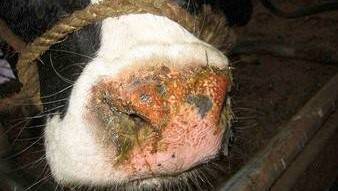
The vaccine is for BTV-3 specifically, but other versions of the disease can still cause infection. File picture
Two new cases of bluetongue have been confirmed in Irish livestock.
In a Dáil meeting on Tuesday, minister for agriculture, Martin Heydon, revealed that since the initial discovery of bluetongue (BTV 3) south of the border on January 22, five herds have been flagged with the disease, with a further infection detected as recently as last week in an individual animal that has reportedly travelled through several counties.
“A further infection was detected last week in a bovine which had been in a number of counties during the possible infection period, and investigations are now ongoing into that case,” the minister reported.
Continuing minister Heydon said: “It is a dynamic virus. This is something we are responding to in real time. We are working in collaboration through our regional veterinary officers with our vets and with private veterinary practitioners in support of our farmers, who are very concerned about this.”
Responding to the Dáil meeting, Deputy Carol Nolan said: "Farmers cannot be left to bear the financial brunt of this threat… We need immediate action to ensure that testing, prevention, and compensation schemes are in place to safeguard livelihoods and maintain biosecurity."
Commenting on vaccines, the minister reiterated in the meeting that although he gave a licence to distribute BTV-3 vaccines, the cost and rollout of vaccines are a commercial decision for farmers.
Discussing whether vaccines provide sufficient coverage to control potential BTV-3 outbreaks, assistant professor of Virology & deputy director of the One Health Centre at UCD, Dr Gerald Barry, explained that the vaccine is for BTV-3 specifically, but other versions of the disease can still cause infection.
“Vaccination alone is unlikely to be enough to rapidly stop an outbreak,” Dr Barry said.
He suggested other measures, such as control of animal movement, mass surveillance efforts, and the removal of infected animals to slaughter, are all necessary to prevent a herd or flock from becoming infected.
“Long term, we need improved vaccines that limit onward transmission or else it will become increasingly difficult to eliminate it from the country,” concluded Dr Barry.
Addressing worries regarding restrictions, the minister said: “An important point to make is that there will not be large-scale restrictions in the summertime because the disease is being re-categorised in July across the EU. That will make life easier for us in some ways.
"It was not something we wanted when we were free of this disease. We wanted to be able to identify as quickly as possible. We did not want to lose our disease-free status, but now it is gone. We were the last of the European countries to be in that space, so there will be some relaxation of how we operate with that from July onwards.”