Would you eat South American meat?
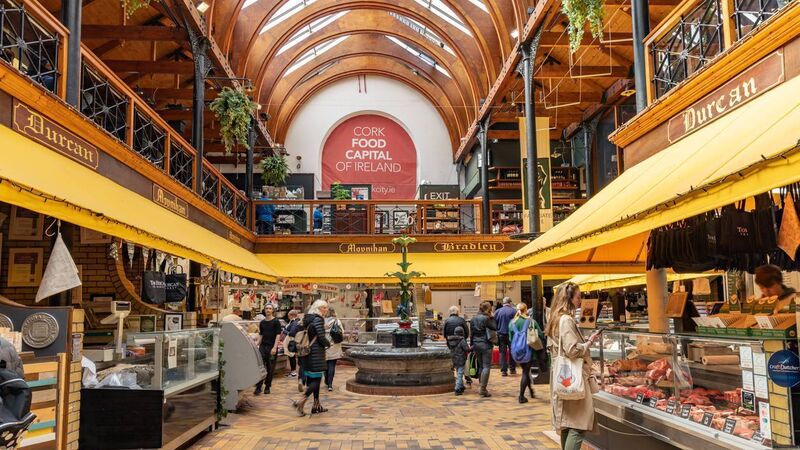
The English Market in Cork City. One person said he prefers to source his meat from local sources, explaining that quality and the additional air miles that come with South American imports are some of his main concerns.
Following a voted majority approval in Europe, a Mercosur deal between South American countries and the EU is moving on to the next phase, seeking European Parliament approval.
The trade deal would allow the Mercosur countries to export a quota of up to 99,000 tonnes of beef and 180,000 tonnes of chicken annually under a lower tariff rate than before.
EU farmers have vocally opposed the trade agreement, with protests occurring in France, Brussels, Poland, and most recently, in Ireland on January 10.Â
Approximately 20,000 farmers, their families and supporters protested and rallied in Athlone with a convoy of roughly 1,000 tractors and haulier lorries parading through the town as part of the protest.
With the farmers clearly opposing the deal, we took to the streets of Cork City to ask members of the general public whether they would eat meat imported from South America.

Very few people we spoke to said they would be inclined to buy meat from South American countries. John O’Leary from Mallow said he’d be worried about the lack of traceability of meat products coming into Ireland from Mercosur countries.

Elma O’Donovan from The Lough also expressed her concerns about the additives, such as hormones, in the farming systems in countries like Brazil, and worried about what people could end up consuming as a result of eating meat from South America.
“We don’t really know what it is, and we’re putting that into our bodies,” Ms O’Donovan said.

Billy Lynch from Glounthane, a student studying in Cork, said he would rather support Irish farmers, saying Irish meat is good quality, and he would hesitate to buy products from Mercosur countries after hearing about the hormone use in agricultural practices in some countries there.

Abbie Lang from Canada, who has come to Ireland as part of her studies, said pricing would be a deciding factor for her, and she wouldn’t be opposed to meat from South America if it were the cheaper option.
"Personally, I don't think it would matter. i feel like when I'm normally buying meat, I'm looking at the price," Ms Lang said.

“I prefer to buy Irish produce. Produce that I know where it comes from... I like to source my meat locally. I've just come from the market for tomorrow's dinner,” said John Lester, from Cork.
Mr Lester prefers to source his meat from local sources, explaining that quality and the additional air miles that come with South American imports are some of his main concerns.

Julia De Mairo, who is from the US and is also spending a semester studying in Cork, said she would buy meat from South America, but her personal preference would be to buy local, as she would also be conscious of the carbon footprint that comes with the Mercosur imports.
"I'm concerned with what they would put in the meat, like hormones, wise. I'm from the US, so that is something I think about," she said.

Patricia Rooney from Bishopstown simply said she wouldn’t even consider buying meat from South America as she considers Irish produce to be superior.

Daphne Roche of O’Sullivan’s Poultry in the English Market said she would prefer to “stay Irish” when buying chicken to supply the shop.
“It’s our choice, we prefer to stay Irish. It’s very good quality meat. It’s regulated, and it’s not filled with hormones and antibiotics,” she said.