New research reveals damaging effects of Himalayan balsam
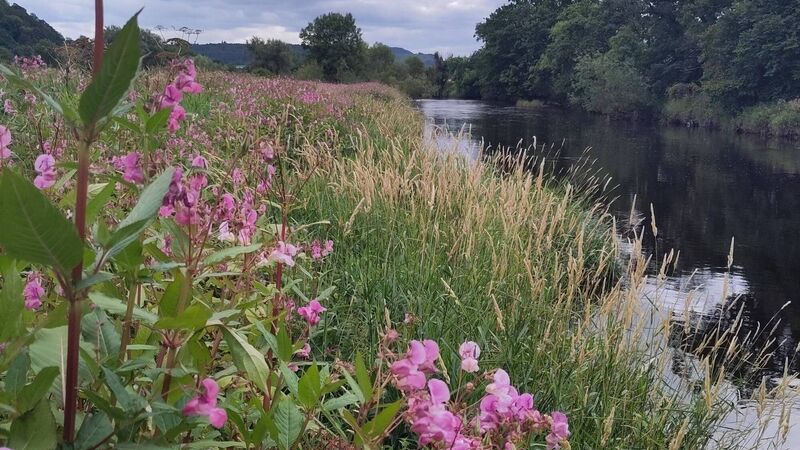
Research published by a team from the University of Stirling has proven the negative impacts of Himalayan balsam on riverbanks
New research reveals damaging effects of Himalayan balsam

Flowering Himalayan balsam along a riverbank.

New research has revealed the damaging impact of Himalayan balsam on river ecosystems.

A three-year study led by Dr James Hardwick, a lecturer in earth sciences at the University of Stirling, has shown the invasive species is doing more than just replacing native plants.


The research, carried out in partnership with Newcastle University, has shown that Himalayan balsam can disrupt the physical stability of ecosystems and significantly weaken riverbanks over winter.

Originally an ornamental plant, Himalayan balsam began spreading rapidly into the wild and flourished along riverbanks and damp areas.

Out-competing native plants on riverbeds and dying back completely over winter, Himalayan balsam makes invaded riverbanks more susceptible to erosion during high-flow periods.

Researchers combined three years of field measurements with advanced statistical modelling. Over this period, they surveyed vegetation and measured riverbank shear strength — an indicator of how resistant the bank is to erosion — at multiple sites with and without Himalayan balsam.

Vegetation survey being carried out as part of the team's research into the effects of Himalayan balsam on riverbanks.

To uncover these processes, researchers used statistical modelling to explore how Himalayan balsam and native vegetation interact across seasons and the impact of these changes on riverbank stability.

Together, the field data and modelling approach enabled the team to quantify, for the first time, the indirect effects of Himalayan balsam on winter riverbank strength.

Discussing the research’s findings, Mr Hardwick explained: “Our study reveals a previously overlooked seasonal process that illustrates how this plant weakens riverbanks. 

"Himalayan balsam is often assumed to increase riverbank erosion simply because it dies back, leaving riverbanks bare over winter, but very little research has tested this relationship.” 

With this erosion, more fine sediment enters the waterways. This can damage habitat, harm wildlife and change the shape and structure of rivers. This negatively impacts water quality and biodiversity.

“Our work provides the first evidence that the impact of Himalayan balsam on the riverbank is not just about dieback. It’s about the way it suppresses native vegetation during summer, creating a loop that weakens riverbanks in winter. 

"This seasonal mechanism has important implications for both river restoration and the management of invasive species,” Mr Hardwick explains.

Lead researcher Dr James Hardwick: 'Our work provides the first evidence that the impact of Himalayan balsam on the riverbank is not just about dieback.'

The research team hope that the findings will help river managers, conservation charities, local authorities, and environmental regulators better understand the risks associated with Himalayan balsam. Allowing more informed decisions to be made, particularly on intervention strategies.

“Understanding how invasive plants influence riverbank stability is essential for designing effective strategies that reduce erosion risks and protect river habitats,” Mr Hardwick concluded.

More in this section

Farming

Newsletter

Keep up-to-date with all the latest developments in Farming with our weekly newsletter.

Cookie Policy Privacy Policy Brand Safety FAQ Help Contact Us Terms and Conditions

© Examiner Echo Group Limited